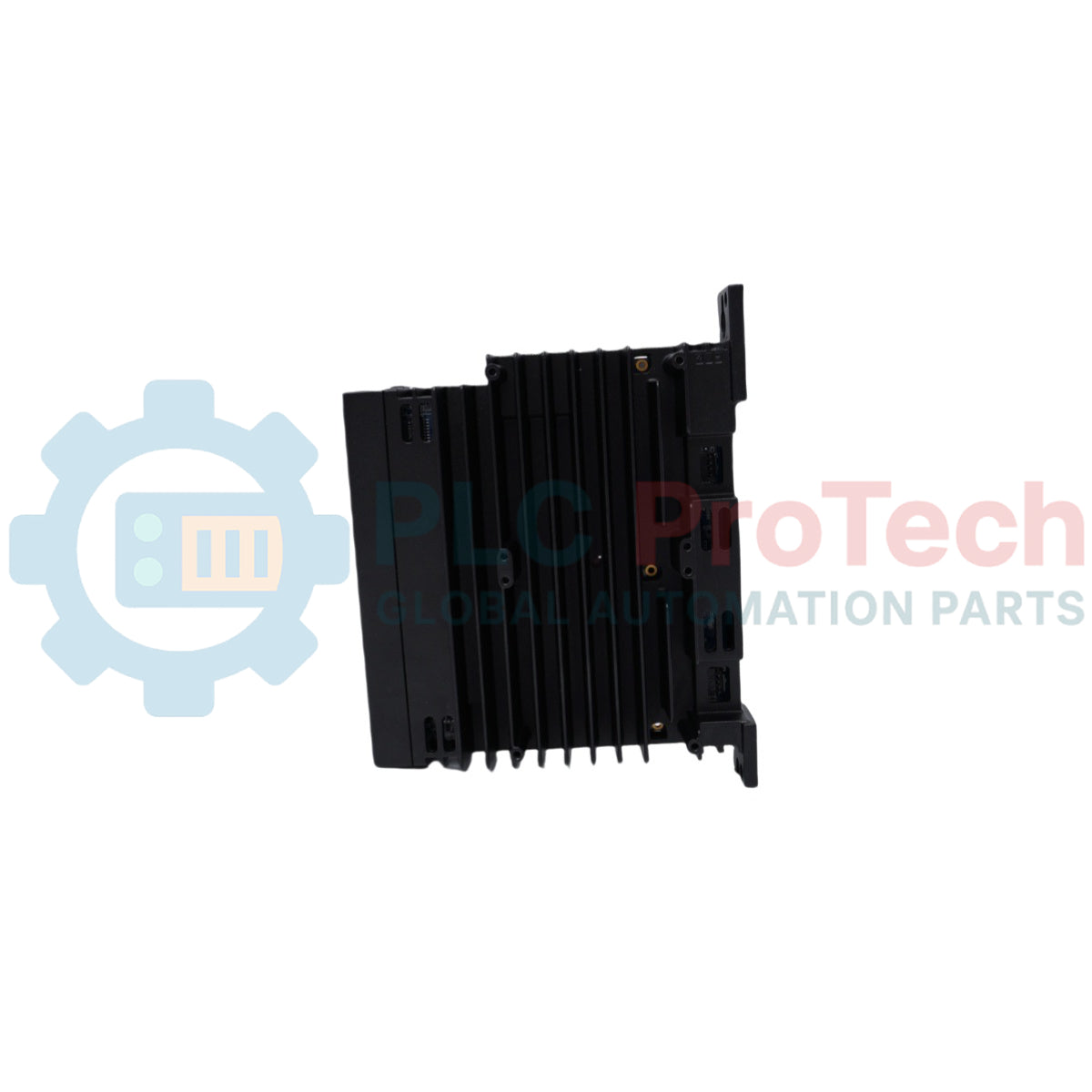
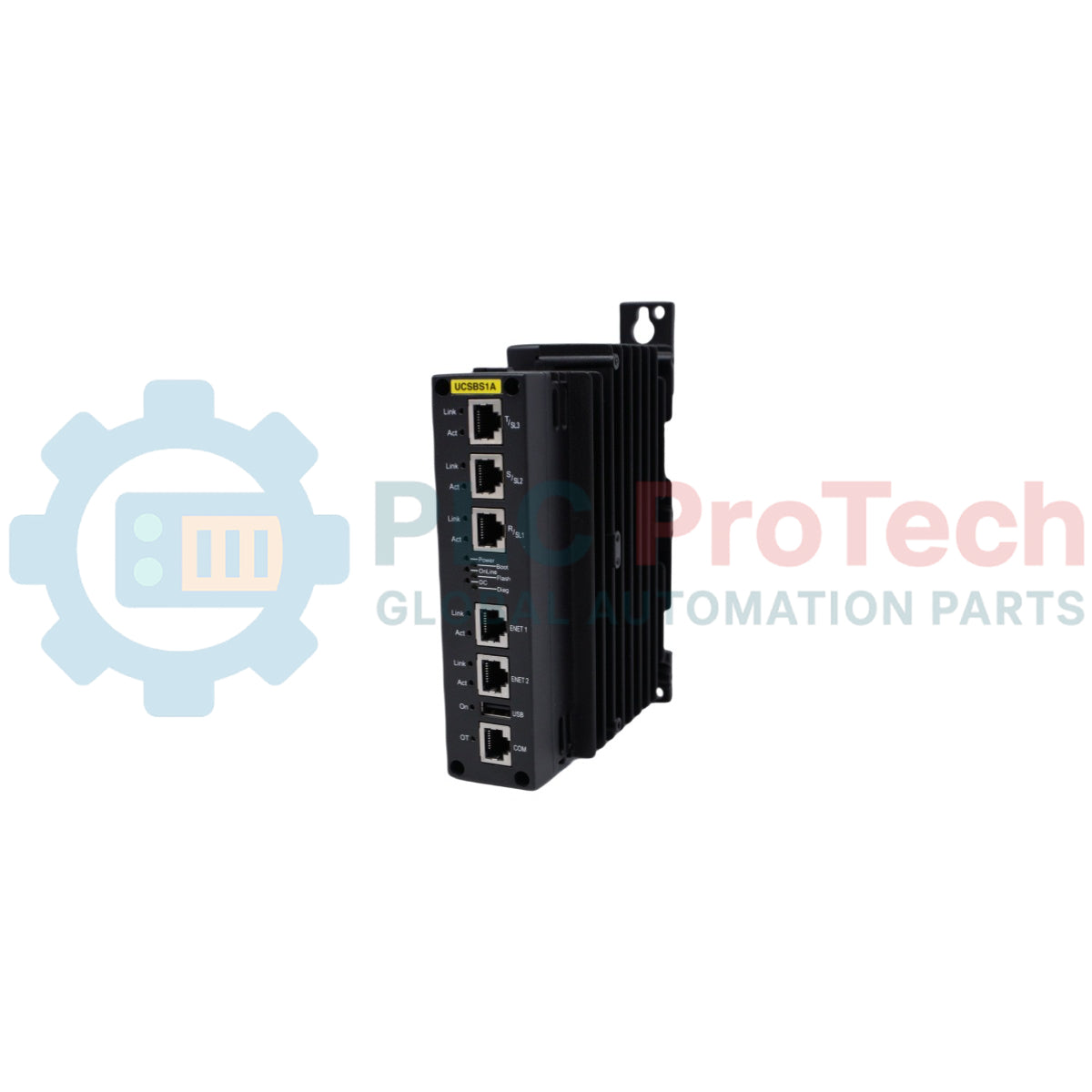
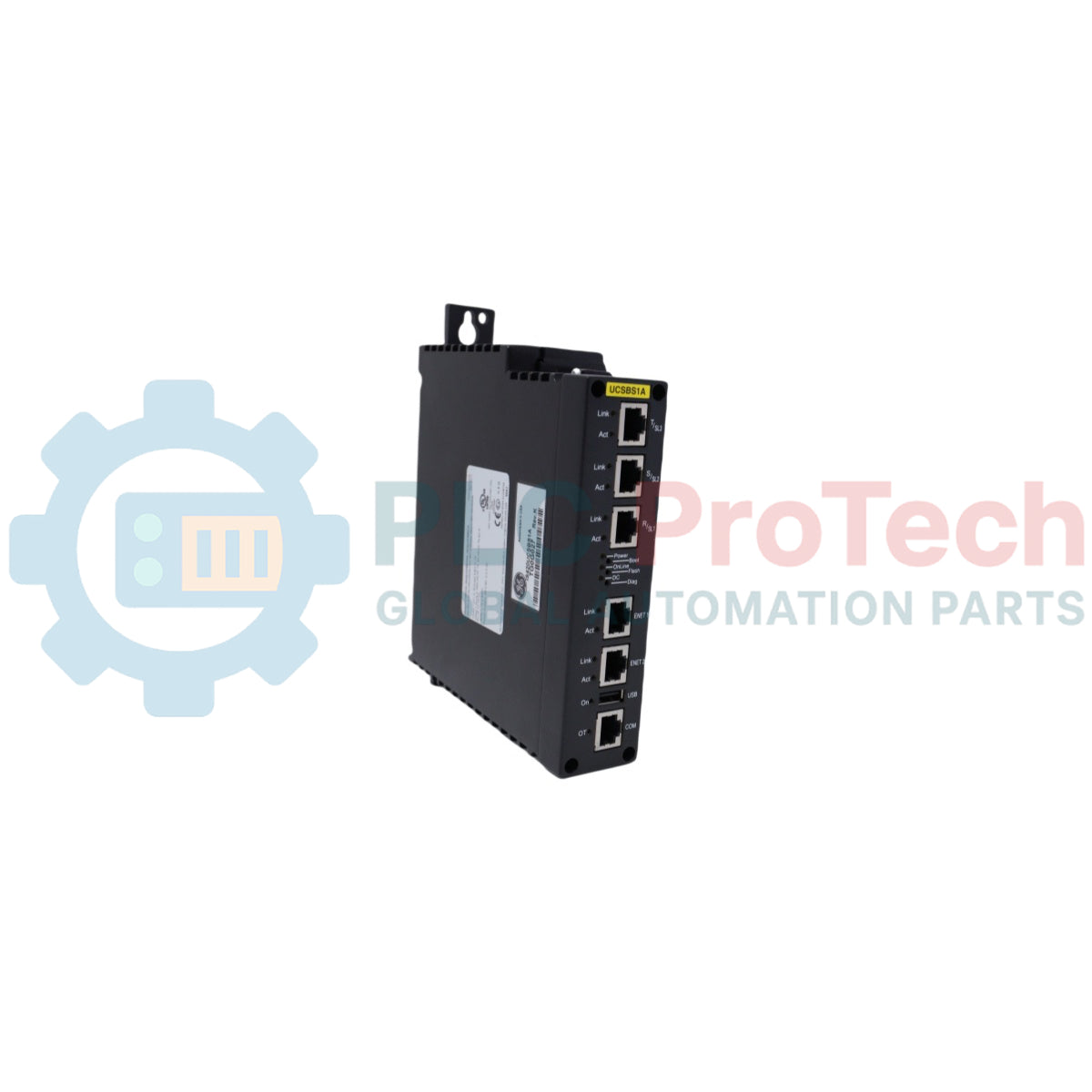
Présentation du produit
Le IS421UCSBH4A (IS421UCSBH4A) est une unité de traitement quadricœur haute performance développée par General Electric pour l’architecture de contrôle distribuée PACSystems Mark VIe . Fonctionnant comme le cerveau computationnel principal des systèmes complexes de turbines, ce module contrôleur actif exécute une logique d’application en temps réel à grande vitesse, gère des calculs de processus volatils et synchronise la télémétrie système via des réseaux IONet dédiés à double ou triple redondance. Les infrastructures industrielles de processus continus sévères — notamment les réseaux modernes de production de turbines à gaz utilitaires, les réseaux ultra-larges de turbines à vapeur et les usines de compression pétrochimiques à haute capacité — déploient le IS421UCSBH4A (IS421UCSBH4A) pour maintenir des limites de processus strictes. En éliminant la latence de communication et les fluctuations de trame de traitement, ce contrôleur avancé prévient les défaillances critiques inattendues des boucles, isole les anomalies transitoires sur le terrain et protège efficacement contre les arrêts forcés coûteux de l’usine.
Configuration technique et architecture de diagnostic
La topologie matérielle interne, les réseaux de routage et l’infrastructure de traitement du contrôleur système IS421UCSBH4A offrent ses capacités d’exécution déterministe en temps réel.
-
Moteur de traitement quadricœur : Propulsé par un microprocesseur industriel multicœur avancé fonctionnant sous un système d’exploitation temps réel (RTOS) hautement sécurisé, conçu pour traiter simultanément des boucles de contrôle multicanaux.
-
Cartographie de contrôle à triple redondance : Dispose de points de synchronisation natifs prenant en charge de manière transparente les topologies réseau Dual (R, S) ou Triple Modular Redundant (R, S, T), garantissant des basculements de contrôle sans à-coups en cas de défaillance d’une carte adjacente.
-
Communication IONet à haute vitesse : Équipé de plusieurs interfaces Ethernet embarquées dédiées configurées pour la communication peer-to-peer sur la boucle du réseau optique industriel (IONet), minimisant la latence de diagnostic.
-
Infrastructure d’auto-diagnostic intégrée : Exécute en continu des routines de diagnostic au niveau matériel qui vérifient la parité mémoire, surveillent les tensions locales des rails d’alimentation et transmettent les seuils thermiques directement à la station HMI hôte.
Spécifications de performance et données techniques
| Métrique technique |
Norme de spécification d’automatisation industrielle |
| Désignation du modèle |
IS421UCSBH4A |
| Fabricant |
GE Gas Power (General Electric Control Solutions) |
| Ligne de système de contrôle |
Système de contrôle distribué Speedtronic Mark VIe |
| Classification du module |
Unité de processeur cœur active haute performance |
| Architecture du processeur |
Unité de traitement embarquée industrielle multicœur |
| Capacités de redondance |
Prend en charge la redondance double ou la redondance modulaire triple (TMR) |
| Interfaces réseau |
Ports IONet redondants multiples via connexions RJ45 |
| Conformité sécurité HazLoc |
Certifié pour les zones dangereuses Classe I, Division 2 / Zone 2 |
| Coque protectrice PCB |
Couche de revêtement conforme premium |
| Plage de température ambiante de fonctionnement |
-30 à +65 °C paramètres thermiques opérationnels continus |
| Limites de température de stockage |
-40 à +85 °C limites maximales de stockage |
| Origine de fabrication |
États-Unis (USA) |
FAQ sur les opérations et le cycle de vie du contrôleur industriel
Quelle est la différence fonctionnelle entre le module IS421UCSBH4A et les processeurs de la série IS220 héritée ?
Le IS421UCSBH4A appartient à la famille matérielle modernisée IS421, offrant des vitesses de traitement multicœur améliorées, des allocations mémoire intégrées plus importantes et un débit réseau optimisé par rapport aux blocs actifs IS220 hérités. De plus, comme vérifié par les matrices de température HazLoc officielles GEH-6725R, la variante H4A offre une plage de fonctionnement ambiante étendue de -30 à +65 °C, lui permettant de fonctionner de manière fiable dans des environnements d’armoire difficiles où les modules hérités pourraient rencontrer des contraintes thermiques.
Comment un système maître TMR remplace-t-il un processeur IS421UCSBH4A en ligne sans perturber le fonctionnement de la turbine ?
Dans une configuration Triple Modular Redundant (TMR), trois contrôleurs identiques traitent la logique d’application en parallèle et votent sur les sorties via le bus de données IONet. Si un contrôleur rencontre une erreur de parité mémoire interne ou une défaillance logique, les deux autres contrôleurs le surclassent instantanément. L’unité défectueuse peut être mise hors tension, retirée du rack et remplacée pendant que la turbine reste en ligne en toute sécurité.
Le firmware de l’IS421UCSBH4A nécessite-t-il une configuration manuelle avant d’être inséré dans un réseau de contrôle actif ?
Non. La plateforme contrôleur prend en charge la synchronisation automatique du firmware. Lorsqu’un module neuf est inséré dans le rack réseau et connecté via les ports IONet, l’outil de configuration système maître identifie le nouvel ID matériel, vérifie son état de révision et pousse automatiquement les paramètres d’application turbine correspondants dans la matrice mémoire au démarrage.
Protocole d’ingénierie terrain et d’installation
-
Contrôles de décharge électrostatique et manipulation du substrat :
Les microprocesseurs internes et les modules mémoire haute vitesse de l’IS421UCSBH4A sont très sensibles à la dégradation par tension électrostatique. Conservez la carte dans son sac anti-statique scellé jusqu’au moment immédiat de l’installation mécanique. Les techniciens terrain doivent porter un bracelet de mise à la terre certifié relié au châssis en acier de l’armoire avant de toucher le boîtier de la carte ou de manipuler les interfaces logiques.
-
Routage des câbles réseau et gestion du stress vibratoire :
Faites passer toutes les lignes Ethernet IONet de catégorie appropriée dans des chemins de câbles indépendants à l’intérieur du panneau de contrôle, en maintenant un rayon de courbure minimum de 5 cm pour éviter la torsion interne des fils de cuivre. Dans les environnements proches des capots d’échappement à vapeur à forte vibration ou des arbres d’entraînement de turbine, fixez les gaines des câbles de communication à l’aide de clips de décharge de traction industriels pour éliminer les micro-déconnexions causant des pertes intermittentes de paquets.
-
Dégagements thermiques et convection passive :
L’unité est certifiée en usine pour des expositions opérationnelles continues de -30 à +65 °C. Ne bloquez pas les fentes de ventilation sur les côtés du boîtier métallique du module. Assurez un écart libre minimal de 4 cm entre les blocs contrôleurs actifs adjacents dans le rack de l’armoire pour favoriser une convection d’air passive régulière, évitant l’accumulation locale de chaleur qui réduirait la durée de vie des composants électroniques à semi-conducteurs.