Présentation
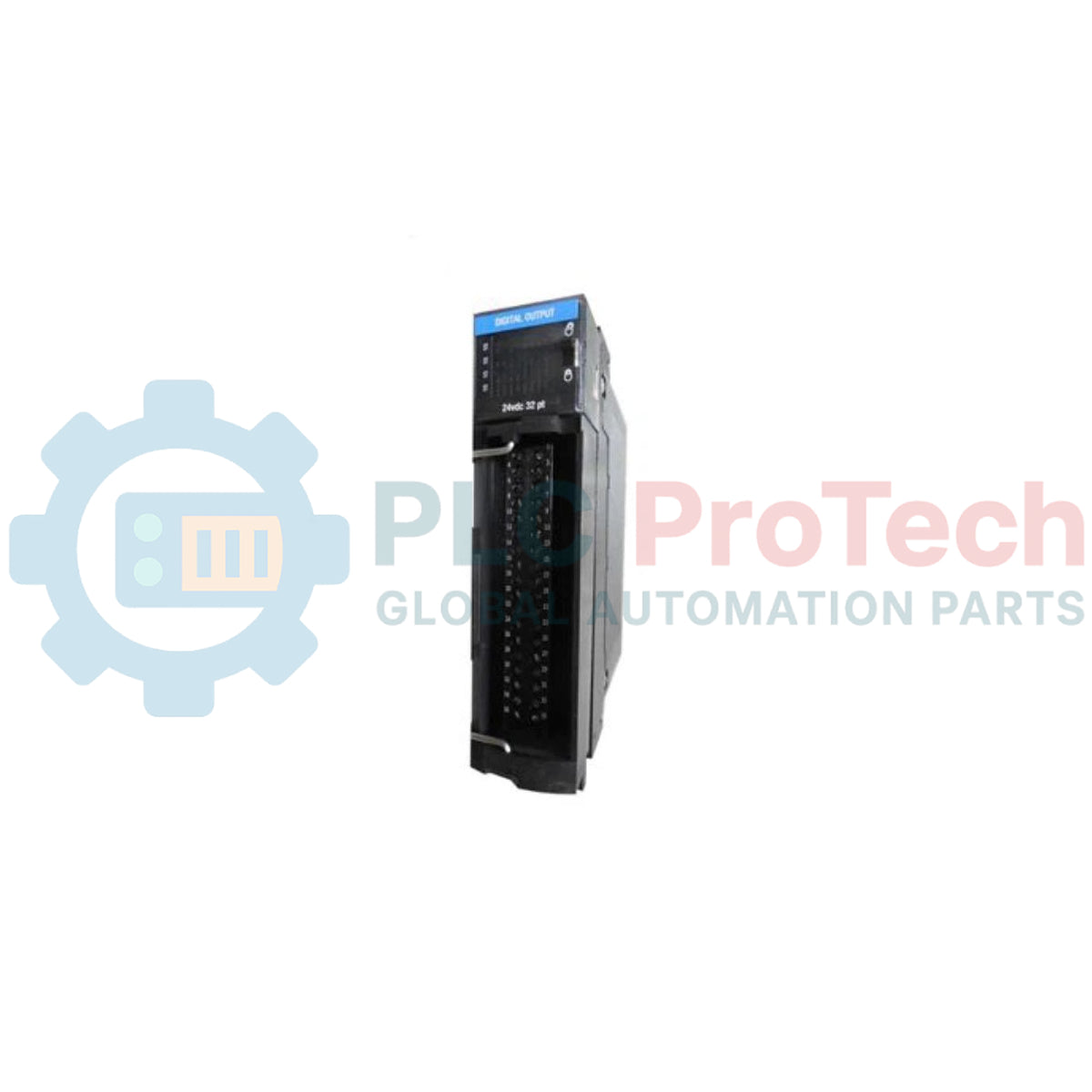
Le TK-ODD321 (TKODD321) est un module de sortie discrète haute densité 24 VDC conçu pour la plateforme Honeywell Experion PKS. Dans les opérations industrielles à grande échelle telles que les raffineries de pétrole, les centrales électriques et les installations minières, ce module sert d'interface principale pour piloter les solénoïdes, les voyants pilotes et les relais d'interposition. Avec 32 points de sortie répartis en deux groupes isolés, le TK-ODD321 offre le contrôle granulaire nécessaire à la gestion complexe des séquences d'événements. Son temps de réponse rapide de 1,0 ms garantit que les commandes de contrôle sont exécutées avec précision, ce qui est crucial pour éviter les perturbations de processus et minimiser les temps d'arrêt coûteux du système. En prenant en charge des états de défaut configurables, le module permet aux ingénieurs de définir des postures opérationnelles sûres—qu'il s'agisse de Maintenir le Dernier État, ON ou OFF—assurant un comportement système prévisible lors de défaillances de communication ou du contrôleur.
Logique Interne & Configuration Technique
L'architecture du TK-ODD321 est conçue pour des environnements à haute disponibilité où la fiabilité et la sécurité sont les priorités absolues.
-
Isolation des Groupes : Les 32 points sont divisés en deux groupes de 16 points par commun. Cette conception offre une isolation continue de 250 VAC entre les groupes, protégeant le backplane du système et les modules adjacents contre les transitoires électriques.
-
Intelligence Thermique : Le module intègre une logique de dégradation linéaire. Bien qu'il supporte 0,5 A par point à 50 °C, la capacité s'ajuste automatiquement à 0,35 A à 60 °C pour préserver la longévité du matériel dans des conditions thermiques stressantes.
-
Programmabilité Fail-Safe : Chaque point est configurable indépendamment pour les modes Défaut et Programme. Ce niveau de personnalisation permet au système Experion de maintenir des verrouillages critiques même si le réseau de contrôle principal est compromis.
-
Intégrité Diagnostique : Avec une charge minimale en courant d'état ON de 3,0 mA, le module garantit que les dispositifs de terrain connectés sont correctement alimentés tout en maintenant un faible courant de fuite en état OFF pour éviter les activations « fantômes » des charges sensibles à haute impédance.
Spécifications de Performance
| Caractéristique |
Spécification |
| Modèle |
TK-ODD321 |
| Marque |
Honeywell |
| Origine |
USA |
| Nombre de Canaux |
32 sorties (16 par commun) |
| Tension Nominale |
24 VDC |
| Courant de Sortie (Par Point) |
0,5 A @ 50 °C / 0,35 A @ 60 °C |
| Courant Total du Module |
16 A @ 50 °C / 10 A @ 60 °C |
| Température de Fonctionnement |
0 à 60 °C |
| Dissipation de Puissance |
6,1 W |
| Temps de Mise à Jour / Délai |
1,0 ms (Maximum) |
| Borne de Connexion |
TC-TBCH (36 positions) |
| Poids à l'Expédition |
2,0 kg |
FAQ Opérations & Maintenance
Quelle est la protection recommandée pour les sorties puisqu'elles ne sont pas fusibles en interne ?
Il est fortement recommandé d'utiliser un Module d'Interface Fusible (IFM). Comme le TK-ODD321 ne possède pas de fusibles internes, un court-circuit dans le câblage de terrain pourrait endommager définitivement les transistors de sortie sans protection externe.
Comment le module se comporte-t-il si la polarité est inversée lors de l'installation ?
Le TK-ODD321 ne dispose pas de protection contre l'inversion de polarité. Un câblage incorrect entraînera probablement des dommages matériels immédiats et permanents. Vérifiez toujours le câblage avec un multimètre avant de mettre sous tension la boucle 24 VDC.
Ce module peut-il gérer les courants de surtension inductifs des gros solénoïdes ?
Oui, le module est conçu pour un courant de surtension de 1 A pendant 10 ms, répétable toutes les 2 secondes à 60 °C. Cependant, pour les charges fortement inductives, il est recommandé d'utiliser des diodes de roue libre externes ou des suppresseurs de surtension afin de prévenir l'usure prématurée des circuits de sortie.
Guide d'Ingénierie & d'Installation
-
Espacement Thermique et Dégradation : Lorsque la température ambiante de l'armoire est susceptible d'atteindre 60 °C, vous devez strictement respecter la limite de courant du module de 10 A (au lieu de 16 A). Dépasser cette limite entraînera une accumulation de chaleur interne pouvant provoquer une défaillance prématurée des composants. Assurez un flux d'air vertical adéquat dans la baie d'E/S.
-
Précautions de Câblage : Utilisez le bornier TC-TBCH 36 positions pour toutes les connexions. Étant donné la densité de 32 points, la gestion des câbles est cruciale. Veillez à ce que les fils de terrain n'obstruent pas les orifices de ventilation du module.
-
Mise à la Terre et Isolation : Le module est testé à 100 % à 2546 VDC pendant 1 seconde pour l'isolation utilisateur-système. Pour maintenir ce niveau de protection, assurez-vous que les alimentations de terrain sont correctement référencées et qu'aucun cavalier non autorisé n'existe entre les groupes communs isolés.