Présentation du produit
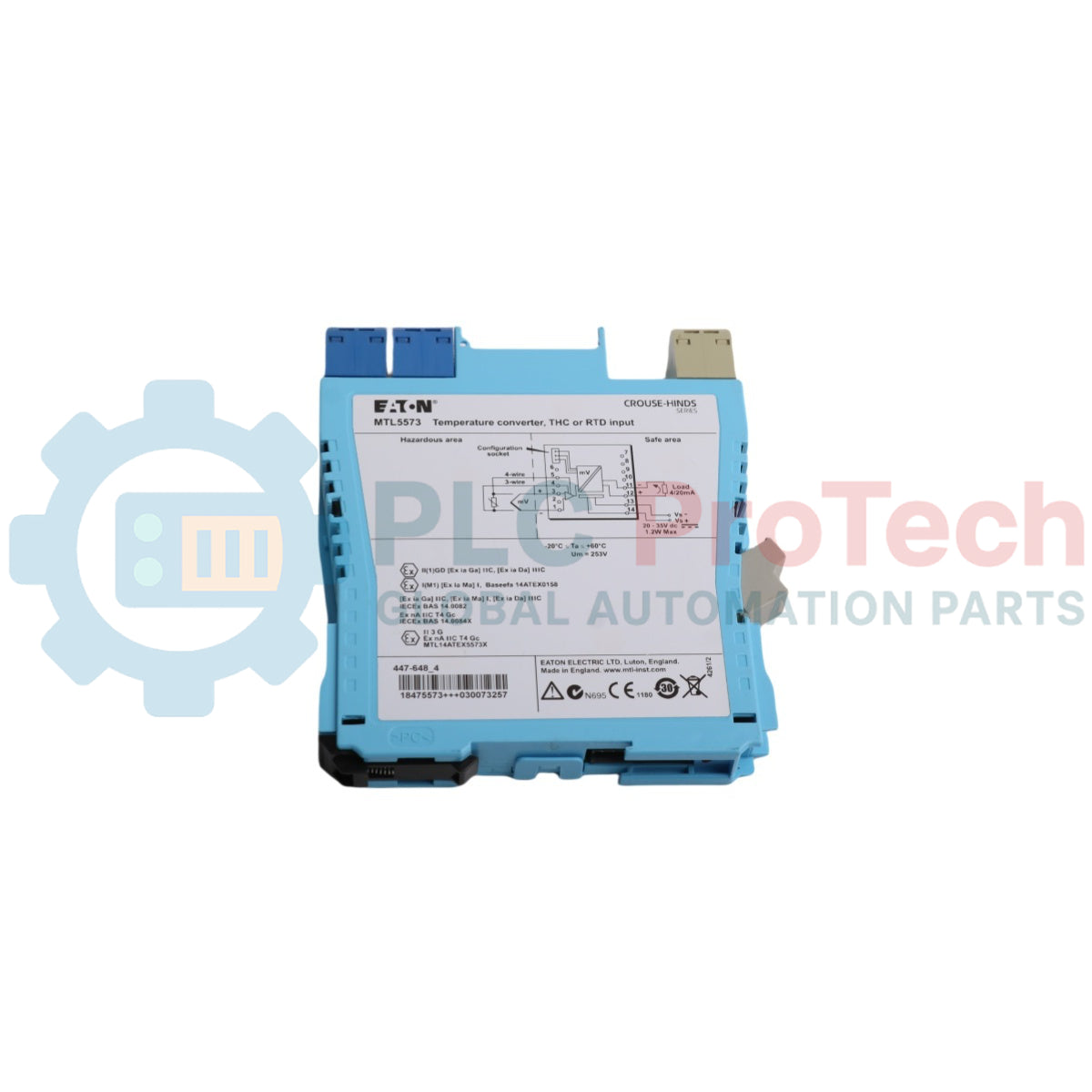
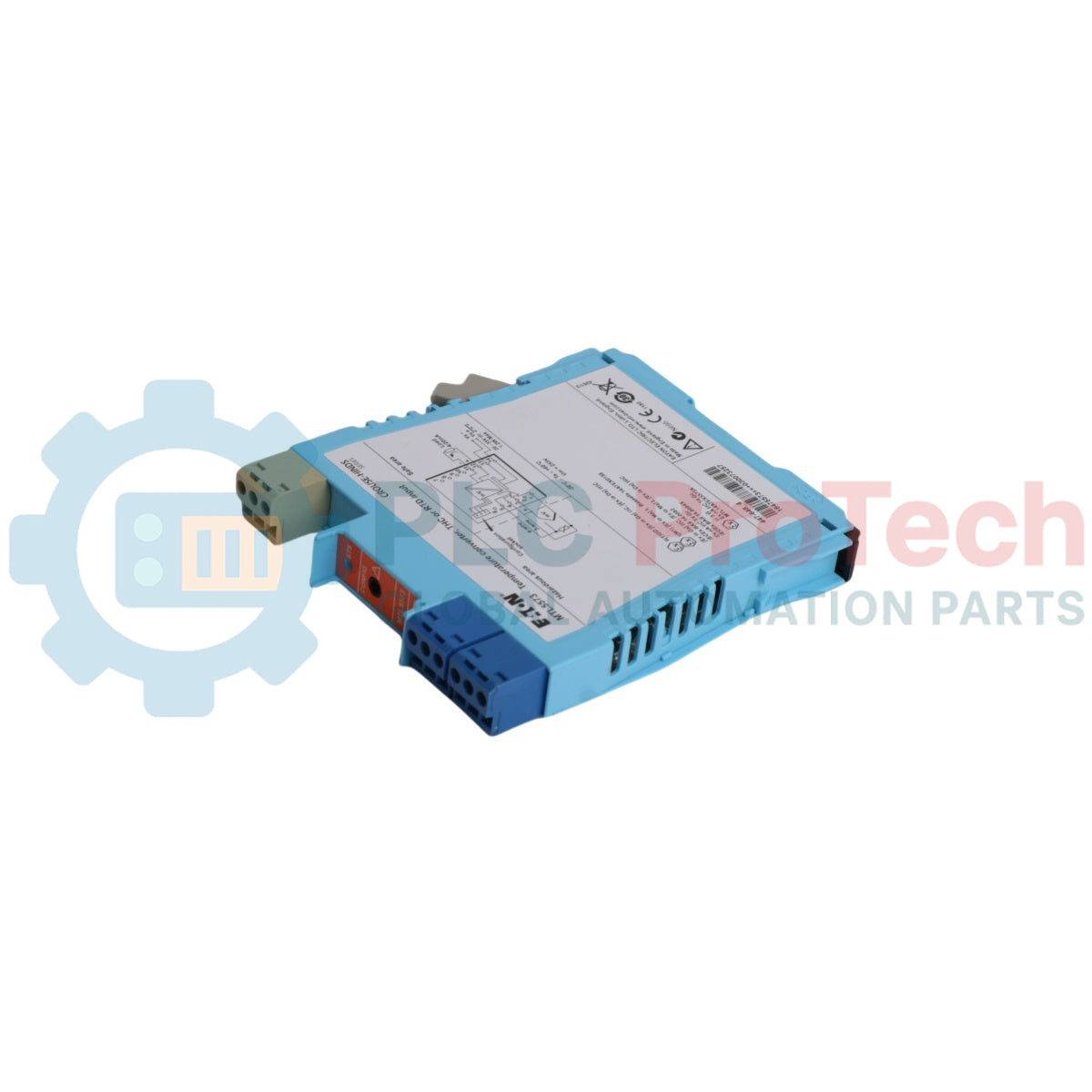
Le MTL 5573 (MTL5573) est un convertisseur de température mono-canal sophistiqué conçu pour interfacer des thermocouples (THC) ou des détecteurs de température à résistance (RTD) situés en zones dangereuses. En tant que composant clé de la série MTL5500, ce module convertit les signaux de faible niveau provenant du terrain en un signal courant 4-20 mA de haut niveau, adapté aux entrées DCS ou PLC. Il est largement utilisé dans les raffineries, les centrales thermiques et les installations de stockage cryogénique où une surveillance précise de la température est essentielle pour la sécurité et l'efficacité des processus. En fournissant une isolation galvanique et une sécurité intrinsèque, le MTL 5573 protège les instruments de la salle de contrôle contre les transitoires haute tension tout en assurant une transmission précise des données sur de longues distances de câblage.
Configuration technique (détail approfondi)
Le MTL 5573 est très polyvalent, avec des paramètres programmables par logiciel qui lui permettent de s’adapter à une grande variété de capteurs industriels.
-
Compatibilité des capteurs : Le module prend en charge presque tous les thermocouples standards (types J, K, T, E, R, S, B, N) et les RTD (2, 3 ou 4 fils Pt100, Pt500, Pt1000, ainsi que divers capteurs Ni/Cu).
-
Compensation de jonction froide (CJC) : Pour les applications thermocouples, l’unité fournit une CJC interne pour maintenir la précision malgré les fluctuations de la température ambiante au niveau de la connexion terminale.
-
Isolation galvanique : Dispose d’une isolation à 3 ports entre l’entrée, la sortie et l’alimentation. Cela empêche les courants de boucle de masse de déformer le signal de température et améliore l’immunité globale du système au bruit.
-
Détection de défaut : Le module inclut une surveillance intelligente des pannes de capteur. En cas de rupture de fil ou de court-circuit, la sortie peut être programmée pour passer en mode « Upscale » ou « Downscale », fournissant une notification immédiate au système de contrôle.
Spécifications techniques
| Caractéristique |
Spécification |
| Modèle |
MTL 5573 |
| Marque |
Eaton MTL |
| Origine |
Royaume-Uni |
| Nombre de canaux |
1 |
| Signal d’entrée |
RTD (2, 3, 4 fils) ou thermocouple |
| Signal de sortie |
4 - 20 mA |
| Tension d’alimentation |
20 - 35 VCC |
| Température de fonctionnement |
-20 à +60 °C |
| Précision |
+/- 10 µV (THC) / +/- 100 mOhm (RTD) typique |
| Dimensions |
16 x 109,3 x 104 mm |
| Poids |
150 g |
FAQ techniques
Q1 : Comment le MTL 5573 est-il configuré pour des types de capteurs spécifiques ?
R1 : La configuration s’effectue à l’aide d’un ordinateur personnel équipé du logiciel de configuration MTL PCS45 et d’un lien d’interface série PCL45USB. Cela permet aux utilisateurs de définir le type de capteur, la plage de température et les préférences de détection de panne.
Q2 : Le module peut-il gérer des mesures RTD 4 fils ?
R2 : Oui, le MTL 5573 prend en charge les connexions RTD 4 fils, méthode préférée pour les applications haute précision car elle élimine complètement les erreurs dues à la résistance des fils de connexion.
Q3 : Que se passe-t-il si le fil du thermocouple se rompt ?
R3 : L’unité détectera un circuit ouvert et fera passer la sortie 4-20 mA à un niveau de sécurité prédéfini (typiquement >21 mA ou <3,6 mA), déclenchant une alarme dans le DCS pour éviter un contrôle de processus incorrect.
Guide d’ingénierie et d’installation
-
Précision du câblage RTD : Pour les configurations RTD 3 fils, assurez-vous que les trois fils ont une résistance identique. Les différences de résistance des fils entraîneront un décalage de mesure qui ne peut pas être facilement compensé par le module.
-
Précision de la CJC : Lors de l’utilisation de thermocouples, veillez à ce que les bornes du module ne soient pas exposées à des courants d’air directs ou à des variations rapides de température, car cela peut affecter la précision de la compensation de jonction froide interne.
-
Mise à la terre sur rail DIN : Assurez-vous que le rail DIN de 35 mm est correctement relié à la terre instrumentale de l’installation. Bien que le module soit isolé, une référence de terre stable pour le rail aide à évacuer les interférences RFI/EMI induites.
Avantages techniques
Le MTL 5573 se distingue par sa haute densité d’intégration, avec un profil mince de 16 mm qui permet d’économiser un espace important dans les armoires. Sa haute résolution de conversion et sa faible dérive thermique (typiquement <0,1 µV par °C) le rendent adapté aux applications de transfert de custody et aux systèmes instrumentés de sécurité critiques (SIS). De plus, la capacité du module à être configuré sous tension simplifie la mise en service et réduit le besoin de calibrateurs externes sur le terrain.