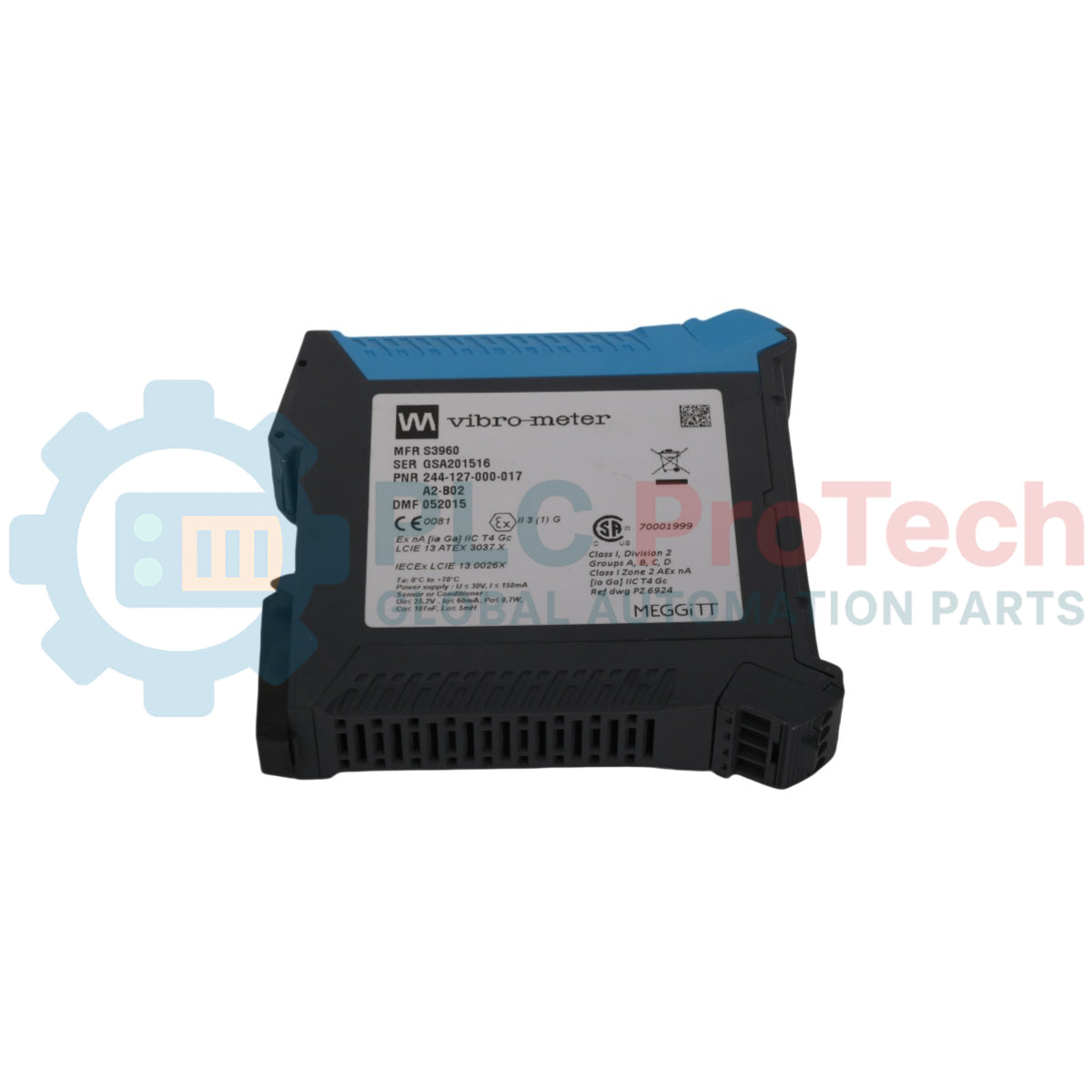
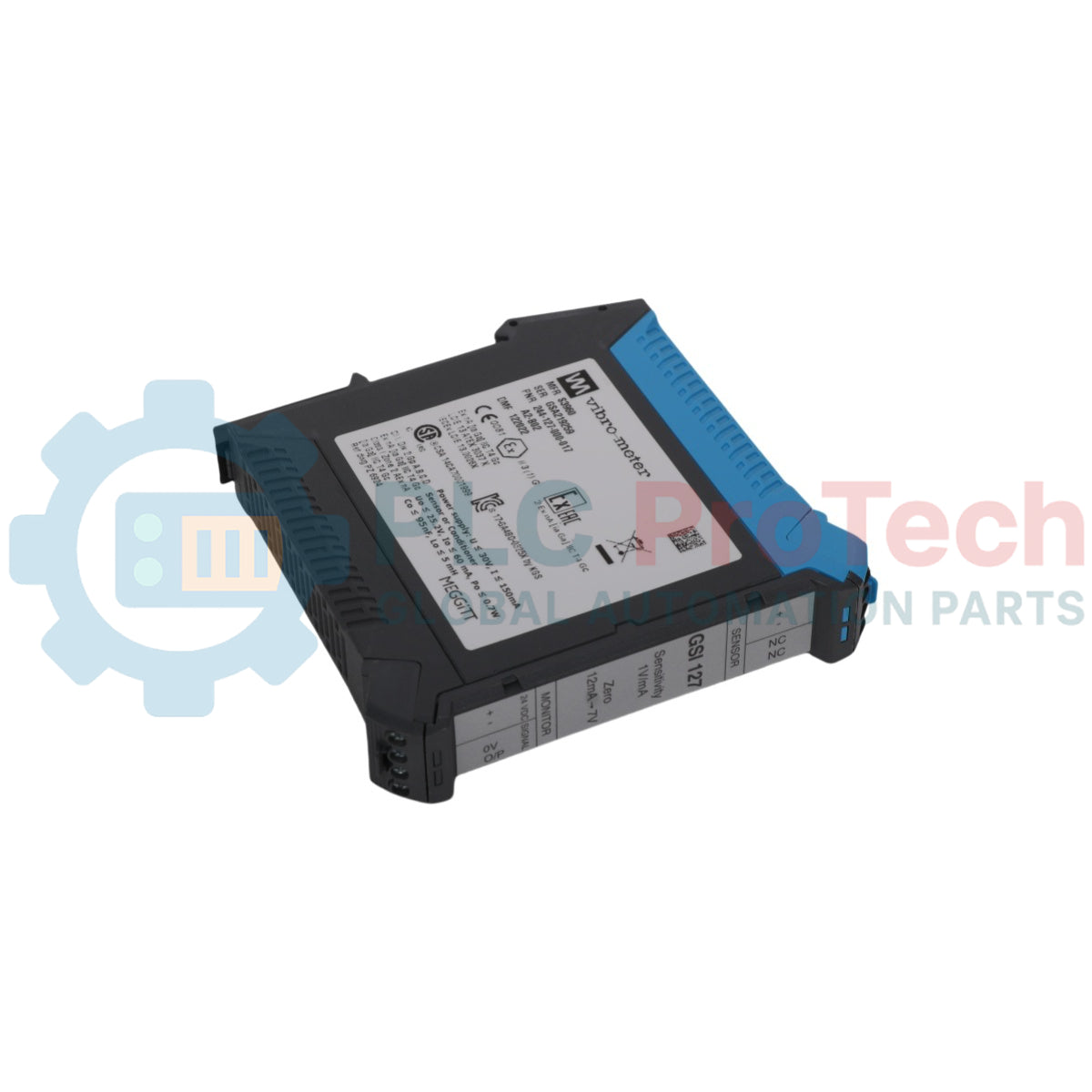
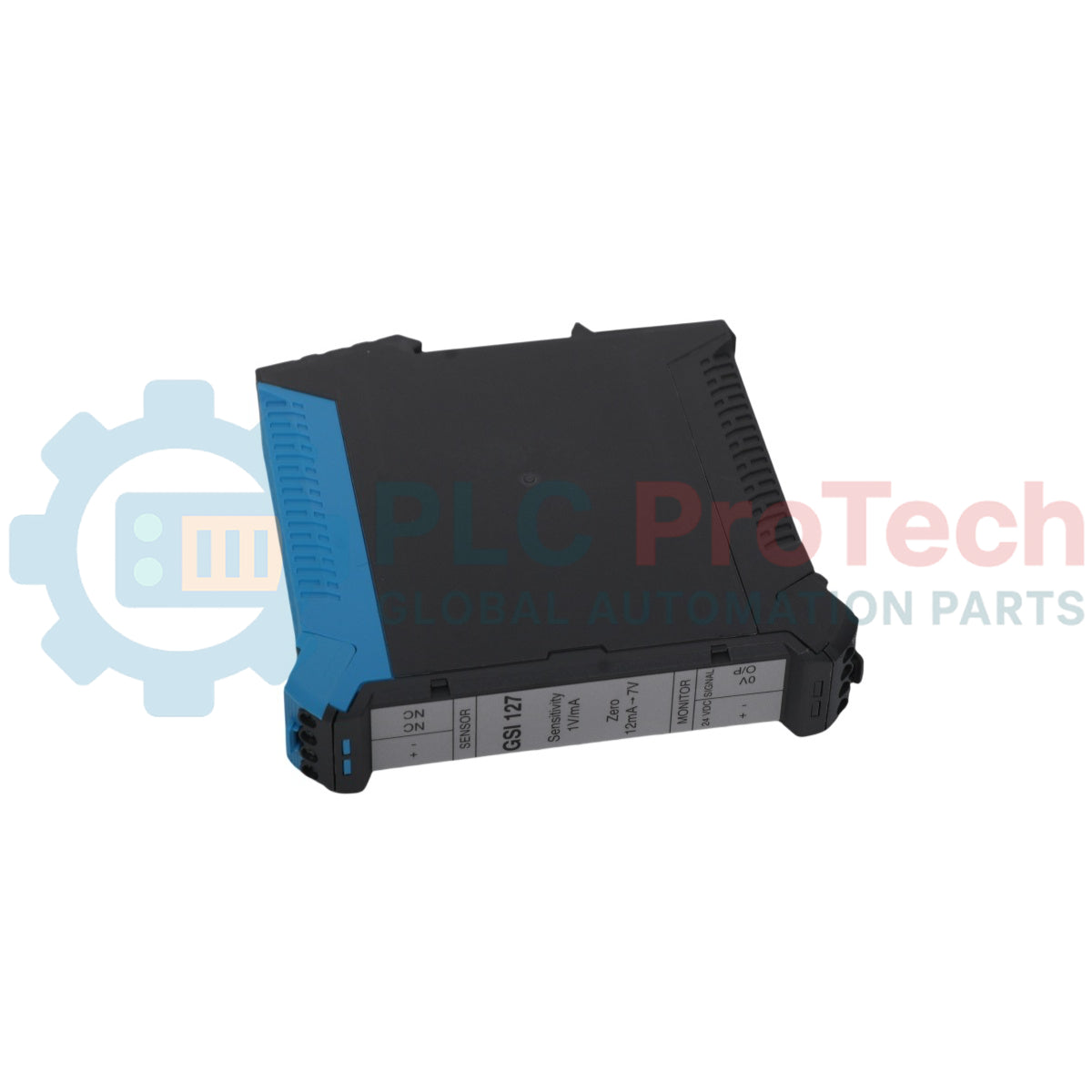
Présentation du produit
Le S3960 244-127-000-017 (S3960) est une unité spécialisée d'interface de signal et de séparation galvanique au sein de l'écosystème Vibro-Meter VM600. Conçu pour des applications TSI (Instrumentation de supervision de turbine) à haute intégrité, cet appareil fournit l'isolation électrique essentielle et le conditionnement du signal nécessaires pour transmettre les données de vibration depuis des environnements de terrain difficiles jusqu'à la salle de contrôle. Le S3960 est spécifiquement conçu pour gérer les signaux dynamiques haute fréquence provenant d'accéléromètres et de sondes de proximité, garantissant que les boucles de masse et les interférences électromagnétiques ne compromettent pas la précision de la logique de protection des machines dans les centrales électriques, raffineries et plateformes offshore.
Configuration technique (détail approfondi)
La désignation 244-127-000-017 représente une version haut de gamme de la série S3960, souvent compatible avec les spécifications de la série GSI 127 pour une modularité accrue.
-
Isolation galvanique tripartite : Cette unité assure une isolation indépendante entre l'entrée (côté capteur), la sortie (côté rack) et l'alimentation électrique. Cette architecture est cruciale pour protéger les cartes VM600 MPC4 des surtensions électriques côté terrain.
-
Fidélité du signal : Optimisé pour une réponse en fréquence large bande, le S3960 maintient une linéarité de phase de DC jusqu'à 20 kHz, ce qui le rend adapté à la fois à la surveillance de la position d'arbre à basse vitesse et à l'analyse des vibrations haute fréquence des engrenages.
-
Protection contre les explosions : Fonctionne comme un « appareil associé », ce qui signifie qu'il peut être installé en zone sûre pour interfacer avec des transducteurs intrinsèquement sûrs (Ex i) situés en zones dangereuses 0 ou 1.
-
Gestion de l'alimentation : Régule et filtre l'alimentation 24 VDC pour fournir une alimentation « propre » aux conditionneurs de signal de terrain (par exemple IQS 450), minimisant ainsi le niveau de bruit de la chaîne de mesure.
Caractéristiques techniques
| Paramètre |
Détails de la spécification |
| Modèle |
S3960 244-127-000-017 |
| Marque |
Vibro-Meter (Meggitt) |
| Origine |
Suisse |
| Force d'isolation |
4000 Vrms |
| Type de signal d'entrée |
Tension ou courant (dépend du transducteur) |
| Tension d'alimentation |
24 VDC (+/- 10%) |
| Température de fonctionnement |
-20 à 70 °C |
| Type de montage |
Rail DIN 35 mm |
| Dimensions |
Boîtier modulaire compact (env. 110 x 22 x 100 mm) |
FAQ techniques
En quoi le S3960 244-127-000-017 diffère-t-il d'un isolateur industriel standard ?
Les isolateurs standards sont souvent limités aux signaux DC 4-20 mA. Le S3960 est une interface « haute vitesse » capable de transmettre des formes d'onde AC dynamiques (signaux de vibration) sans atténuation ni décalage de phase, ce qui est indispensable pour des outils de diagnostic comme l'Analyse Orbitale.
Puis-je utiliser le S3960 pour des signaux de vibration et de température ?
Bien que principalement conçu pour des signaux dynamiques (vibration/déplacement), le S3960 peut être utilisé pour des signaux quasi-statiques si les plages de tension d'entrée sont compatibles. Cependant, pour les entrées RTD ou thermocouples, un transmetteur de température dédié est généralement préféré.
Quelle est la signification du suffixe A2-B02 souvent associé à cette pièce ?
Le suffixe A2-B02 indique l'étalonnage spécifique du gain de sortie et le kit de montage mécanique. Il garantit que l'unité est un remplacement « plug-and-play » pour les installations existantes GSI 127 ou S3960 dans des armoires standardisées.
Guide d'ingénierie et d'installation
-
Séparation des câblages : Maintenez une distance minimale de 50 mm entre le câblage bleu intrinsèquement sûr (côté capteur) et le câblage noir/gris non intrinsèquement sûr (côté rack). Utilisez des goulottes séparées pour respecter les normes de sécurité ATEX/IECEx.
-
Mise à la terre de l'écran : L'écran du câble capteur doit être raccordé à la borne d'écran désignée du S3960 . Assurez-vous que le rail DIN est relié à la terre principale de l'instrument pour fournir un chemin efficace contre les interférences électromagnétiques haute fréquence.
-
Considérations sur la chute de tension : Lors du calcul de la longueur maximale du câble entre le S3960 et le capteur de terrain, tenez compte de la chute de tension interne de l'unité (environ 1 V). Pour des longueurs très importantes (>300 m), assurez-vous que la tension d'alimentation au conditionneur de terrain reste dans la plage spécifiée de -18 à -30 VDC.
Avantages techniques
Le S3960 244-127-000-017 est privilégié par les ingénieurs de site pour son MTBF (Temps moyen entre pannes) qui dépasse 500 000 heures. Dans le cadre d'une logique d'alarme « Trip-Multiply » ou « Danger », la fiabilité de cette carte d'interface est primordiale. Son refroidissement passif et l'absence de logiciel interne le rendent immunisé contre les bugs de firmware ou les blocages processeur qui peuvent affecter les isolateurs numériques moins coûteux, offrant ainsi une voie de sécurité « purement matérielle » pour les machines critiques.