Présentation
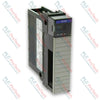
Le Triconex 5201 (5201) est un module de communication TriPak spécialisé, conçu pour l'échange de données à haute intégrité au sein de l'écosystème Triconex à redondance modulaire triple (TMR). En tant que composant essentiel de la connectivité du système, ce module permet au contrôleur TriPak d'interfacer des postes de travail externes, des systèmes de contrôle distribués (DCS) et des interfaces homme-machine (IHM). Conçu pour les applications critiques dans les terminaux de GNL, le traitement chimique et la sûreté des centrales nucléaires, le 5201 garantit la transmission des données de diagnostic et des variables de procédé avec un niveau de fiabilité maximal. Son architecture robuste est spécialement conçue pour éliminer les goulots d'étranglement de communication tout en maintenant les certifications de sécurité strictes requises dans les environnements classés SIL.
Architecture et intégration du système
Le module 5201 TriPak fait office de pont entre la puissance de traitement TMR interne et les réseaux de surveillance externes. Son format compact est trompeur, car il abrite des circuits haute vitesse capables de gérer des paquets de données denses sans compromettre le temps de scrutation des processeurs de sécurité principaux.
-
Cohérence TMR : Le module est conçu pour fonctionner de manière transparente avec la logique de vote Triconex, garantissant que les défaillances de communication ne se propagent pas dans la boucle de contrôle de sécurité.
-
Protection physique : Logé dans un boîtier renforcé, le module facilite la dissipation thermique malgré sa conception électronique haute densité, garantissant des performances stables dans les locaux d'équipement non climatisés.
-
Profondeur des diagnostics : Il fournit des informations détaillées au logiciel TriStation, permettant aux ingénieurs de surveiller en temps réel l'état de la liaison, les pertes de paquets et l'état des ports.
Spécifications techniques
| Attribut |
Détails de la spécification |
| Modèle |
5201 |
| Marque |
Triconex (Schneider Electric) |
| Type de module |
Module de communication TriPak |
| Dimensions |
4.4 cm X 16.9 cm X 22 cm |
| Poids net |
5.0 kg |
| Poids d'expédition |
7.5 kg |
| Température de fonctionnement |
0 à 60 deg C |
| Température de stockage |
-40 à 85 deg C |
FAQ techniques
Quelle est la fonction principale du 5201 dans un système TriPak ?
Le 5201 fournit la couche physique de communication essentielle et le traitement des protocoles nécessaires pour relier le contrôleur TriPak à des réseaux externes basés sur Modbus ou Ethernet. Il assure la conversion des données internes du système dans un format lisible par les équipements de surveillance externes.
Le module 5201 présente-t-il des exigences particulières en matière de montage ?
Oui. En raison de son poids de 5.0 kg, le module doit être correctement installé dans les emplacements dédiés du châssis TriPak. Vérifiez que les vis de verrouillage sont serrées à la main afin d'éviter le bruit de signal induit par les vibrations, phénomène courant dans les environnements soumis à de fortes vibrations, comme les stations de compression.
Comment dépanner l'état « Comm Fail » sur ce module ?
Commencez par vérifier l'intégrité du câblage externe. Si la liaison physique est stable, consultez les journaux de diagnostic TriStation pour déterminer si le module a été mis hors ligne par le processeur TMR en raison d'une erreur de somme de contrôle ou d'une incompatibilité matérielle interne.
Guide d'ingénierie et d'installation
-
Mise à la terre du châssis : Assurez-vous que le châssis TriPak est relié à une terre dédiée pour instrumentation. Comme le 5201 gère des données à haute vitesse, toute boucle de terre peut introduire des interférences électromagnétiques (EMI), entraînant des pertes de communication intermittentes ou la corruption de paquets de données.
-
Dégagement et refroidissement : Maintenez un dégagement vertical d'au moins 50 mm au-dessus et au-dessous du module afin de permettre la convection naturelle. Bien qu'il soit prévu pour 60 deg C, une accumulation excessive de chaleur dans des armoires exiguës peut accélérer le vieillissement des condensateurs électrolytiques du module.
-
Protocole de remplacement à chaud : Bien que les modules Triconex soient généralement conçus pour un remplacement en ligne, vérifiez toujours l'état « Active » du partenaire redondant avant d'extraire un 5201. Assurez-vous que le système est dans un « Steady State » avant de lancer le remplacement d'un module afin d'éviter toute interruption imprévue du bus.
Avantages techniques
Le Triconex 5201 se distingue par sa compatibilité électromagnétique (CEM) exceptionnelle et sa résistance aux bruits haute fréquence. Contrairement aux cartes de communication commerciales standard, le 5201 est équipé de composants de qualité industrielle capables de résister aux transitoires et aux pointes de tension typiques des réseaux électriques industriels lourds. Son poids d'expédition de 7.5 kg témoigne du blindage substantiel et des matériaux de construction de haute qualité utilisés pour garantir une durée de vie dépassant souvent 20 ans en fonctionnement continu 24 h/24 et 7 j/7.