


Melaksanakan Logik Tangga XOR 3 Suis dengan Bit Dalaman
Laksanakan litar lampu XOR suis 3-SPST dalam LogixPro atau RSLogix 500 menggunakan bit geganti dalaman. Termasuk jadual kebenaran, persamaan Boolean dan pengesahan.

Direka bentuk untuk penyegerakan berbilang paksi berprestasi tinggi, Mitsubishi Electric Q173CPUN berfungsi sebagai CPU gerakan khusus dalam platform MELSEC Siri Q. Pengawal ini disepadukan dengan lancar pada unit asas yang sama bersama CPU PLC Siri Q standard, mengagihkan beban pemprosesan untuk mencapai penyegerakan tepat bagi jentera kompleks. Ia menyokong tugas kawalan gerakan lanjutan seperti konfigurasi paksi maya, pengendalian sesondol elektronik dan operasi gear segerak, sambil bergantung pada antara muka komunikasi gentian optik yang sangat tahan gangguan untuk berhubung dengan penguat servo luaran.
| Pengilang | Mitsubishi Electric |
| Model | Q173CPUN |
| Siri | Siri MELSEC Q |
| Jenis Modul | Modul CPU Pengawal Gerakan |
| Bilangan Paksi Kawalan | Sehingga 32 paksi |
| Titik I/O | 8192 titik |
| Kapasiti Program | 14k langkah |
| Rangkaian Gerakan | SSCNET III (Gentian Optik) |
| Suhu Operasi | 0 hingga 55 degC |
| Suhu Penyimpanan | -25 hingga 75 degC |
| Berat Penghantaran (Dikira) | 3.0 kg |
| Dimensi Bungkusan (Dikira) | 150 mm x 120 mm x 100 mm |
| Jenis Antara Muka | Penerangan & Fungsi Fizikal |
|---|---|
| Port SSCNET III | Soket penyambung gentian optik untuk komunikasi penyegerakan berkelajuan tinggi kepada penguat servo siri MR-J3/MR-J4. |
| Antara Muka Berbilang CPU | Penyambung satah belakang berkelajuan tinggi yang sepadan dengan peruntukan slot unit asas utama Siri MELSEC Q. |
| Sambungan USB | Port komunikasi persisian untuk pentauliahan, memuat turun konfigurasi dan diagnostik jejak masa nyata. |
Apabila berpindah daripada model bukan-N yang lebih lama seperti Q173CPU, sahkan susun atur rangkaian fizikal. Q173CPU standard menggunakan SSCNET berasaskan kabel kuprum, manakala Q173CPUN menggunakan SSCNET III gentian optik. Perubahan ini memerlukan kabel komunikasi ditukar kepada gentian optik dan memastikan pemacu servo yang sepadan menyokong protokol SSCNET III.
Pengiraan kuasa satah belakang adalah penting. Oleh sebab CPU pengawal gerakan menggunakan arus yang lebih tinggi daripada bekalan 5V satah belakang berbanding modul I/O digital standard, anda mesti menjumlahkan penggunaan arus CPU PLC, Q173CPUN dan semua modul hos untuk mengelakkan beban lampau pada bekalan kuasa sistem (contohnya, Q61P berbanding Q63P).
Kendalikan kabel gentian optik SSCNET III dengan amat berhati-hati semasa pendawaian panel. Mengekalkan jejari lenturan minimum 25 mm adalah penting; melebihi had ini boleh menyebabkan pengecilan isyarat optik, lalu mengakibatkan kegagalan komunikasi yang sukar dikesan atau pencetus kerosakan paksi secara berselang-seli (seperti kod 32 atau 10) semasa kitaran operasi berkelajuan tinggi.
Global Express Shipping
Returns & Warranty

Pengilang: Mitsubishi Electric
No. Produk: Q173CPUN
Negara asal:Amerika Syarikat
Jenis Produk: Pengawal Gerakan
Pembayaran: T/T, Western Union
Berat: 3000g
Dimensi: 150 mm x 120 mm x 100 mm
Pelabuhan penghantaran: Xiamen
Jaminan: 12 bulan
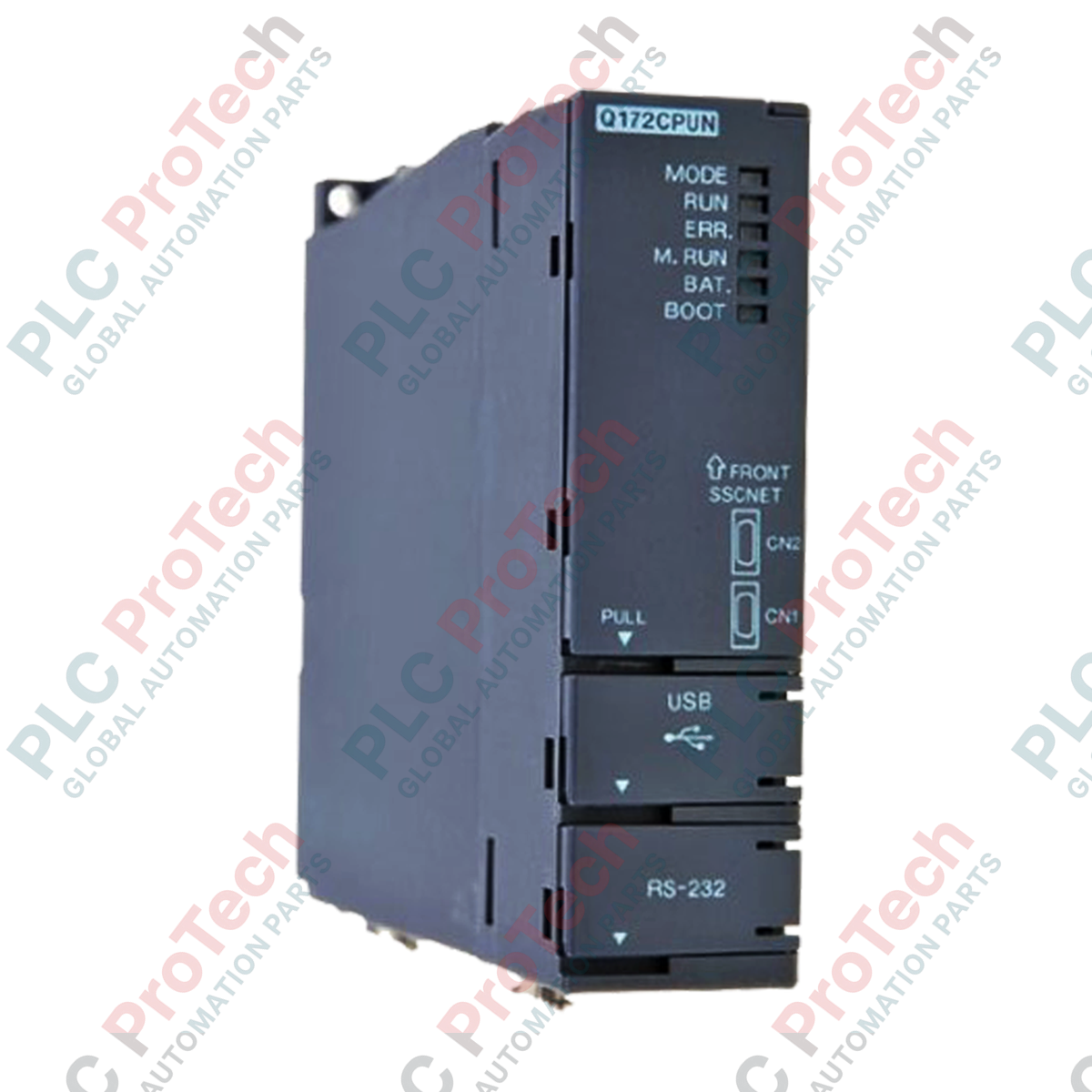
Direka bentuk untuk penyegerakan berbilang paksi berprestasi tinggi, Mitsubishi Electric Q173CPUN berfungsi sebagai CPU gerakan khusus dalam platform MELSEC Siri Q. Pengawal ini disepadukan dengan lancar pada unit asas yang sama bersama CPU PLC Siri Q standard, mengagihkan beban pemprosesan untuk mencapai penyegerakan tepat bagi jentera kompleks. Ia menyokong tugas kawalan gerakan lanjutan seperti konfigurasi paksi maya, pengendalian sesondol elektronik dan operasi gear segerak, sambil bergantung pada antara muka komunikasi gentian optik yang sangat tahan gangguan untuk berhubung dengan penguat servo luaran.
| Pengilang | Mitsubishi Electric |
| Model | Q173CPUN |
| Siri | Siri MELSEC Q |
| Jenis Modul | Modul CPU Pengawal Gerakan |
| Bilangan Paksi Kawalan | Sehingga 32 paksi |
| Titik I/O | 8192 titik |
| Kapasiti Program | 14k langkah |
| Rangkaian Gerakan | SSCNET III (Gentian Optik) |
| Suhu Operasi | 0 hingga 55 degC |
| Suhu Penyimpanan | -25 hingga 75 degC |
| Berat Penghantaran (Dikira) | 3.0 kg |
| Dimensi Bungkusan (Dikira) | 150 mm x 120 mm x 100 mm |
| Jenis Antara Muka | Penerangan & Fungsi Fizikal |
|---|---|
| Port SSCNET III | Soket penyambung gentian optik untuk komunikasi penyegerakan berkelajuan tinggi kepada penguat servo siri MR-J3/MR-J4. |
| Antara Muka Berbilang CPU | Penyambung satah belakang berkelajuan tinggi yang sepadan dengan peruntukan slot unit asas utama Siri MELSEC Q. |
| Sambungan USB | Port komunikasi persisian untuk pentauliahan, memuat turun konfigurasi dan diagnostik jejak masa nyata. |
Apabila berpindah daripada model bukan-N yang lebih lama seperti Q173CPU, sahkan susun atur rangkaian fizikal. Q173CPU standard menggunakan SSCNET berasaskan kabel kuprum, manakala Q173CPUN menggunakan SSCNET III gentian optik. Perubahan ini memerlukan kabel komunikasi ditukar kepada gentian optik dan memastikan pemacu servo yang sepadan menyokong protokol SSCNET III.
Pengiraan kuasa satah belakang adalah penting. Oleh sebab CPU pengawal gerakan menggunakan arus yang lebih tinggi daripada bekalan 5V satah belakang berbanding modul I/O digital standard, anda mesti menjumlahkan penggunaan arus CPU PLC, Q173CPUN dan semua modul hos untuk mengelakkan beban lampau pada bekalan kuasa sistem (contohnya, Q61P berbanding Q63P).
Kendalikan kabel gentian optik SSCNET III dengan amat berhati-hati semasa pendawaian panel. Mengekalkan jejari lenturan minimum 25 mm adalah penting; melebihi had ini boleh menyebabkan pengecilan isyarat optik, lalu mengakibatkan kegagalan komunikasi yang sukar dikesan atau pencetus kerosakan paksi secara berselang-seli (seperti kod 32 atau 10) semasa kitaran operasi berkelajuan tinggi.
| Product Image | Model Number / Title | Condition | Availability | Action |
|---|---|---|---|---|
|
Pengawal Gerakan CompactLogix 5380 Allen-Bradley 5069-L3100ERM | Original New | In Stock | View Details |
Penghantaran Ekspres Global
Pemulangan & Jaminan
Pesanan diproses dan dihantar Isnin-Jumaat (tidak termasuk cuti umum).
Untuk kelayakan penuh, yuran penyimpanan semula, dan butiran pemulangan antarabangsa, sila lihat rasmi kami Polisi Pemulangan & Bayaran Balik .
| Country of origin |
Amerika Syarikat
|

Laksanakan litar lampu XOR suis 3-SPST dalam LogixPro atau RSLogix 500 menggunakan bit geganti dalaman. Termasuk jadual kebenaran, persamaan Boolean dan pengesahan.

Integrasikan Allen-Bradley CompactLogix, Caterpillar ATS dan penjana ke dalam DeltaV DCS melalui Modbus RTU. Meliputi get laluan ProSoft MVI69-MCM dan Miille DIN266.

Arahan ONS tercetus tetapi gegelung OTE tidak pernah terkunci dalam Studio 5000 kerana one-shot hanya benar untuk satu imbasan. Gunakan OTL/OTU atau logik pengekalan sebaliknya.

Konfigurasikan pemacu servo Allen-Bradley Kinetix 5500 pada EtherNet/IP. Meliputi CIP Sync, pemasaan IEEE 1588 V2, pemilihan Stratix, topologi DLR dan HMI.

Penapis purata bergerak ialah pelicin tetingkap gelongsor yang paling kerap digunakan oleh jurutera instrumentasi dalam laluan analog DCS dan PLC. Begini cara tetingkap itu berfungsi, cara N dan masa...

Pada turbin gas Frame 5–9, GE Mark VI dan Mark VIe menjalankan kawalan sebagai perisian aplikasi blok fungsi. Artikel ini memetakan fungsi proses, perlindungan dan penjujukan—serta perkara yang...