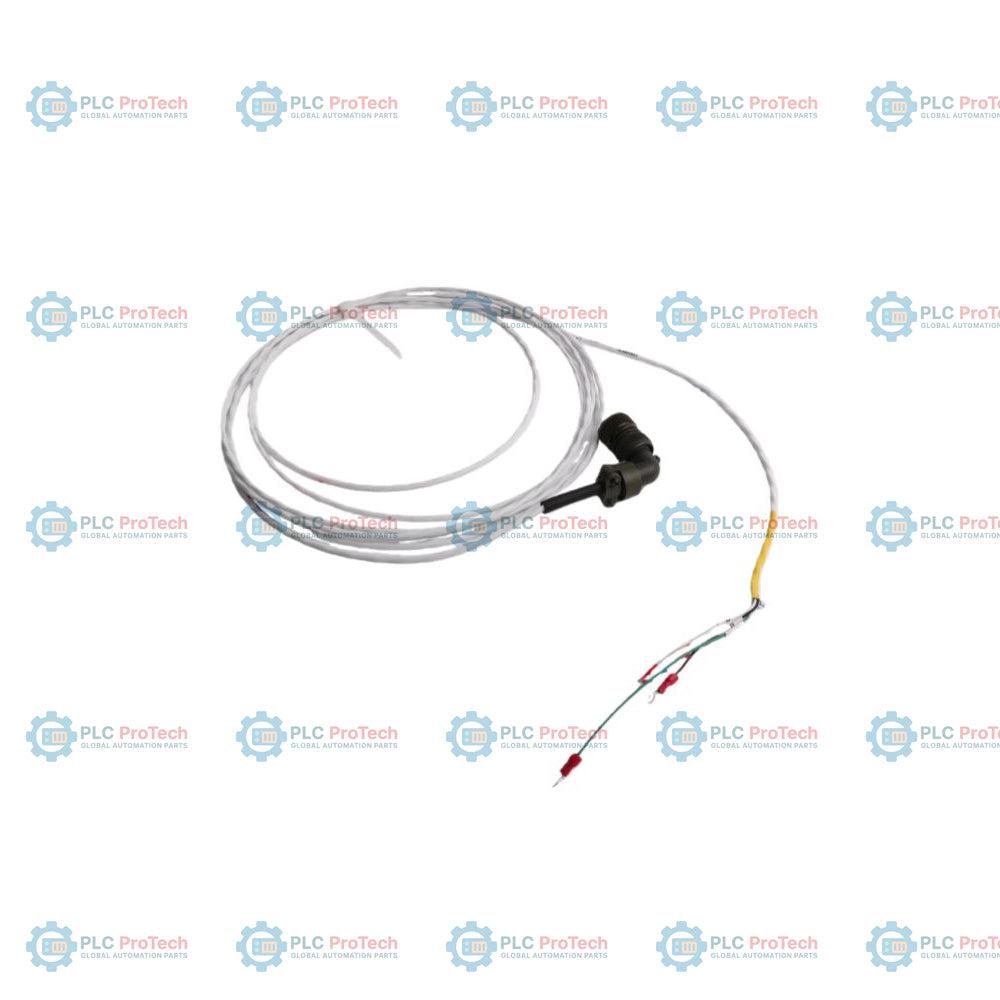
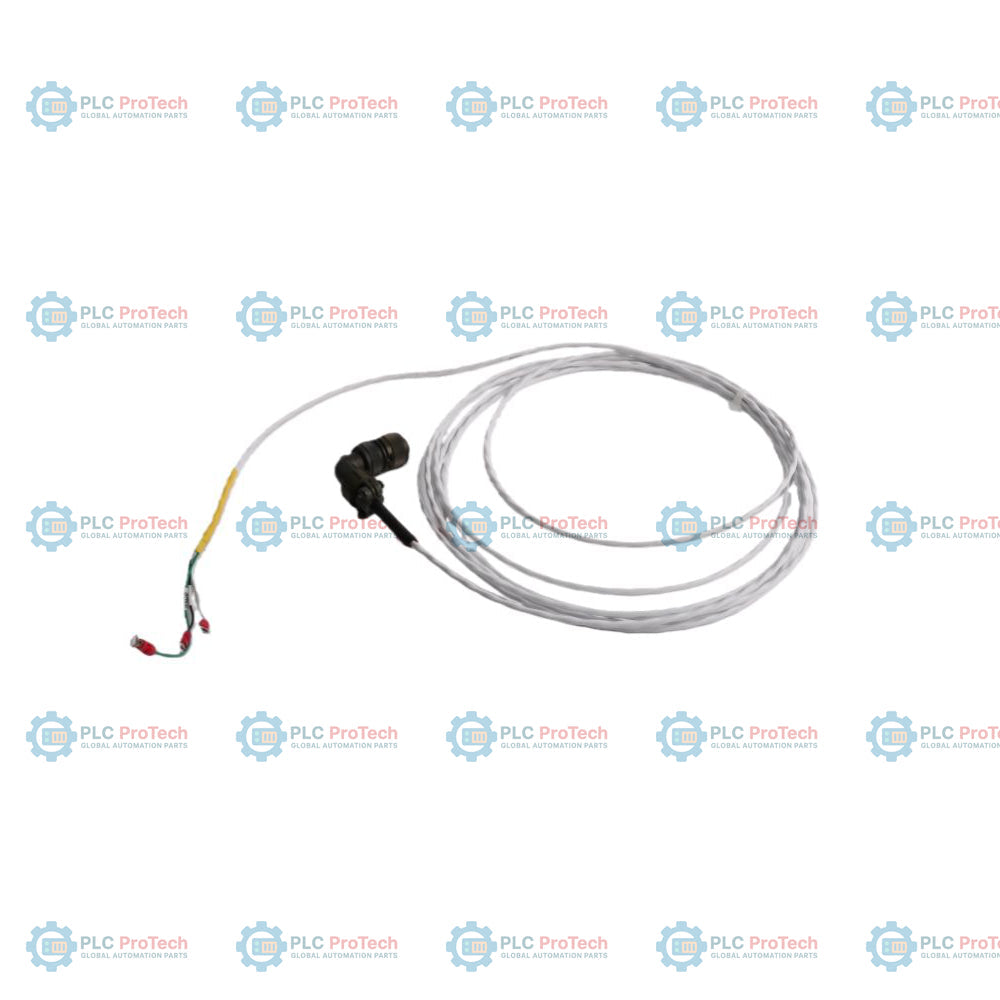
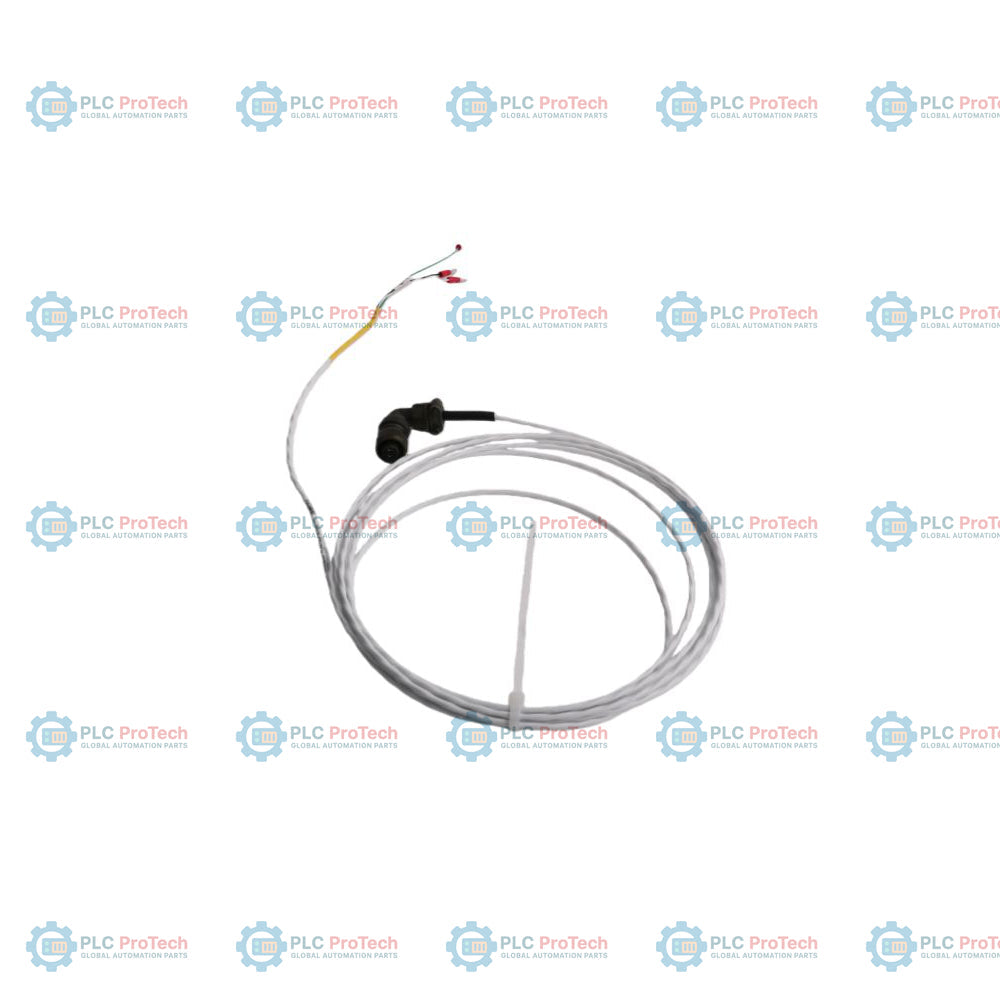
The Bently Nevada 89477-50 is a specialized, rugged industrial Velomitor piezo-velocity sensor engineered to measure total vibration velocity directly on the casings of rotating machinery. Unlike traditional moving-coil velocity transducers, this solid-state instrument utilizes internal piezoelectric crystals integrated with an onboarding charge amplifier circuit to process raw vibration accelerations and output an integrated, linear voltage velocity signal. The 89477-50 provides continuous casing vibration data across high-speed machinery drops, routing the dynamic signal path directly to specialized machinery protection monitors, programmable logic controllers (PLCs), or distributed control systems (DCSs). By integrating the processing electronics inside a hermetically sealed enclosure, it minimizes moving mechanical parts wear and eliminates the orientation limitations typical of mechanical design configurations. It features a specific design revision optimized for extreme-temperature deployment, standard mounting thread patterns, and a standard top-connector interface block to stream clean predictive maintenance variables directly to host processing racks.
Features
Solid-state piezoelectric integration converting raw acceleration to linear velocity outputs without moving parts.
High-temperature specialized design variant tailored for high-thermal machine casings and harsh plant fields.
Industrial standard field velocity transducer unit weight
Connections/Interfaces
Interface Component
Function Assignment
Top Connector Pins
Pinout paths for dynamic voltage signal output and circuit power input loop
Sensor Base Baseplate
Threaded mechanical interface for rigid attachment to machine casing
Installation Guidelines
Rigid Casing Mounting: Mount the sensor base directly onto a flat, unpainted, cleanly tapped surface on the machine bearing housing. Torque the sensor casing down to standard engineering layout criteria to maximize dynamic signal transfer accuracy.
Cable Routing Paths: Route the interconnecting sensor lead wire through standard flexible conduit blocks. Keep the signal cables isolated from parallel high-voltage motor electrical conduits to minimize electromagnetic noise coupling.
Connector Strain Relief: Support the mating top connector shell properly to prevent physical strain loop forces from wearing out the sensor internal pin contacts during prolonged high-vibration exposure.
Thermal Mitigation: Verify that the maximum operational surface temperature does not exceed the designated thermal rating boundary of this high-temperature configuration during sustained peak operation loops.
FAQ
How does a piezo-velocity sensor like the 89477-50 differ internally from a traditional velocity transducer?
The sensor contains a solid-state piezoelectric crystal and an internal electronics pack that integrates acceleration into velocity, whereas traditional transducers use moving coils that suffer from mechanical wear.
Can this specific Velomitor model be mounted horizontally or at an angle on a machine casing?
Yes. Because it utilizes solid-state piezoelectric components rather than a moving-coil array, it is omnidirectional and can be installed at any physical angle without loss of measurement accuracy.
What primary operational condition is the -50 suffix variant optimized to withstand?
The -50 suffix variant is specifically designed and configured to handle high-temperature industrial environments on machine casings where standard sensors might suffer degradation.
A field replacement guide for GE Fanuc IC200MDL650 covering revision-dependent negative logic, four common groups, 24 VDC thresholds, input filtering, carrier checks and commissioning records.
A field-focused IC697CPX935 replacement guide covering fast memory, firmware-dependent serial behavior, rack power, cooling, I/O architecture and backup records.
A field-focused IC693DSM324 replacement guide covering Series 90-30 host checks, FSSB servo-chain records, 5 V power budget, firmware limits, follower control and commissioning.