


Replacing a Beckhoff EL4032: Wiring and Output Checks
A field checklist for replacing a Beckhoff EL4032, covering the ±10 V load, terminal map, power contacts, EtherCAT state, and watchdog behavior.
Manufacturer: Lenze
Product No.: ESMD371X2SFA
Country of origin:Germany
Product Type: Variable frequency drives
Barcode: 85044095
Payment: T/T, Western Union
Weight: 450g
Dimensions: 15,20cm x 18,80cm x 5,50cm
Shipping port: Xiamen
Warranty: 12 months
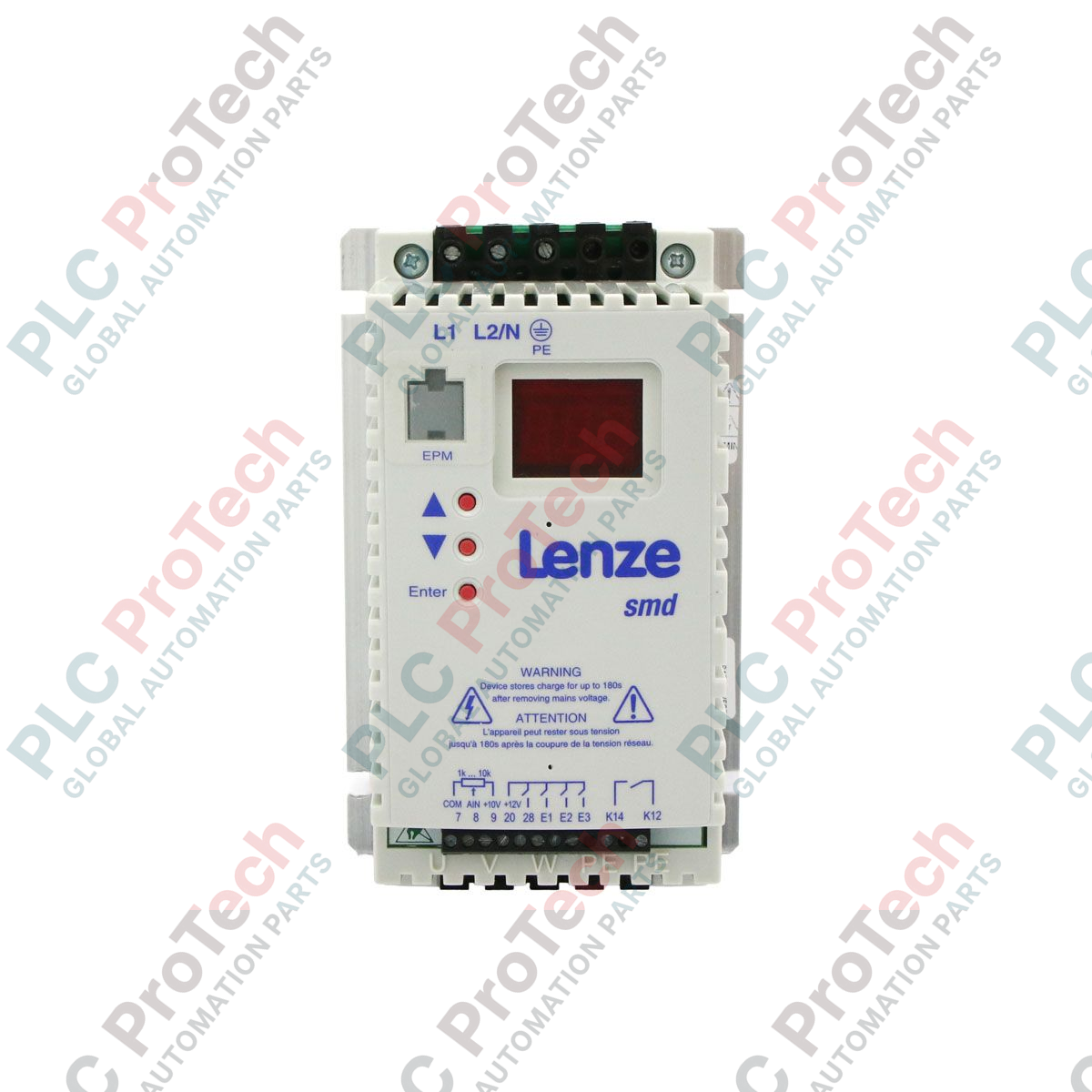
The Lenze ESMD371X2SFA (ESMD371X2SFA) is a compact and robust variable frequency drive engineered for high-precision motor speed control in demanding industrial environments. Designed for efficiency, this unit manages motor operations in applications such as material handling, pump systems, and conveyor lines, playing a critical role in mitigating mechanical wear and reducing unplanned downtime. By providing precise voltage and frequency regulation, it enables smooth start-up sequences and optimized energy consumption for small-scale induction motor setups in manufacturing and processing facilities.
The ESMD371X2SFA utilizes an advanced pulse-width modulation (PWM) architecture to ensure stable torque and speed control. Designed specifically for the SMD (Simple Motion Drive) range, the hardware prioritizes ease of integration and high functional reliability.
| Feature | Specification |
| Model | ESMD371X2SFA |
| Brand | Lenze |
| Origin | Germany |
| Weight | 0.45 kg |
| Dimensions | 15.20 x 18.80 x 5.50 cm |
| Input Voltage | 230 / 240 VAC |
| Input Current | 5.0 A |
| Output Power | 0.37 kW |
| Output Current | 2.4 A |
| Operating Temp | -10 to 50 Celsius |
Is the Lenze ESMD371X2SFA still available for purchase despite the 2017 phase-out date?
Yes, this model remains available through professional industrial surplus channels. We provide fully tested, reliable units that can integrate into your existing infrastructure without requiring system-wide upgrades.
Can this drive be used as a direct replacement for other SMD series models?
The ESMD371X2SFA is designed for specific power ratings (0.37 kW). You must ensure that the replacement unit matches the current and voltage requirements of your motor; replacing a drive with a different power rating may lead to VFD overload trips or motor damage.
What are the common causes of communication or startup faults with this drive?
Most faults are related to improper shielding of control cables or electromagnetic interference (EMI). Ensure that motor cables are shielded and separated from signal wires. Also, check that the input power matches the 230/240 VAC requirement, as voltage sags can trigger undervoltage faults.


Global Express Shipping
Returns & Warranty


Global Express Shipping
Returns & Warranty
Orders are processed and delivered Monday-Friday (excluding public holidays).
For full eligibility, restocking fees, and international return details, please view our official Refund & Return Policy .
| Color pattern |
White
Greyish White
|
| Country of origin |
Germany
|

A field checklist for replacing a Beckhoff EL4032, covering the ±10 V load, terminal map, power contacts, EtherCAT state, and watchdog behavior.

Before replacing a Yokogawa AAI835, verify the 4-in/4-out channel map, power-loss loop behavior, barrier type, output load, cable, and redundancy.

ABB PM891K01 article 3BSE053241R1 is the non-redundant AC 800M processor kit. Use this field checklist before replacement.

Replacement checks for ABB TP853 3BSE018126R1: identify the installed CI853, CI855, CI857, or CI861 interface, record wiring, and verify communication after installation.

Engineering checks for the Allen-Bradley 5069-L330ERMS2: controller capacity, separate RTB kits, local I/O limits, network-node limits, and motion-axis count.

Checks to record before replacing ABB 3HNE 00006-1 DSQC 351: controller generation, X3/X5/X20/X21 wiring, DeviceNet settings, INTERBUS mapping, and LED states.