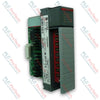
Description
Integrating high-density discrete output routing within space-constrained automation enclosures, the FX5-C32EYT/DSS provides robust digital output expansion for the MELSEC iQ-F PLC range. This compact extension connector type module supplies 32 transistor output points, facilitating rapid, high-frequency switching for external control components. Power is allocated directly via the system backplane with a nominal current consumption of 120 mA at 5 V DC and 200 mA at 24 V DC. The high-density connector interface simplifies panel wiring configurations and accelerates installation and maintenance times compared to traditional terminal blocks.
Features
- 32 discrete transistor output points for high-density system configuration.
- Space-saving extension connector interface for efficient panel integration.
- Optimized internal power management with low current consumption from the PLC backplane.
- Direct integration with the MELSEC iQ-F Series controller ecosystem.
- Engineered for reliable operation in heavy industrial electrical environments.
Applications
- High-speed packaging and sorting machinery.
- Multi-axis pick-and-place assembly stations.
- Semiconductor fabrication and handling systems.
- Automated warehousing and material handling conveyor systems.
Technical Specifications
| Manufacturer |
Mitsubishi Electric |
| Part Number/Model |
FX5-C32EYT/DSS |
| Series |
MELSEC iQ-F Series |
| Module Type |
Extension Connector Type Output Module |
| Total Output Points |
32 points |
| Output Type |
Transistor |
| Connection Type |
Connector |
| 5 V DC Power Supply Consumption |
120 mA |
| 24 V DC Power Supply Consumption |
200 mA |
Installation Guidelines
To ensure safe and reliable operation, always disconnect all external power supplies before mounting or connecting the expansion module. Mount the module securely onto a standard 35 mm DIN rail. When configuring the connection, verify that the high-density multi-pin connector plug is fully seated and locked to prevent intermittent signal losses. Maintain standard ventilation clearances of at least 50 mm above and below the module to prevent heat accumulation, and isolate low-voltage output signaling cables from high-power line cables to minimize electromagnetic interference.