


Troubleshooting Beckhoff EPP2008-0001 Output Faults
A field checklist for EPP2008-0001 current limits, supply voltage, channel LEDs, connector coding and load-related output faults.
Manufacturer: B&R
Product No.: X20CP3586
Country of origin:Austria
Product Type: Controller
Payment: T/T, Western Union
Weight: 470g
Shipping port: Xiamen
Warranty: 12 months
The X20CP3586 (X20CP3586) stands as a powerhouse within the B&R X20 System, engineered to handle the most demanding computational tasks in modern industrial environments. From high-speed power plant control to precision synchronization in automotive assembly, this controller excels in multi-axis motion control and complex data processing. By integrating a fanless design with robust redundancy capabilities, the X20CP3586 significantly mitigates the risk of system-wide failure, ensuring that critical infrastructure—such as oil refineries and large-scale mining operations—maintains peak operational continuity even under high-stress conditions.
The X20CP3586 is more than a central processing unit; it is a communication hub featuring an array of integrated interfaces including POWERLINK (V1/V2), Ethernet, and X2X Link. This multi-protocol support allows for seamless vertical integration from the sensor level to the ERP layer.
A standout feature is its Controller Redundancy support, allowing two CPUs to operate in a high-availability configuration. In this setup, should the primary controller encounter a fault, the secondary unit takes over in milliseconds without disrupting the process. Furthermore, its Storage Health Data Support provides predictive maintenance insights, monitoring the wear levels of the CompactFlash media to prevent unexpected data loss and improve overall system MTBF (Mean Time Between Failures).
| Attribute | Specification |
| Model | X20CP3586 |
| Brand | B&R (Bernecker + Rainer) |
| Interface Array | 1x RS232, 1x Ethernet, 1x POWERLINK, 2x USB, 1x X2X Link |
| Cooling Method | Fanless Passive Cooling |
| Input Voltage | 24 VDC (-15% / +20%) |
| Max Input Current | 1.5 A |
| Power Consumption | 9.7 W (Base) |
| Controller Redundancy | Yes |
| Storage Media | CompactFlash (with LED Status) |
| Operating Temp | Software-monitored register |
| Unit Weight | 0.470 kg |
| Shipping Weight | 2.0 kg |
How is the system status monitored on the X20CP3586?
The controller features a comprehensive LED status indicator array for CPU function, Ethernet, POWERLINK, CompactFlash access, and battery health. Real-time temperature diagnostics are also available via internal software registers.
Does this controller support motion control applications?
Yes, the X20CP3586 provides full ACOPOS support and Visual Components support, making it ideal for synchronized multi-axis motion control and sophisticated HMI (Human-Machine Interface) visualization.
What are the power requirements for the X2X Link supply?
While the base CPU consumes approximately 9.7 W, the X2X Link power supply adds a nominal load of 1.42 W. The system is designed for a standard 24 VDC industrial power source.
Thermal Management: Despite its fanless design, ensure a minimum clearance of 20 mm above and below the module to facilitate natural convection. Monitor the software temperature register during the first 48 hours of full-load commissioning to ensure ambient cabinet temperatures do not exceed the module's rating.
Power Supply Integrity: Given the Max 1.5 A input current, use a dedicated, stabilized 24 VDC power source. Ensure that the permissible contact load of 10 A is not exceeded when daisy-chaining power to adjacent X20 I/O modules.
X2X Link Termination: For distributed I/O topologies, always verify that the X2X Link is properly terminated to prevent signal reflections, especially in environments with high electromagnetic interference (EMI).
The X20CP3586 is purpose-built for longevity. Its fanless architecture eliminates a common point of mechanical failure, making it suitable for high-vibration and dust-prone environments. With ACOPOS integration and deterministic POWERLINK communication, it offers sub-millisecond response times essential for high-speed packaging and CNC applications. The inclusion of a software-monitored battery and storage health data ensures that the controller is not just a reactive component, but a proactive element in your facility's reliability strategy.

Global Express Shipping
Returns & Warranty

| Product Image | Model Number / Title | Condition | Availability | Action |
|---|---|---|---|---|
|
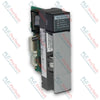
Allen-Bradley 1747-L514 SLC 500 Controller Processor | Original New | In Stock | View Details |

|
Allen-Bradley 1747-L40B SLC 500 Fixed Controller Processor | Original New | In Stock | View Details |
|
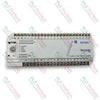
Allen-Bradley 1761-L32BWB MicroLogix 1000 Controller Processor | Original New | In Stock | View Details |
Global Express Shipping
Returns & Warranty
Orders are processed and delivered Monday-Friday (excluding public holidays).
For full eligibility, restocking fees, and international return details, please view our official Refund & Return Policy .
| Color pattern |
Greyish White
|
| Country of origin |
Austria
|

A field checklist for EPP2008-0001 current limits, supply voltage, channel LEDs, connector coding and load-related output faults.

Before moving a TwinCAT 3 license with a Beckhoff C9900-L100, verify the TwinCAT build, XML device description, exact order code and cabinet limits.

A field checklist for replacing a Beckhoff EL4032, covering the ±10 V load, terminal map, power contacts, EtherCAT state, and watchdog behavior.

Before replacing a Yokogawa AAI835, verify the 4-in/4-out channel map, power-loss loop behavior, barrier type, output load, cable, and redundancy.

ABB PM891K01 article 3BSE053241R1 is the non-redundant AC 800M processor kit. Use this field checklist before replacement.

Replacement checks for ABB TP853 3BSE018126R1: identify the installed CI853, CI855, CI857, or CI861 interface, record wiring, and verify communication after installation.