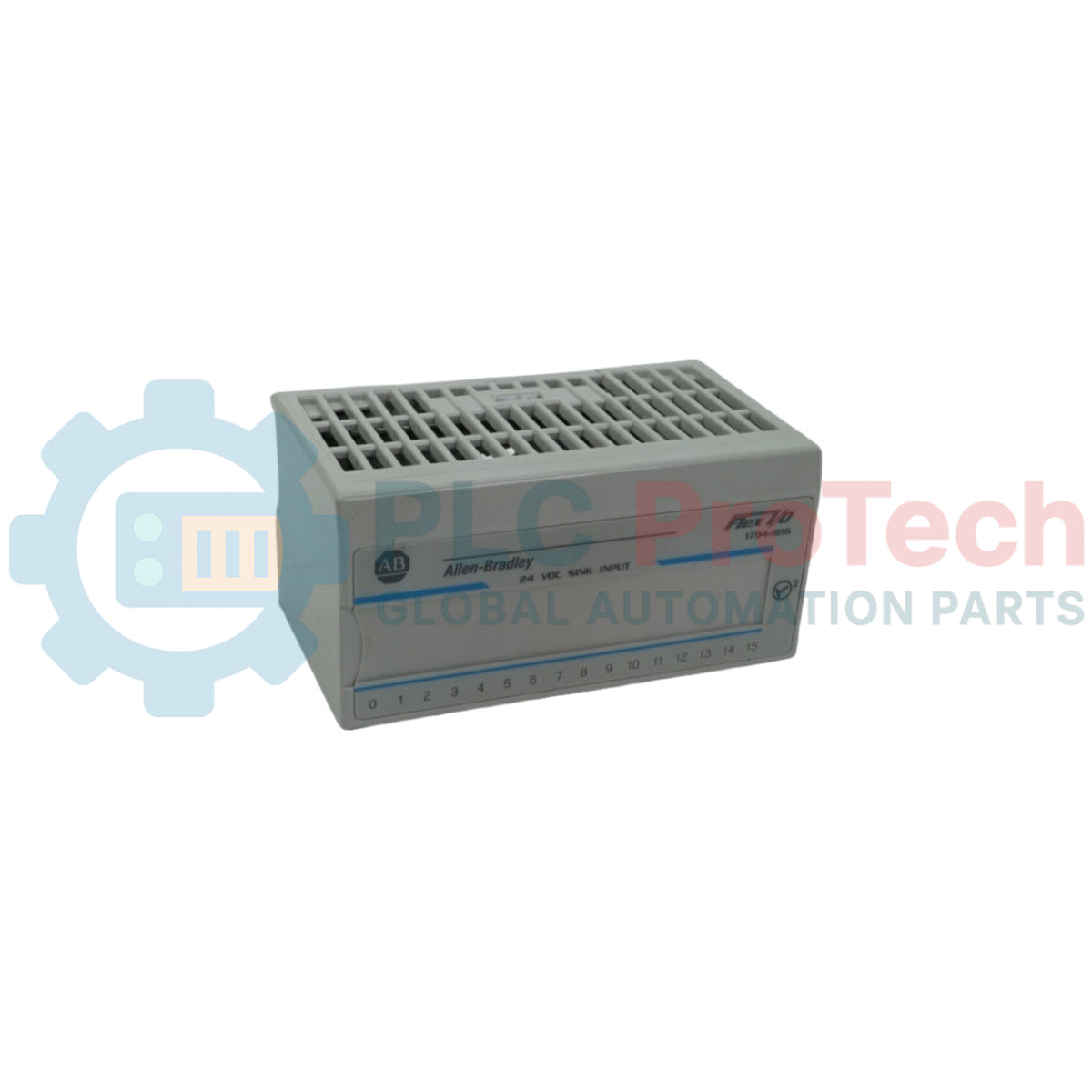
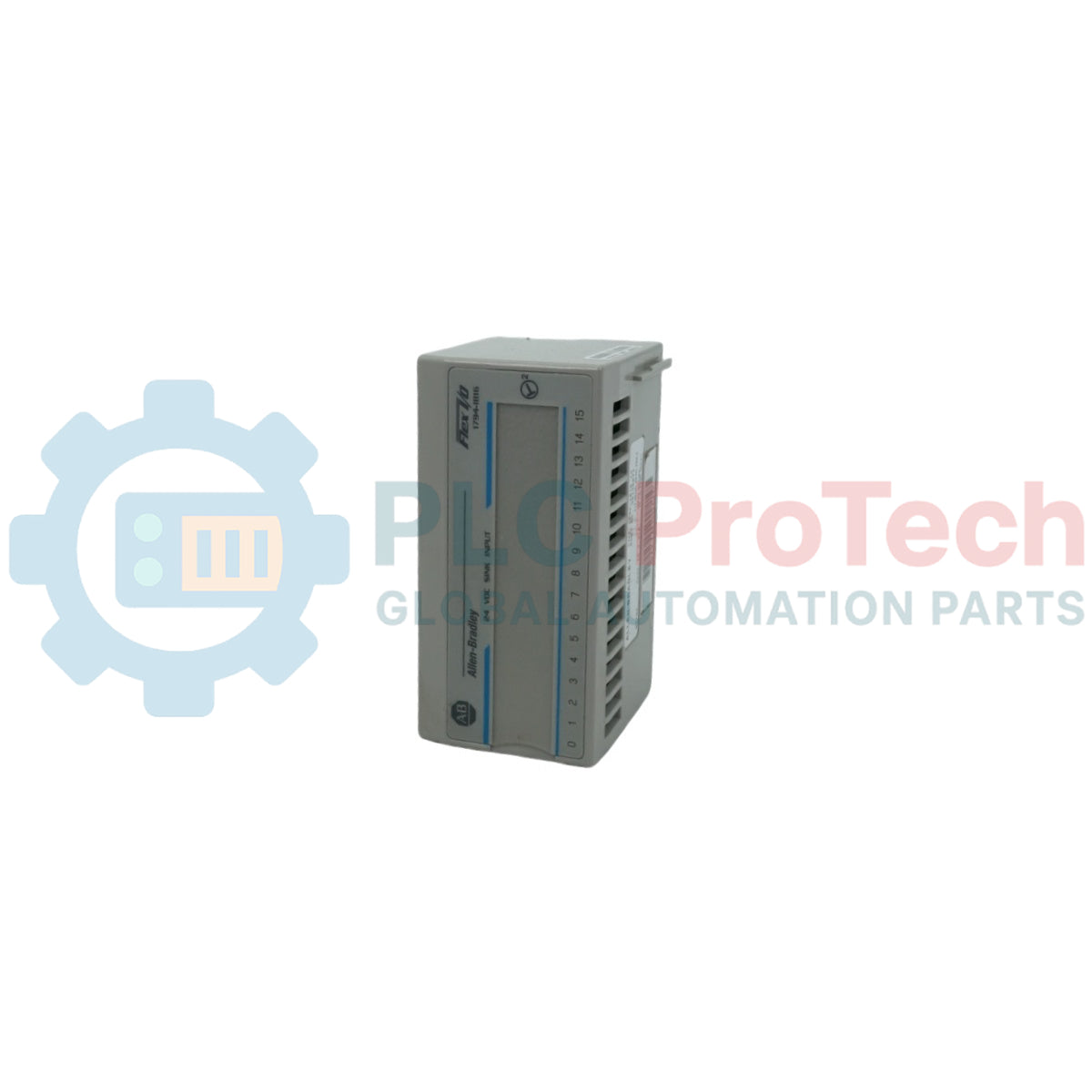
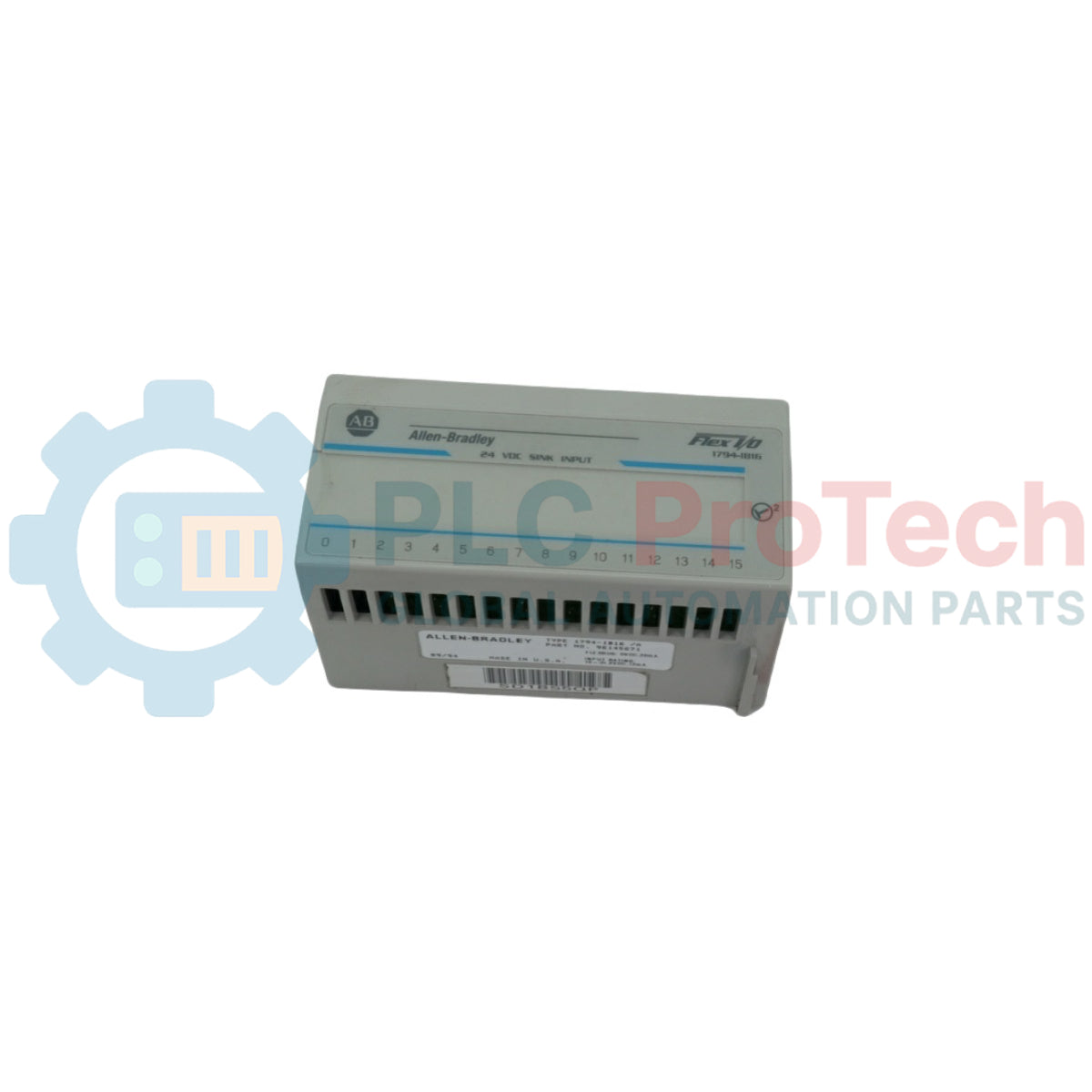
O 1794-IB16 é um componente de hardware de entrada discreta de alta densidade projetado para o sistema terminal de rede distribuída FLEX I/O. Este módulo funciona como um processador de status binário de 24V DC, traduzindo condições elétricas brutas de sensores físicos em bits de dados lógicos utilizados por um controlador lógico mestre. Operando em configuração de corrente sinking, os circuitos internos direcionam eletricidade de elementos de campo sourcing para um nó centralizado de retorno, gerenciando a classificação confiável de estados em redes automatizadas de plantas.
Equipado com dezesseis canais de entrada não isolados, o dispositivo aumenta a densidade de instalação em espaços pequenos de painéis de controle, reduzindo a pegada total de hardware. O 1794-IB16 gerencia o roteamento de dados de sinal em redes amplas, conectando-se aos processadores principais via adaptadores de rede FLEX I/O apropriados sobre os barramentos de sistema EtherNet/IP, ControlNet ou DeviceNet. O módulo é montado diretamente em bases de terminais pré-fiação, permitindo conexão imediata ao barramento e implantação rápida em sistemas de embalagem, instalações de triagem de alta velocidade, automação de estações de bombeamento e loops de máquinas de montagem.
Características
Dezesseis canais de entrada discretos do tipo sinking, permitindo agregação densa de sensores de campo.
Envelope operacional nominal de 24V DC compatível com interruptores de proximidade industriais e dispositivos de limite.
Suporte para Remoção e Inserção Sob Energia (RIUP), permitindo troca a quente durante estados ativos do barramento.
Indicadores individuais de diodo emissor de luz no painel frontal exibindo estados lógicos em tempo real por ponto.
Restrições de tempo configuráveis de filtro digital para filtrar o rebote de contato indutivo externo.
Aplicações
Rastreamento da matriz de sensores de proximidade e loops de posicionamento de cilindro pneumático.
Estações de botões de painel do operador da fábrica e entradas de matriz de interruptores seletor.
Detecção de atolamento na esteira transportadora, interruptores de alinhamento e sensores de contagem.
Registro de intertravamentos da porta do invólucro de segurança e interruptor mecânico de limite físico.
Especificações Técnicas
Parâmetro
Especificação
Fabricante
Rockwell Automation / Allen-Bradley
Marca
FLEX I/O
Número da Peça
1794-IB16
Tipo de Módulo
Módulo de Entrada Digital por Sinking
Número de Entradas
16 Canais, Não Isolados
Tensão Nominal de Entrada
24V CC
Faixa de Tensão em Estado Ligado
10V CC a 31,2V CC
Faixa de Corrente em Estado Ligado
2,0 mA mínimo a 12,0 mA máximo
Corrente Nominal em Estado Ligado
8,0 mA a 24V CC
Tensão Máxima em Estado Desligado
5,0V CC
Corrente Máxima em Estado Desligado
1,5 mA
Impedância Nominal de Entrada
4,6 quilohms
Consumo de Corrente FlexBus
30 mA a 5V CC
Tensão de Isolamento Contínuo
50V (Tipo de Isolamento Básico)
Tempo de Filtro de Entrada (Ligado para Desligado)
Programável (0,25 ms nominal a 8,0 ms máximo)
Temperatura de Operação
0 a 55 °C
Temperatura de Armazenamento
-40 a 85 °C
Umidade Relativa
5% a 95% sem condensação
País de Origem
EUA
Peso
0,09 kg
Dimensões
46 mm x 94 mm x 53 mm
Conexões/Interfaces
Nó do Bloco de Conexão Terminal
Alocação de Função / Caminho de Sinal
Terminal 0 a Terminal 15
Canais de Entrada Discretos por Sinking de 0 a 15
+V (Nó de Fonte Externa)
Caminho de Distribuição de Energia Operacional do Sensor de Fonte 24V CC
COM (Retorno da Fonte Externa)
Trilho de Referência Comum de Terra do Sistema de Corrente Contínua
Diretrizes de Instalação
Instalação em Trilho DIN
Engate os ganchos superiores de retenção da carcaça do módulo traseiro na aba superior da linha padrão de trilho DIN de 35 mm. Empurre para baixo e gire a parte inferior do invólucro para dentro até que o conjunto de trava de aço embutido se fixe ao redor da aba inferior do trilho de guia.
Assentamento da Base Terminal
Alinhe as guias físicas integradas localizadas na face inferior do módulo operacional com as ranhuras de encaixe na unidade base terminal pré-instalada. Deslize o hardware firmemente na matriz do soquete de interface até que as travas laterais duplas se abram para fora, travando-o no lugar.
Fiação de Configuração de Aterramento por Sinking
Conecte os componentes de fonte externa diretamente aos pontos de entrada de 0 a 15. Faça o trajeto da perna principal de distribuição positiva de 24V CC através do nível de potência correspondente do bloco base terminal para manter perfis de potencial padrão comuns em todos os nós sensores conectados.
Blindagem de Cabo do Gabinete
Mantenha as linhas de sinal sensorial de baixa tensão separadas dos cabos de motor de corrente alternada, relés de potência de controle ativo e campos de acionamento indutivo dentro do mesmo duto elétrico para eliminar a distorção eletromagnética do sinal no ar.
Perguntas Frequentes
O que a configuração de circuito sinking implica para os sensores de campo?
A configuração de entrada sinking requer que todos os dispositivos conectados operem como componentes de fornecimento de corrente, alimentando tensão nos pontos de entrada.
Os canais de entrada individuais nesta unidade são isolados entre si?
Não, os dezesseis pontos de entrada distintos não são isolados e referenciam uma linha comum de retorno de sinal compartilhada dentro do módulo eletrônico.
Um engenheiro de automação pode trocar este dispositivo com segurança enquanto a energia está ligada?
Sim, o hardware inclui capacidades de remoção e inserção sob tensão, permitindo substituição ao vivo sem desabilitar a matriz mais ampla do adaptador de barramento.
Quais variações de base de terminal acomodam este bloco de entrada específico?
O módulo é emparelhado com blocos de base de terminal multinível, como os modelos 1794-TB2, 1794-TB3, 1794-TB3S, 1794-TB3K ou 1794-TBN.
Como um operador pode estabilizar ruídos de alta frequência em circuitos de interruptores mecânicos?
As constantes de resposta do filtro de entrada digital podem ser modificadas no software de programação de engenharia para limpar sinais de entrada confusos.
Quais parâmetros registram uma condição confiável de estado desligado?
Um canal é considerado desligado quando a tensão cai abaixo de 5,0V DC ou os valores de corrente do circuito de entrada ficam abaixo de 1,5 mA.
Este dispositivo requer alimentação externa independente para processar as entradas?
Sim, um circuito elétrico externo nominal de 24V DC deve ser conectado diretamente à infraestrutura da base do terminal para alimentar a eletrônica de detecção do lado do campo.
Qual função os indicadores amarelos na face superior desempenham?
Cada LED acende quando seu ponto de entrada correspondente detecta um parâmetro de tensão ativo no estado ligado.
Este modelo específico pode aceitar entradas de tensão em corrente alternada?
Não, este módulo processa exclusivamente parâmetros de corrente contínua de baixa tensão em uma faixa de 10V DC a 31,2V DC.
Como este hardware transmite blocos discretos de dados para um PLC central?
A unidade transmite bits de dados do canal através do backplane local FlexBus para um adaptador de rede, que mapeia os dados em registradores de rede.
Entrega Padrão: 4-6 dias úteis via DHL, FedEx e UPS.
Despacho Expresso: Envio no mesmo dia para pedidos em estoque realizados antes das 14:00 (GMT+8).
Cobertura Mundial: Atendemos mais de 150 países, incluindo entrega rápida para Arábia Saudita e Emirados Árabes Unidos.
Devoluções e Garantia
Garantia de 30 Dias: Aceitamos devoluções de produtos em estoque na embalagem original, lacrada de fábrica.
Garantia de 12 Meses: Cada componente industrial é coberto pela nossa garantia técnica profissional.
Os pedidos são processados e entregues de segunda a sexta-feira (exceto feriados).
Para elegibilidade completa, taxas de reposição e detalhes de devolução internacional, por favor, consulte nosso site oficial
Política de Reembolso e Devolução
.
Um guia prático para substituir estações operadoras Bailey Symphony antigas que funcionam com OpenVMS Alpha. Ele compara emulação Alpha, migração OpenVMS x86, replatforming OPC e modernização ABB em...
Os dados de manutenção conectam ordens de serviço, sinais de sensores, histórico de ativos, custos e conhecimento dos técnicos. Quando usados corretamente, melhoram o planejamento, a confiabilidade,...
Este artigo explica como os atuadores elétricos integrados, como a série e-Actuator da SMC, estão transformando o controle de movimento industrial ao substituir os sistemas pneumáticos e hidráulicos...
Este artigo explica como os sistemas PLC realizam operações matemáticas básicas, como adição, subtração, multiplicação, divisão, módulo e exponenciação dentro da automação industrial. Ele mostra como...
O artigo explica várias funções avançadas de lógica Booleana usadas na programação de CLPs além das operações básicas AND, OR e NOT. Ele aborda como ferramentas como tabelas verdade, multiplexadores,...
A lógica booleana é a base de todo programa PLC. Desde controles simples de máquinas até sistemas complexos de automação industrial, as portas lógicas determinam como os controladores respondem às...
Escolher uma opção resulta em uma atualização completa da página.