Descrição
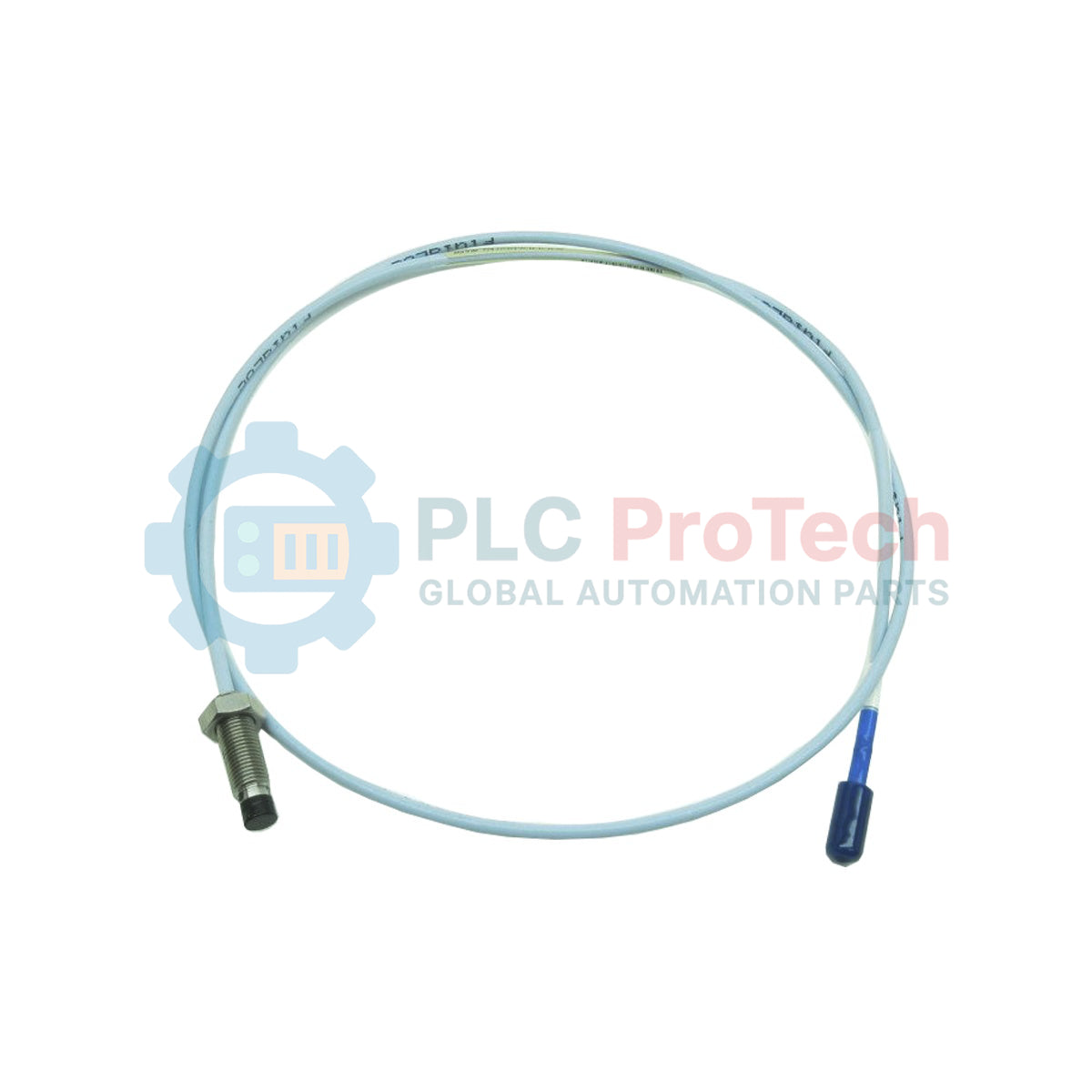
Projetada para monitoramento de alta confiabilidade da vibração e da posição do eixo, a Bently Nevada 330101-00-52-10-02-CN funciona como um sensor industrial de deslocamento sem contato no Sistema de Transdutor de Proximidade 3300 XL de 8 mm. Esta sonda fornece medições contínuas e precisas do deslocamento do eixo, da vibração radial e da posição do empuxo axial em máquinas rotativas críticas, oferecendo excepcional resistência à entrada de fluidos e ao desgaste mecânico.
Principais recursos
-
Conformidade com a API 670: Atende integralmente aos padrões do setor para sistemas de proteção e diagnóstico de máquinas.
-
Conector ClickLoc: Possui um conector coaxial miniatura ClickLoc, resistente à umidade e banhado a ouro, para um acoplamento mecânico seguro.
-
Carcaça resistente à corrosão: A carcaça padrão da sonda em aço inoxidável protege os conjuntos internos do núcleo contra ambientes agressivos.
-
Estabilidade térmica otimizada: Integridade do sinal mantida em uma ampla faixa de variações de temperatura típicas de salas de turbinas industriais pesadas.
Aplicações
- Análise da vibração do eixo de turbinas a vapor e a gás.
- Medições da posição axial e radial em compressores centrífugos.
- Monitoramento do eixo de geradores de hidroturbinas.
- Detecção do deslocamento do eixo de caixas de engrenagens industriais e bombas de alta pressão.
Especificações técnicas
| Fabricante |
Bently Nevada |
| Número do modelo |
330101-00-52-10-02-CN |
| Compatibilidade do sistema |
|
Opção de comprimento sem rosca |
0,0 pol. |
| Opção de comprimento total da carcaça |
5,2 pol. (132 mm) |
| Opção de comprimento total |
1,0 metro (3,3 pés) |
| Tipo de conector e cabo |
Conector coaxial miniatura ClickLoc, cabo padrão |
| Opção de aprovação da agência |
CN (aprovações específicas do país) |
| Peso físico |
0.323 kg |
| Peso de envio |
1.500 kg |
| País de origem |
Estados Unidos (EUA) |
Insights de engenharia empírica
Modelos alternativos e compatibilidade
Esta sonda de 1,0 metro exige emparelhamento rigoroso com componentes Bently Nevada compatíveis. Para formar um sistema funcional de 5,0 metros, ela deve ser emparelhada com um cabo de extensão de 4,0 metros e um sensor Proximitor de 5,0 metros. Para um sistema de 9,0 metros, utilize um cabo de extensão de 8,0 metros emparelhado com um Proximitor de 9,0 metros. Misturar comprimentos de sistema (por exemplo, usar um cabo de extensão de 9,0 metros com um Proximitor de 5,0 metros) causará desvios graves de calibração e dados imprecisos de deslocamento.
Armadilhas de aplicação e notas de engenharia
O comprimento total do corpo de 5,2 polegadas foi projetado para instalações em poços profundos. Ao montar esta unidade, calcule a expansão térmica do alojamento sob carga operacional. Rigidez inadequada do suporte ou a falta de consideração pelo crescimento térmico do alojamento podem causar contato físico entre a ponta de 8 mm e o alvo do eixo rotativo, levando à falha imediata do sensor. Certifique-se de que os cabos de sinal sejam encaminhados por eletrodutos aterrados dedicados, separados das linhas de CA de alta tensão, para evitar a injeção de ruído de EMI.
Dicas de comissionamento e calibração
Durante o comissionamento, calibre a folga física da sonda usando um multímetro digital para medir a tensão CC de saída no terminal do sensor Proximitor. Uma folga física de 1,0 mm (40 mils) corresponde a uma tensão de polarização padrão do sensor de -10.0 VCC quando calibrado com aço AISI 4140. Antes de travar a rosca de montagem, verifique se o desvio físico e o desvio elétrico não excedem as diretrizes da API 670 (normalmente 0,25 mil / 6,3 micrômetros combinados).
Diretrizes de instalação
AVISO CRÍTICO: SEGURANÇA EM PRIMEIRO LUGAR
Desenergize o maquinário monitorado e bloqueie/etiquete todos os sistemas de alimentação antes de ajustar a sonda. Certifique-se de que o eixo físico do rotor esteja imóvel antes de definir as folgas da sonda. Um ajuste físico inadequado pode causar impacto mecânico, levando a danos físicos tanto ao eixo da turbina quanto ao conjunto da sonda.
1
Limpe a área-alvo: Verifique se a área-alvo da sonda no eixo está limpa, sem depósitos de carbono e corresponde à liga de calibração (normalmente AISI 4140).
2
Montagem com rosca: Rosqueie cuidadosamente a sonda no suporte ou alojamento, tomando cuidado para não torcer nem tensionar o cabo coaxial integrado de 1,0 metro durante a rotação.
3
Estabeleça a folga de polarização: Conecte um multímetro digital à saída de monitoramento do Proximitor. Ajuste a profundidade da sonda até que o sinal indique -10.0 VCC (centro da faixa linear) e, em seguida, aperte as contraporcas conforme as especificações de torque-alvo.
4
Conexões seguras: Conecte a interface coaxial miniatura ClickLoc. Certifique-se de que a conexão esteja totalmente travada e isole-a usando fita de silicone autofusão ou protetores de conectores se houver névoa de óleo.