Descrição
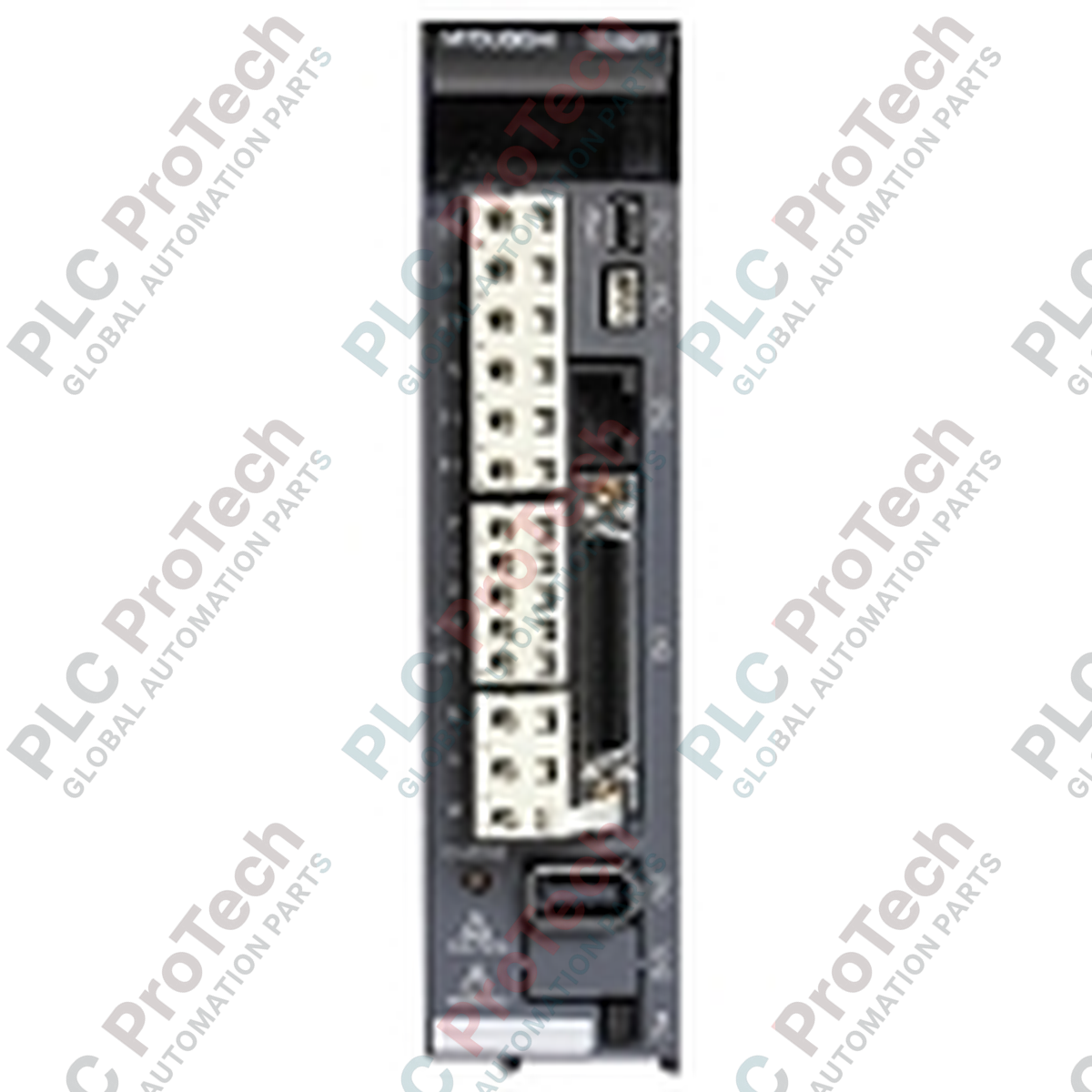
Para atender a requisitos complexos de controle de movimento multieixos, o Mitsubishi Electric MR-J3-500B coordena a sincronização contínua de trajetórias e o posicionamento preciso por meio de uma rede de fibra óptica de alta velocidade. Como parte da família de produtos MELSERVO J3, este amplificador servo de 5,0 kW integra-se diretamente aos controladores de movimento por meio do barramento de comunicação SSCNET III, reduzindo a vulnerabilidade a ruídos elétricos graças ao isolamento óptico. A unidade processa o feedback de encoders absolutos incrementais de alta resolução de 18 bits, permitindo manter a consistência precisa da velocidade e executar algoritmos de supressão de vibrações em diferentes perfis de carga dinâmica.
Principais recursos técnicos
-
Interface SSCNET III: Barramento de comunicação por fibra óptica de alta velocidade, operando a 50 Mbps com tempo de ciclo de 0,44 ms, evitando interferências eletromagnéticas externas (EMI).
-
Controle avançado de supressão de vibrações: Suprime oscilações residuais ao final do posicionamento, minimizando a fadiga mecânica em sistemas de braços longos ou de alta inércia.
-
Compatibilidade com feedback de alta resolução: Conecta-se perfeitamente a encoders rotativos de 18 bits (262.144 pulsos/revolução), proporcionando excepcional resolução de posicionamento e estabilidade do loop de velocidade.
-
Autossintonia adaptativa em tempo real: Calcula automaticamente os parâmetros de ganho ideais com base no cálculo contínuo da relação de inércia durante as operações ativas da máquina.
-
Dimensões térmicas compactas: O sistema interno de dutos de resfriamento altamente eficiente e o conjunto de ventilador interno direcionam o calor para longe dos módulos adjacentes do painel de controle.
Aplicações industriais
- Usinagem CNC multieixos, sistemas de pórtico e máquinas de roteamento.
- Máquinas de embalagem de alta velocidade, encaixotadoras rotativas e máquinas verticais de formar, encher e selar.
- Sistemas de registro de impressão de precisão e enrolamento com controle de tensão.
- Manuseio automatizado de materiais, robôs de seleção e colocação para cargas pesadas e posicionadores de soldagem automotiva.
Especificações técnicas
| Parâmetro |
Valor da especificação |
| Fabricante |
Mitsubishi Electric |
| Número do modelo |
MR-J3-500B |
| Série do produto |
Série MELSERVO-J3 (tipo de rede SSCNET III) |
| Potência de saída nominal |
5,0 kW (5000 W) |
| Entrada de alimentação do circuito principal |
Trifásica de 200 a 230 VCA, 50/60 Hz |
| Entrada de alimentação do circuito de controle |
Monofásica de 200 a 230 VCA, 50/60 Hz |
| Sistema de controle |
Controle PWM de onda senoidal, sistema de controle de corrente |
| Interface de comunicação |
SSCNET III (barramento serial de fibra óptica de alta velocidade) |
| Resposta de frequência de velocidade |
2100 Hz |
| Temperatura ambiente de operação |
0 a 55 °C (sem congelamento) |
| Método de resfriamento |
Ventilador de resfriamento forçado (integrado) |
| País de origem |
Japão |
| Peso para envio (calculado) |
6,0 kg (aprox. 13,2 lb) |
| Dimensões da embalagem (calculadas) |
280 mm x 150 mm x 220 mm |
Conexões e interfaces
| Terminal / conector |
Função / atribuição do circuito |
| CN1A |
Conector de fibra óptica SSCNET III (conexão com o controlador) |
| CN1B |
Conector de fibra óptica SSCNET III (conexão com o acionamento seguinte) |
| CN2 |
Interface de realimentação do encoder do servomotor (realimentação absoluta/incremental de 18 bits) |
| CN3 |
Interface de E/S externa (entradas de chaves de limite, parada de emergência e sensor de ponto próximo) |
| L1 / L2 / L3 |
Terminais da alimentação principal (entrada trifásica de 200–230 VCA) |
| L11 / L21 |
Terminais de alimentação do circuito de controle (entrada monofásica de 200–230 VCA) |
| U / V / W |
Terminais de saída do servomotor (fases de saída para os enrolamentos do motor) |
| P / C / D |
Pontos de conexão da opção de resistor de frenagem regenerativa externo |
Informações práticas de engenharia
Modelos alternativos e compatibilidade
O modelo de rede direta MR-J3-500B opera com protocolos SSCNET III e não é diretamente compatível com controladores SSCNET II nem com redes analógicas/de trem de pulsos padrão (acionamentos do tipo A). Ao modernizar uma máquina antiga que contenha um acionamento MR-J2S-500B, é necessário substituir os cabos de encoder padrão e atualizar o controlador para um Motion Controller da série Q compatível (como Q172HCPU ou QD75MH4) ou um módulo de posicionamento da série L, para oferecer suporte à interface óptica.
Armadilhas de aplicação e notas de engenharia
Com potência nominal de 5,0 kW, este acionamento gera perdas térmicas contínuas de até 300 W durante perfis de aceleração com carga total. Ao organizar os painéis, garanta um espaço livre mínimo de 40 mm acima e abaixo do amplificador. Se instalar vários amplificadores em uma única fileira, mantenha uma folga de pelo menos 10 mm entre os acionamentos para evitar carga térmica mútua e o acionamento prematuro das falhas de proteção térmica (AL.45 ou AL.46).
Dicas de comissionamento e fiação
Nunca exceda o limite estrito de raio de curvatura de 25 mm dos cabos de fibra óptica SSCNET III conectados a CN1A e CN1B. Exceder esse limite degrada a transmissão de luz e causa falhas intermitentes AL.16 (Erro de comunicação SSCNET). Sempre use tampas plásticas protetoras nas portas ópticas não utilizadas para impedir a infiltração de poeira ou névoa de óleo, que degrada permanentemente a óptica interna do receptor.
Diretrizes de instalação
AVISO CRÍTICO DE SEGURANÇA
Antes de realizar qualquer fiação, instalação mecânica ou manutenção nos blocos de terminais de potência, desligue o disjuntor principal. Os capacitores de alta tensão mantêm uma carga letal. Verifique se o LED CHARGE vermelho, localizado na parte frontal física do MR-J3-500B, está completamente apagado. Meça o potencial do barramento CC entre os terminais P(+) e N(-) usando um multímetro digital com classificação adequada para confirmar que a tensão caiu abaixo de 50 VCC.
1
Monte o amplificador servo verticalmente sobre uma superfície metálica plana e rígida, dentro de um gabinete de controle sem poeira nem névoa de óleo, com grau de proteção IP54 ou superior.
2
Conecte firmemente o terminal de aterramento de proteção primário (PE) à placa principal de aterramento de cobre do gabinete usando tiras trançadas de aterramento de bitola elevada para suprimir ruídos de alta frequência.
3
Conecte a entrada de alimentação CA trifásica a L1, L2 e L3 usando um disjuntor de derivação e um contator eletromagnético. Conecte a alimentação do circuito de controle aos terminais L11 e L21.
4
Conecte o cabo de saída dedicado do motor a U, V e W, garantindo que a correspondência de fases coincida exatamente com os terminais do servomotor. Nunca conecte diretamente a alimentação de entrada CA aos terminais U, V ou W do motor.
5
Conecte o cabo do encoder ao CN2 e, em seguida, conecte os cabos de fibra óptica do barramento SSCNET III aos terminais CN1A e CN1B, confirmando que se encaixaram com um clique. Use o software padrão MR-Configurator para a configuração de diagnóstico.