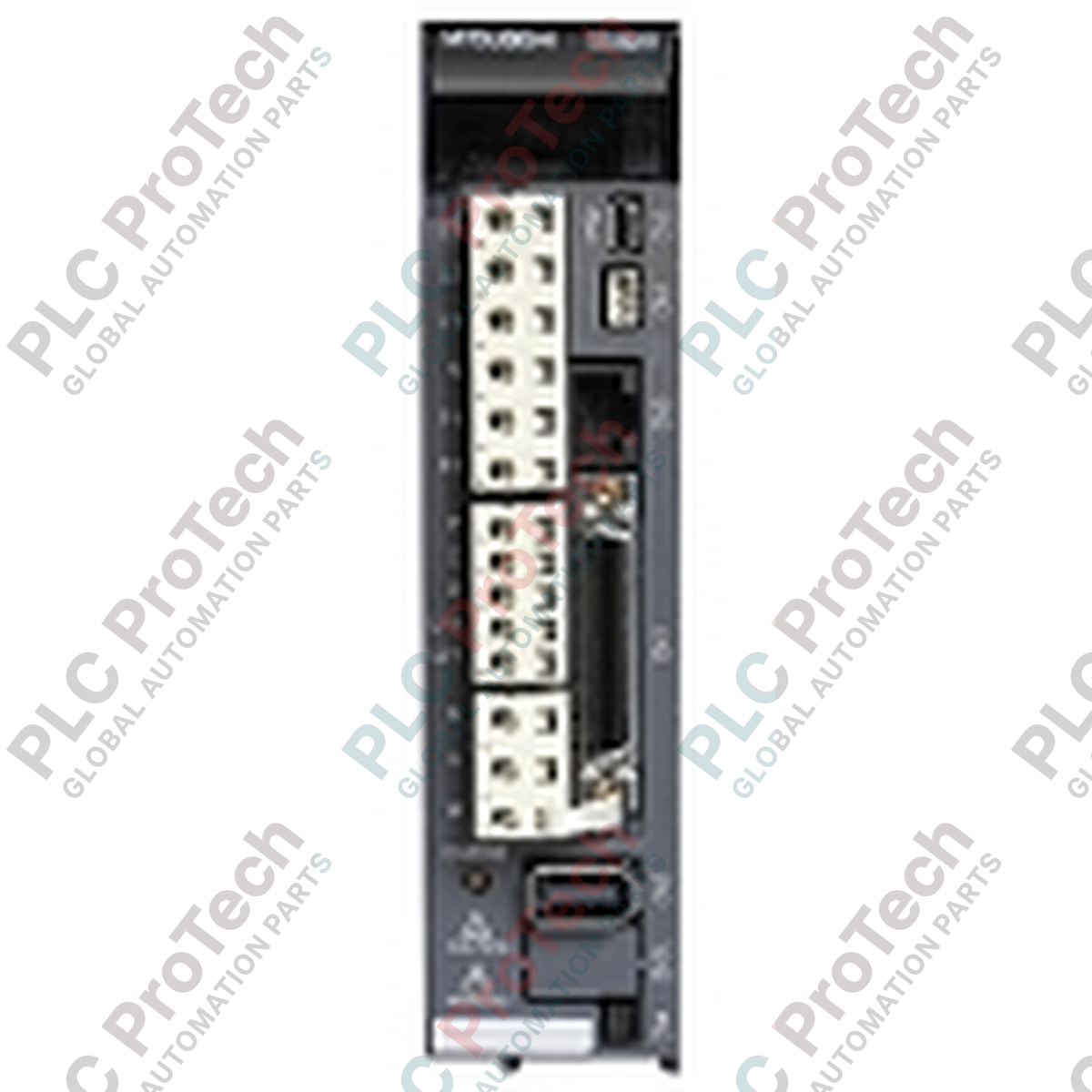
Descrição
Executando controle de alta precisão de velocidade, torque e posição, o Mitsubishi Electric MR-J3-60A é um servo drive CA projetado para integração perfeita à arquitetura do sistema MELSERVO-J3. Este amplificador utiliza controle PWM senoidal e sistemas de feedback em malha fechada para alcançar tempos de resposta rápidos e mínimo tempo de acomodação. Projetada para acionar servomotores rotativos e lineares compatíveis de até 600W (0.6 kW), a unidade incorpora uma interface analógica e de trem de pulsos de uso geral para conexão direta com controladores de movimento PLC externos, módulos de posicionamento e sistemas CNC. Os algoritmos integrados de ajuste de desempenho monitoram continuamente a ressonância mecânica, ajustando automaticamente os filtros de supressão de vibrações para garantir máxima estabilidade estrutural durante ciclos de trabalho com alta aceleração.
Recursos
-
Autotuning em tempo real: Calcula automaticamente os valores ideais de ganho, adaptando-se às variações nas relações de inércia mecânica durante a operação contínua da máquina.
-
Supressão de vibrações: Filtros avançados de supressão de vibrações em duas frequências reduzem as oscilações estruturais tanto na ponta da ferramenta quanto na base da máquina.
-
Compatibilidade com feedback de alta resolução: Integra-se a encoders absolutos/incrementais de 18 bits, proporcionando alta constância de posicionamento e desempenho suave em baixa velocidade.
-
Modos de controle flexíveis: Configurável por parâmetros para operar nos modos de controle de posição, velocidade ou torque por meio de entradas de comando analógicas de uso geral ou de trem de pulsos.
-
Monitoramento de diagnóstico integrado: O display LED integrado de 5 dígitos e 7 segmentos permite o monitoramento direto dos registradores de status internos, dos sinais de entrada/saída e dos códigos do histórico de alarmes.
Aplicações
- Sistemas de embalagem de alta velocidade para coleta e colocação.
- Sistemas robóticos cartesianos de posicionamento multieixos.
- Máquinas de manuseio de semicondutores de precisão e fabricação em salas limpas.
- Mecanismos automatizados de alimentação de ferramentas em usinagem de metais e eixos auxiliares CNC.
- Rolos de alinhamento para montagem eletrônica e prensas de impressão.
Especificações técnicas
| Parâmetro |
Valor / Especificação |
| Fabricante |
Mitsubishi Electric |
| Modelo / SKU |
MR-J3-60A |
| Série |
MELSERVO-J3 (Tipo A de interface de uso geral) |
| Capacidade nominal de saída |
0,6 kW (600 W) |
| Corrente nominal de saída |
3,2 A |
| Tensão nominal de saída |
CA trifásica de 170 V |
| Alimentação de entrada |
CA trifásica ou monofásica de 200 a 230 V, 50/60 Hz |
| Flutuação de tensão permitida |
170 a 253 V CA |
| Sistema de controle |
Controle PWM de onda senoidal, sistema de controle de corrente |
| Freio dinâmico |
Integrado |
| Recursos de segurança |
Desligamento por sobrecorrente, desligamento por sobretensão regenerativa, desligamento por sobrecarga (térmica), proteção contra erro do encoder |
| Temperatura ambiente de operação |
0 a 55 °C (sem congelamento) |
| Umidade ambiente de operação |
Até 90% de UR (sem condensação) |
| Dimensões físicas |
168 mm (A) x 40 mm (L) x 135 mm (P) |
| Peso líquido da unidade |
1,0 kg |
| Peso de envio (calculado) |
1,8 kg |
| Dimensões da embalagem (calculadas) |
240 mm x 180 mm x 120 mm |
| País de origem |
Japão |
Conexões e Interfaces
| Porta / Bloco de terminais |
Atribuição funcional / Finalidade |
| L1, L2, L3 |
Conexões dos terminais de entrada de alimentação CA trifásica do circuito principal. |
| L11, L21 |
Conexões dos terminais de entrada de alimentação CA monofásica do circuito de controle. |
| U, V, W |
Saídas de potência trifásica encaminhadas diretamente aos enrolamentos do servomotor. |
| CN1 (50 pinos) |
Conector de E/S para entradas analógicas, entradas de pulsos de comando, entradas/saídas digitais e pulsos de saída do encoder. |
| CN2 (10 pinos) |
Conexão de comunicação serial de alta velocidade para sinais de realimentação do encoder do motor. |
| CN3 (Mini-USB) |
Porta de comunicação para PC e conexão com o software de configuração MR Configurator. |
| P+, C, D |
Pinos de terminal designados para frenagem dinâmica interna integrada ou opções regenerativas externas. |
Insights Empíricos de Engenharia
Modelos Alternativos e Compatibilidade
Ao migrar arquiteturas legadas, observe que o MR-J3-60A utiliza uma interface de trem de pulsos digitais de uso geral e uma interface analógica (tipo A). Ele não pode substituir diretamente uma variante de rede "MR-J3-60B", projetada para configurações de barramento SSCNET III. Ao substituir este modelo por gerações mais novas (como o MR-J4-60A), são necessários uma unidade adaptadora de conversão (como o kit de transição MR-J4-T20) e um software de mapeamento de parâmetros devido às diferenças na disposição dos pinos do conector CN1 de 50 pinos.
Armadilhas de Aplicação e Observações de Engenharia
Em ciclos contínuos de alta aceleração, a capacidade regenerativa integrada do drive pode facilmente exceder sua capacidade nominal de dissipação térmica, causando um disparo de AL.30 (Erro regenerativo). Se os ciclos de frenagem ativa forem frequentes, uma opção de resistor regenerativo externo (por exemplo, MR-RB12) deverá ser integrada e parametrizada. Além disso, em gabinetes elétricos com ventilação insuficiente, certifique-se de manter espaços livres adequados para o fluxo de ar: no mínimo 40 mm de espaço livre acima e abaixo da estrutura do drive, para evitar a degradação térmica prematura dos bancos de capacitores internos.
Dicas de comissionamento e fiação
Para proteger as entradas de comando contra desvios de posicionamento induzidos por ruído elétrico, as entradas de driver de linha diferencial no CN1 (entradas OPG/OPC) devem sempre ser selecionadas em vez de caminhos de fiação com coletor aberto. Certifique-se de que o fio de drenagem da blindagem do encoder esteja firmemente preso à carcaça metálica do conector CN2 para minimizar loops de aterramento. Se o drive disparar imediatamente na inicialização com um AL.16 (Erro de comunicação do encoder), verifique a integridade da ligação de aterramento entre a carcaça do motor e o subpainel elétrico.
Diretrizes de instalação
AVISO CRÍTICO
Desconecte todas as linhas de alimentação CA de entrada antes da instalação ou desmontagem. Aguarde pelo menos 15 minutos após desligar a alimentação para permitir a descarga completa dos capacitores internos de alta tensão. Verifique se a tensão entre os terminais (P+) e (N-) é inferior a 20 V CC com um voltímetro calibrado antes de tocar em quaisquer conexões de terminais ou estruturas de fiação. O não cumprimento dessas instruções pode resultar em choque elétrico grave ou destruição do hardware.
1
Monte o drive verticalmente dentro de um gabinete metálico limpo, com classificação IP54. Garanta separação mecânica adequada de equipamentos adjacentes que gerem muito calor, como reatores de linha ou resistores de frenagem.
2
Conecte o aterramento físico do sistema ao terminal de terra de proteção (PE) antes de instalar as entradas de controle ou da rede elétrica principal, para evitar danos causados por ESD.
3
Verifique se as relações de fase das conexões de saída U, V e W correspondem exatamente aos terminais correspondentes do servomotor. Não troque as fases para inverter o sentido, pois isso causará imediatamente uma falha de disparo descontrolado do motor.
4
Verifique se quaisquer jumpers do circuito de controle entre P+ e D estão conectados com segurança, a menos que uma opção regenerativa externa esteja configurada ativamente nos parâmetros do drive.