Описание
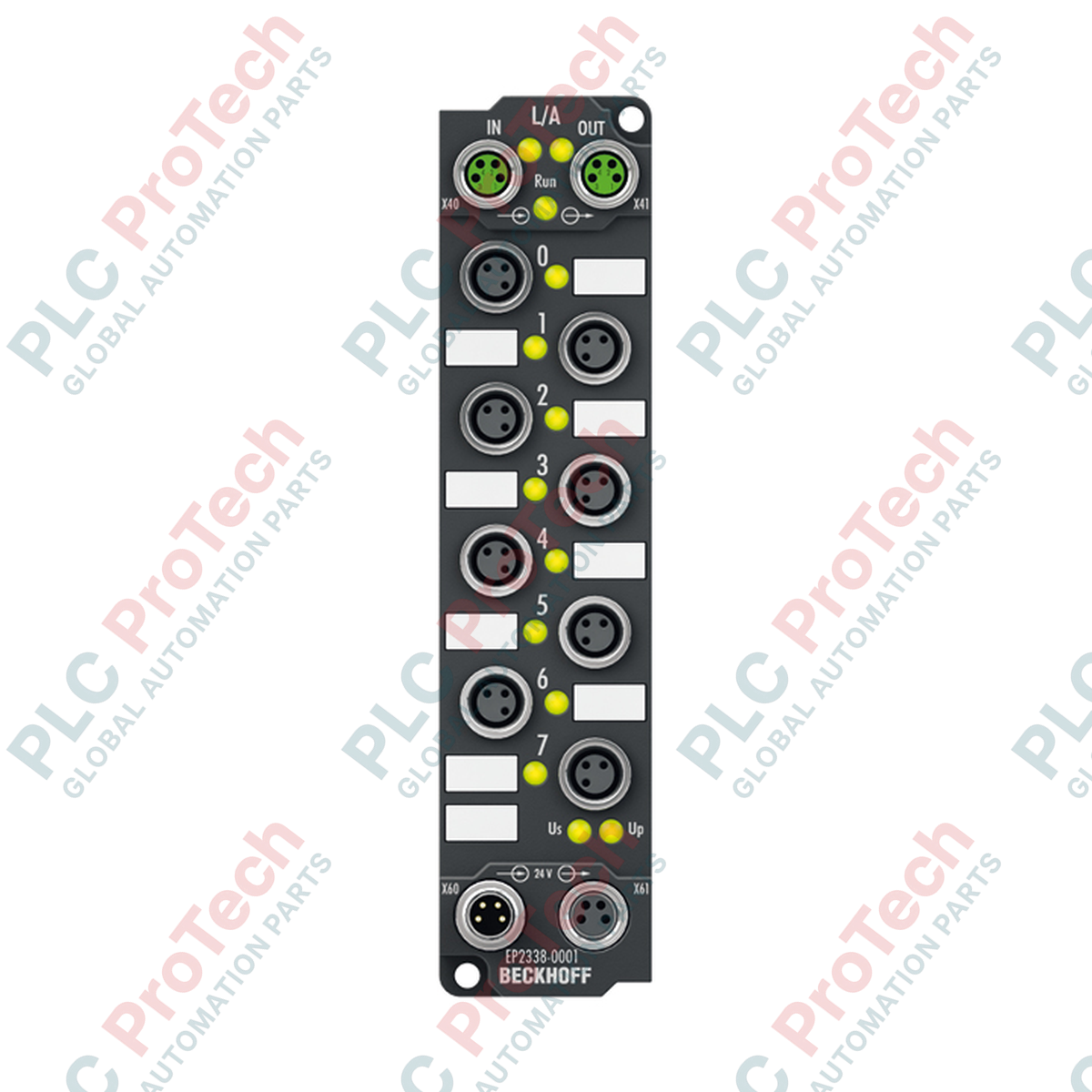
Разработанный для непосредственного монтажа на машине, EtherCAT Box Beckhoff EP2338-0001 обеспечивает децентрализованную обработку сигналов ввода-вывода в прочном и компактном корпусе. Модуль оснащён 8 цифровыми каналами, каждый из которых можно свободно настроить как вход или выход, оптимизируя распределение сигналов на уровне оборудования без необходимости в промежуточных клеммных коробках. Работая по собственному протоколу EtherCAT, он подключается через экранированные винтовые шинные разъёмы M8, обеспечивая высокоскоростную передачу данных и детерминированность в условиях высокой вибрации. Корпус из полиамида PA6 обеспечивает комплексную защиту от пыли, струй воды и временного погружения, благодаря чему модуль подходит для влажных или загрязнённых производственных помещений.
Характеристики
-
Гибкая настройка ввода-вывода: 8 каналов, которые можно динамически назначать как цифровые входы (тип 1/3) или цифровые выходы (0,5 А на канал).
-
Защищённая промышленная конструкция: Корпус из полиамида PA6 со степенями защиты IP65, IP66 и IP67 для эксплуатации в условиях влаги, пыли и мойки.
-
Прямой интерфейс шины EtherCAT: Двухканальное подключение M8 со встроенным экранированием для сохранения целостности сигнала в распределённых топологиях.
-
Защита от короткого замыкания: Индивидуально защищённые от короткого замыкания выходы с активным ограничением тока и автоматическим восстановлением.
-
Сертификация для взрывоопасных зон: ATEX Zone 2/22 (II 3 G Ex nA IIC T4 Gc) — для безопасной установки во взрывоопасных средах.
Применение
- Децентрализованные системы управления конвейерами и сортировки.
- Автомобильные сборочные линии и роботизированные концевые инструменты.
- Упаковочное оборудование, требующее распределённой интеграции датчиков и исполнительных устройств со степенью защиты IP67.
- Технологические установки и химические среды, требующие применения полевых модулей ATEX Zone 2.
Технические характеристики
| Параметр |
Значение спецификации |
| Производитель |
Beckhoff Automation |
| Идентификатор модели |
EP2338-0001 |
| Протокол связи |
EtherCAT |
| Количество каналов |
8 цифровых входов или выходов, двунаправленные |
| Характеристики входов |
EN 61131-2, тип 1/3 (фильтр 10 микросекунд) |
| Напряжение сигнала «0» |
−3…+5 В |
| Напряжение сигнала «1» |
11–30 В (номинальный ток 6 мА) |
| Ток питания датчиков |
Макс. 0,5 А суммарно от источника питания нагрузки, защита от короткого замыкания |
| Номинальное напряжение нагрузки |
24 В пост. тока (−15% / +20%) |
| Макс. выходной ток |
0,5 А на канал (защита от короткого замыкания, типичный пиковый предел 1,5 А) |
| Задержки переключения |
TON: 50 микросекунд (тип.), TOFF: 100 микросекунд (тип.) |
| Потребляемый ток |
120 мА от US (системное напряжение) |
| Гальваническая развязка |
500 В (между каналом и логикой) |
| Материал корпуса |
Полиамид PA6 |
| Степень защиты |
IP65/66/67 (соответствует EN 60529) |
| Рабочая температура |
от −25 до +60 °C |
| Габаритные размеры |
30 мм x 126 мм x 26,5 мм (W x В x Г) |
| Масса нетто |
165 g |
| Расчётная масса при транспортировке |
0,50 кг |
Подключения и интерфейсы
| Подключение интерфейса |
Тип разъёма |
Сведения о конфигурации |
| Вход/выход шины EtherCAT |
2 гнезда M8 (экранированные, винтовое соединение) |
Обеспечивает связь на физическом уровне для обработки входящих и исходящих кадров EtherCAT. |
| Интерфейсы каналов |
8 разъёмов M8 x 1, 3-контактных (кодировка A) |
Динамически настраивается контроллером для физического подключения датчика или исполнительного механизма. |
| Подвод питания |
1 разъём M8, штекерный, 4-контактный |
Вход для напряжения системы/датчиков (US) и напряжения исполнительных механизмов/нагрузки (UP). |
| Питание последующих устройств |
1 разъём M8, гнездовой, 4-контактный |
Обеспечивает последовательное подключение линий питания для последующих узлов EtherCAT Box. |
Альтернативные модели и совместимость
Для установок с более крупной кабельной архитектурой EP2338-0002 имеет ту же внутреннюю электрическую логику, что и EP2338-0001, но оснащён круглыми разъёмами M12 вместо M8. При переходе систем со старых топологий без EtherCAT эта модель напрямую заменяет устаревшие блоки Profibus или CANopen. Убедитесь, что XML-файлы конфигурации TwinCAT 2.11 (или более поздней версии) обновлены для сопоставления с правильной аппаратной ревизией, чтобы предотвратить ошибки несоответствия при запуске системы.
Ограничения применения и инженерные примечания
A critical parameter during deployment is the sensor supply limit of 0.5 A total across all channels. If multiple heavy-draw inductive sensors or photo-eyes are fed from the same unit, ensure their combined quiescent and peak operational current does not exceed this limit. Overcurrent conditions will cause the sensor power rail (derived from US) to trip, resulting in field offline errors in TwinCAT. Additionally, although the outputs are protected against inductive load energy, fast-cycling inductive solenoids should be installed with external suppression elements to prolong the lifetime of the switching driver circuits.
Советы по вводу в эксплуатацию и электромонтажу
Всегда убеждайтесь, что соединения полевой шины и питания M8 затянуты с указанным производителем моментом 0,4 Н·м. Недостаточная затяжка нарушает влагонепроницаемость IP67, а чрезмерная затяжка может привести к растрескиванию полиамидного корпуса или повреждению внутренних резьбовых вставок. При установке в условиях высокого уровня электрических помех (например, рядом с мощными преобразователями частоты) монтажная пластина модуля должна иметь низкоимпедансное заземление. Используйте зубчатую шайбу как минимум с одним из крепёжных винтов M3, чтобы она прорезала анодированное или окрашенное основание и обеспечила надёжный путь к защитному заземлению.
Рекомендации по установке
КРИТИЧЕСКОЕ ПРЕДУПРЕЖДЕНИЕ:
Перед физической установкой или подключением кабелей к EtherCAT Box обесточьте все источники питания системы и нагрузки (US и UP). Подключение полевой шины или питания к оборудованию под напряжением во взрывоопасных зонах 2 может привести к возникновению электрической дуги, создающей серьёзную опасность взрыва и риску немедленного разрушения внутреннего микропроцессора устройства.
1
Установите модуль на ровной поверхности без вибрации. Разметьте и просверлите два монтажных отверстия диаметром 3,5 мм в соответствии с расположенными на корпусе встроенными точками крепления.
2
Закрепите устройство двумя стандартными винтами M3. Обеспечьте надёжное заземление, создав металлический контакт между монтажной пластиной и корпусом машины.
3
Подсоедините и затяните входящие и исходящие кабели EtherCAT M8. Неиспользуемые порты M8 закройте защитными пластиковыми заглушками, чтобы сохранить степень защиты от проникновения влаги IP67.
4
Подключите вспомогательные кабели питания M8, убедившись, что входное напряжение для обоих источников — US (система) и UP (нагрузка исполнительных механизмов) — строго находится в допустимом диапазоне 24 В пост. тока (-15% / +20%).