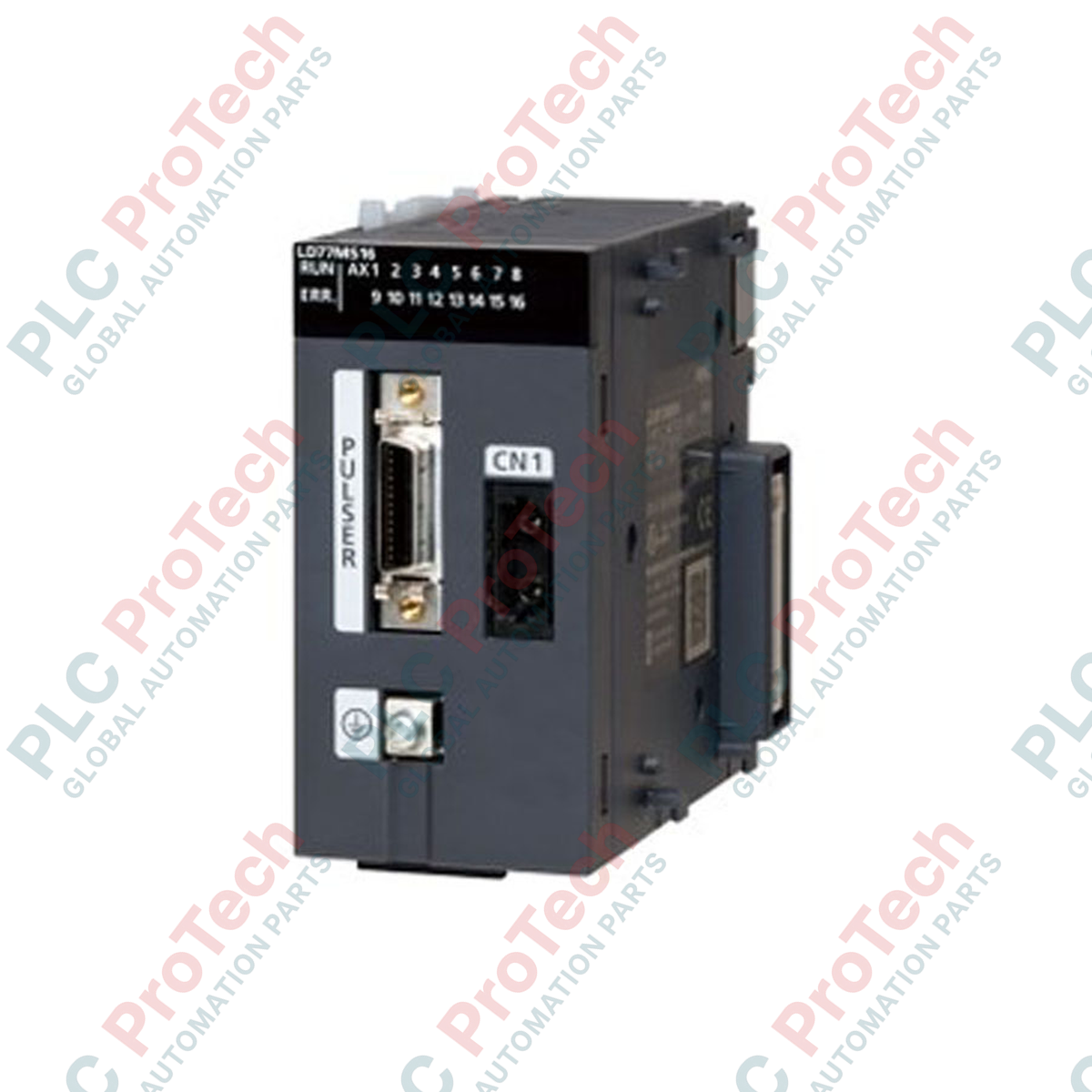
Beschreibung
Das für die hochgeschwindige Mehrachsensynchronisation innerhalb der MELSEC-L-Serie entwickelte Mitsubishi Electric LD77MH16 ermöglicht fortschrittliche Bewegungs-, Positionier- und Synchronsteuerung über ein leistungsstarkes Glasfasernetzwerk. Dieses hochdichte Positioniermodul unterstützt bis zu 16 Achsen über SSCNET III/H und bietet eine hohe Störfestigkeit sowie eine schnelle Befehlsübertragung für anspruchsvolle Industriemaschinen. Dank integrierter Digitaleingänge für die Hochgeschwindigkeitsregistrierung fungiert das Gerät als zentrale Befehlsschnittstelle zwischen SPS-Logik und der Ausführung durch den Servoverstärker, ohne die Leistung der Rückwandplatine zu beeinträchtigen.
Merkmale
-
Steuerung von 16 Achsen: Steuert bis zu 16 physische Servoachsen über einen einzigen Netzwerkring.
-
SSCNET-III/H-Kommunikation: Hochgeschwindigkeits-Glasfasernetzwerk mit 50 Mbps und vollständiger Störfestigkeit.
-
Integrierte Digitaleingänge: Verfügt über 4 galvanisch getrennte Eingangskanäle mit Unterstützung für gemeinsame positive oder negative Anschlüsse.
-
Erweiterte Synchronsteuerung: Unterstützt Softwarekonfigurationen für elektronische Kurvenscheiben, Getriebe, Phasenkompensation und Rotationsschneider.
-
Hochgeschwindigkeitsregistrierung: Eingänge verarbeiten Signale mit einer Ansprechzeit von 1 ms oder weniger für eine präzise Produktkennzeichnung.
Anwendungen
-
Mehrachsige Verpackungssysteme: Echtzeitprofilierung elektronischer Kurvenscheiben und synchrones Schneiden während der Zuführung.
-
Hochgeschwindigkeits-Etikettiermaschinen: Nutzung schnell reagierender Registriereingänge zur Ausrichtung von Druckmarken.
-
Materialhandling und Portalanlagen: Interpolation und koordinierte Bewegungen für Pick-and-Place-Systeme.
Technische Daten
| Parameter |
Spezifikation |
| Hersteller |
Mitsubishi Electric |
| Modellcode |
LD77MH16 |
| Modultyp |
Simple-Motion-Modul |
| Anzahl der Steuerachsen |
16 Achsen |
| Schnittstelle zum Servoverstärker |
SSCNET III/H (50 Mbps Glasfaser) |
| Eingangspunkte |
4 Punkte |
| Isolation des Eingangskreises |
Optokoppler |
| Nenneingangsspannung |
24 VDC |
| Betriebsspannungsbereich |
21,6 bis 26,4 VDC (Welligkeitsanteil 5 % oder weniger) |
| Nenneingangsstrom |
Ca. 5 mA |
| EIN-Spannung / -Strom |
17,5 VDC oder mehr / 3,5 mA oder mehr |
| AUS-Spannung / -Strom |
5 VDC oder weniger / 0,9 mA oder weniger |
| Eingangswiderstand |
Ca. 5,6 kOhm |
| Ansprechzeit |
1 ms oder weniger |
| Empfohlener Leiterquerschnitt |
AWG24 (0,2 mm²) |
| Interne Stromaufnahme (5 VDC) |
0,70 A |
| Ursprungsland |
Japan |
| Nettogewicht des Moduls |
0,22 kg |
| Versandgewicht (berechnet) |
2,00 kg |
Anschlüsse und Schnittstellen
| Anschluss / Schnittstelle |
Funktions-/Schaltungszuordnung |
| CN1A-Anschluss |
Eingehende SSCNET-III/H-Lichtwellenleiterverbindung |
| CN1B-Anschluss |
SSCNET-III/H-Lichtwellenleiterverbindung für die ausgehende/abwärtsgerichtete Verbindung |
| Externer Eingangsanschluss |
Digitale 24-VDC-Eingänge (Punkte 1–4) für Signale von Endschaltern, Stoppschaltern oder Tastsensoren |
Erfahrungsbasierte technische Erkenntnisse
Alternative Modelle und Kompatibilität
Das LD77MH16 ist die 16-Achs-Variante der MELSEC-L-Positionierbaureihe. Für Systeme mit weniger Achsen dient das hardwareidentische LD77MH4 (4 Achsen) als direkt einsetzbare Software-Teilmenge-Alternative. Bei der Migration von Softwarekonfigurationen aus Q-Series-QD77MS-Modulen müssen Sie bestätigen, dass die Puffer Speicherzuweisungen übereinstimmen, da die L-Series-Architektur Konfigurationsblöcke im globalen Adressraum geringfügig anders abbildet.
Anwendungsfallen und technische Hinweise
Das Lichtwellenleitersystem ist vollständig auf die Integrität der optischen Signale angewiesen. Stellen Sie sicher, dass die MR-J3BUS-Lichtwellenleiter ihren zulässigen Mindestbiegeradius nicht unterschreiten. Zu enge Biegungen verursachen eine hohe Signaldämpfung, was unter Betriebsbedingungen mit starken Vibrationen zu intermittierenden Kommunikationsausfällen, Fehlern vom Typ „SSCNET Frame Error“ oder unerwarteten Servo-Trennungen führen kann.
Tipps zu Inbetriebnahme und Verdrahtung
Achten Sie bei der Konfiguration von Absolutwertgebersystemen darauf, dass die Absolutkoordinaten im Simple Motion Setting Tool korrekt initialisiert werden. Führen Sie die externen 24-VDC-Registrierungseingänge über abgeschirmte, verdrillte Leitungspaare. Halten Sie diese Leitungen von Wechselstromleitungen für Servoantriebe mit hoher Stromstärke getrennt, um kapazitive Kopplungen zu vermeiden, die falsche Registrierungsauslösungen verursachen können.
Installationsrichtlinien
KRITISCHER WARNHINWEIS: Schalten Sie vor der Installation, dem Austausch oder dem Zugriff auf das LD77MH16 die gesamte Hauptsteuerung vollständig spannungsfrei und entladen Sie alle verbleibenden Busspannungen an angeschlossenen Servoverstärkern. Die Nichteinhaltung der Verfahren zur Spannungsfreischaltung kann zu Schäden an empfindlichen optischen Transceivern und internen Logikschaltungen des Moduls führen.
1
Richten Sie das Modul aus und befestigen Sie es sicher an der DIN-Schiene. Stellen Sie dabei sicher, dass das Gerät mithilfe der integrierten seitlichen Verriegelungshebel ordnungsgemäß mit den benachbarten L-Series-Modulen verriegelt ist.
2
Entfernen Sie die Schutzkappen von den optischen Transceiver-Anschlüssen CN1A/CN1B und schließen Sie die SSCNET-III/H-Lichtwellenleiterkabel an. Bewahren Sie die Staubschutzkappen für künftige Wartungsarbeiten sicher auf.
3
Schließen Sie die 24-VDC-Feldeingangsleitungen am externen Klemmenblock mit abgeschirmten AWG24-Leitungen an und überprüfen Sie vor dem Einschalten eine ordnungsgemäße Vermeidung von Erdschleifen.