


پیادهسازی منطق نردبانی XOR سهکلیده با بیت داخلی
مدار روشنایی XOR با کلید ۳-SPST را در LogixPro یا RSLogix 500 با استفاده از یک بیت رله داخلی پیادهسازی کنید. شامل جدولهای درستی، معادلات بولی و تأییدشده است.

تقویتکنندهٔ سروو Mitsubishi Electric MR-J4-70B که برای کنترل حرکت با عملکرد بالا طراحی شده است، کنترل دقیق موقعیت، سرعت و گشتاور را در اکوسیستم MELSERVO-J4 ارائه میدهد. این تقویتکننده با توان خروجی ۰٫۷۵ kW، در ردهٔ ۲۰۰V، از طریق شبکهٔ نوری همگام فوقسریع SSCNET III/H بهصورت بومی با کنترلکنندههای حرکت ارتباط برقرار میکند و زمان چرخه را تا ۰٫۲۲۲ ms بهینه میسازد. عملکرد ایمنی یکپارچهٔ قطع ایمن گشتاور (STO) و فیلترهای پویای سرکوب ارتعاش، حفاظت از دستگاه و بیشینهسازی توان عملیاتی مکانیکی را در خطوط دشوار اتوماسیون کارخانه تضمین میکنند.
| پارامتر | مشخصات |
|---|---|
| سازنده | میتسوبیشی الکتریک |
| شماره مدل | MR-J4-70B |
| سری محصول | سری MELSERVO-J4 |
| توان نامی خروجی | ۰٫۷۵ kW |
| ولتاژ نامی خروجی | AC سهفاز ۱۷۰ V |
| جریان نامی خروجی | ۵٫۸ A |
| ورودی توان مدار اصلی | AC سهفاز یا تکفاز ۲۰۰ V تا ۲۴۰ V، ۵۰ Hz / ۶۰ Hz |
| جریان نامی مدار اصلی | ۳٫۸ A |
| ورودی توان مدار کنترل | AC تکفاز ۲۰۰ V تا ۲۴۰ V، ۵۰ Hz / ۶۰ Hz |
| جریان و توان مدار کنترل | ۰٫۲ A / ۳۰ W |
| رابط فرمان | رابط SSCNET III/H |
| روش کنترل | کنترل PWM موج سینوسی، سیستم کنترل جریان |
| مقاومت احیای داخلی | ۲۰ W |
| ایمنی عملکردی | STO (IEC/EN 61800-5-2)، EN ISO 13849-1 ردهٔ ۳ PL e، SIL 3 |
| درجهٔ حفاظت IP | IP20 (خنککاری طبیعی / طراحی باز) |
| دمای محیط کارکرد | ۰ درجهٔ سانتیگراد تا ۵۵ درجهٔ سانتیگراد (بدون یخزدگی) |
| وزن | ۱٫۴ کیلوگرم |
| وزن حمل (محاسبهشده) | ۴٫۰ کیلوگرم |
| کانکتور / ترمینال | اختصاص سیگنال / مدار |
|---|---|
| L1، L2، L3 | ورودی منبع تغذیه AC مدار اصلی (سهفاز یا تکفاز) |
| L11، L21 | ورودی منبع تغذیه AC مدار کنترل (تکفاز) |
| U، V، W | خروجی توان موتور سروو (فاز U، فاز V، فاز W) |
| P+, C | اتصالات مقاومت احیای خارجی |
| CN1A / CN1B | کانکتورهای فیبر نوری باس SSCNET III/H (ورودی / خروجی) |
| CN2 | رابط فیدبک انکودر موتور سروو |
| CN5 | درگاه USB برای ارتباط با رایانه شخصی (MR Configurator 2) |
| CN8 | رابط ایمنی عملکردی STO (خاموشسازی ایمن گشتاور) |
MR-J4-70B از حالت سازگاری J3 داخلی پشتیبانی میکند که امکان راهاندازی در چیدمانهای قدیمی سیستم SSCNET III مبتنی بر MR-J3 را فراهم میسازد. این قابلیت امکان جایگزینی فیزیکی و عملکردی مستقیم سختافزار را در پیکربندیهای قدیمی ماشین فراهم میکند، بدون آنکه نیاز باشد نرمافزار یا کنترلر اصلی فوراً بازنویسی شود. توجه داشته باشید که در حالت سازگاری J3، سرعت ارتباط بهطور پیشفرض ۵۰ Mbps است، نه قابلیت بومی ۱۵۰ Mbps در SSCNET III/H.
اگرچه MR-J4-70B میتواند با ورودی AC تکفاز کار کند، کارکرد سیستم با چرخههای بار بسیار پویا ممکن است به بانک خازن باس DC داخلی فشار وارد کند. هنگام نصب چند واحد در کنار یکدیگر، در چیدمان پنل حداقل ۱۰ میلیمتر فاصله در هر دو طرف تقویتکننده حفظ کنید، زیرا خنککاری با همرفت طبیعی کاملاً به جریان هوای عمودی و بدون مانع وابسته است. برای کارکرد چرخهای سنگین یا ناهماهنگی زیاد اینرسی، بررسی کنید ظرفیت احیایی داخلی ۲۰ W کافی باشد؛ در غیر این صورت، باید یک مقاومت احیایی خارجی بین ترمینالهای P+ و C اضافه و مقاومت داخلی قطع شود.
هرگز به سطوح صیقلی کابلهای فیبر نوری SSCNET III/H دست نزنید. گردوغبار، رطوبت یا چربی سطحی اندک، سیگنال نوری را تضعیف کرده و باعث وقفههای ارتباطی یا افت نامنظم بستهها در چرخه انتقال میشود. مطمئن شوید شعاع خم فیبر هرگز کمتر از ۲۵ میلیمتر نشود. همچنین، خطوط کنترل و فیدبک ولتاژ پایین (CN2/CN8) را با عبور دادن آنها از مجراهای فلزی اختصاصی و دارای اتصال زمین، از سیمکشی قدرت (U/V/W و L1/L2/L3) جدا نگه دارید.
هشدار بسیار مهم:
ولتاژ خطرناک وجود دارد. پیش از نصب فیزیکی یا سیمکشی ترمینالها، تمام ورودیهای برق اصلی و کنترلی را قطع و بیبرق کنید. حداقل ۱۵ دقیقه صبر کنید تا خازنهای باس داخلی تخلیه شوند. پیش از لمس ترمینالها، با استفاده از یک ولتمتر دیجیتال مطمئن شوید ولتاژ باس DC بین ترمینالهای P+ و N- صفر است.
تقویتکننده را بهصورت عمودی روی یک پنل پشتی صاف و غیرقابلاشتعال، با استفاده از تجهیزات نصب استاندارد، نصب کنید تا جریان هوای همرفتی بهدرستی از کانالهای خنککننده عبور کند.
برای کاهش نویز الکتریکی و جلوگیری از خطر برقگرفتگی، از طریق ترمینالهای اختصاصی اتصال زمین، اتصال ارت حفاظتی محکم و مطمئنی برقرار کنید.
سیمکشی برق کنترلی (L11/L21) و ترمینالهای ورودی مدار اصلی (L1/L2/L3) را انجام دهید و اطمینان حاصل کنید فیوزهای حفاظتی مدار انشعابی یا مدارشکنهای مناسب در بالادست نصب شدهاند.
کابل انکودر را به CN2 و فیبرهای نوری SSCNET III/H را به CN1A/CN1B وصل کنید و مطمئن شوید محافظهای ضد گردوغبار فیبر نوری تمیز نگه داشته شده و در محل امنی نگهداری میشوند.
Global Express Shipping
Returns & Warranty


تولیدکننده: Mitsubishi Electric
شماره محصول: MR-J4-70B
کشور سازنده:ایالات متحده آمریکا
نوع محصول: درایوهای سروو
پرداخت: حواله بانکی (T/T)، وسترن یونیون
وزن: 1400g
بندر حمل و نقل: شیامن
گارانتی: ۱۲ ماه
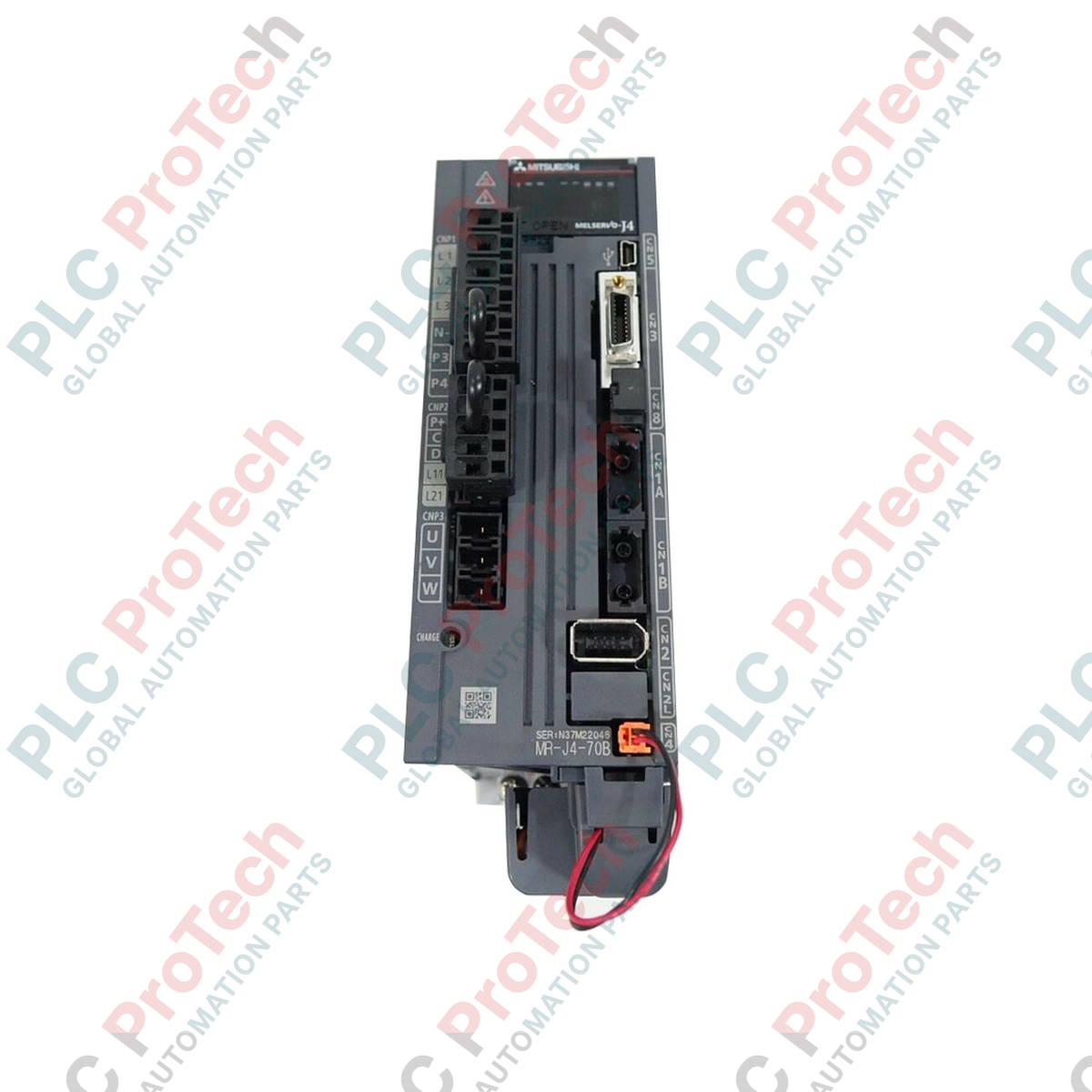
تقویتکنندهٔ سروو Mitsubishi Electric MR-J4-70B که برای کنترل حرکت با عملکرد بالا طراحی شده است، کنترل دقیق موقعیت، سرعت و گشتاور را در اکوسیستم MELSERVO-J4 ارائه میدهد. این تقویتکننده با توان خروجی ۰٫۷۵ kW، در ردهٔ ۲۰۰V، از طریق شبکهٔ نوری همگام فوقسریع SSCNET III/H بهصورت بومی با کنترلکنندههای حرکت ارتباط برقرار میکند و زمان چرخه را تا ۰٫۲۲۲ ms بهینه میسازد. عملکرد ایمنی یکپارچهٔ قطع ایمن گشتاور (STO) و فیلترهای پویای سرکوب ارتعاش، حفاظت از دستگاه و بیشینهسازی توان عملیاتی مکانیکی را در خطوط دشوار اتوماسیون کارخانه تضمین میکنند.
| پارامتر | مشخصات |
|---|---|
| سازنده | میتسوبیشی الکتریک |
| شماره مدل | MR-J4-70B |
| سری محصول | سری MELSERVO-J4 |
| توان نامی خروجی | ۰٫۷۵ kW |
| ولتاژ نامی خروجی | AC سهفاز ۱۷۰ V |
| جریان نامی خروجی | ۵٫۸ A |
| ورودی توان مدار اصلی | AC سهفاز یا تکفاز ۲۰۰ V تا ۲۴۰ V، ۵۰ Hz / ۶۰ Hz |
| جریان نامی مدار اصلی | ۳٫۸ A |
| ورودی توان مدار کنترل | AC تکفاز ۲۰۰ V تا ۲۴۰ V، ۵۰ Hz / ۶۰ Hz |
| جریان و توان مدار کنترل | ۰٫۲ A / ۳۰ W |
| رابط فرمان | رابط SSCNET III/H |
| روش کنترل | کنترل PWM موج سینوسی، سیستم کنترل جریان |
| مقاومت احیای داخلی | ۲۰ W |
| ایمنی عملکردی | STO (IEC/EN 61800-5-2)، EN ISO 13849-1 ردهٔ ۳ PL e، SIL 3 |
| درجهٔ حفاظت IP | IP20 (خنککاری طبیعی / طراحی باز) |
| دمای محیط کارکرد | ۰ درجهٔ سانتیگراد تا ۵۵ درجهٔ سانتیگراد (بدون یخزدگی) |
| وزن | ۱٫۴ کیلوگرم |
| وزن حمل (محاسبهشده) | ۴٫۰ کیلوگرم |
| کانکتور / ترمینال | اختصاص سیگنال / مدار |
|---|---|
| L1، L2، L3 | ورودی منبع تغذیه AC مدار اصلی (سهفاز یا تکفاز) |
| L11، L21 | ورودی منبع تغذیه AC مدار کنترل (تکفاز) |
| U، V، W | خروجی توان موتور سروو (فاز U، فاز V، فاز W) |
| P+, C | اتصالات مقاومت احیای خارجی |
| CN1A / CN1B | کانکتورهای فیبر نوری باس SSCNET III/H (ورودی / خروجی) |
| CN2 | رابط فیدبک انکودر موتور سروو |
| CN5 | درگاه USB برای ارتباط با رایانه شخصی (MR Configurator 2) |
| CN8 | رابط ایمنی عملکردی STO (خاموشسازی ایمن گشتاور) |
MR-J4-70B از حالت سازگاری J3 داخلی پشتیبانی میکند که امکان راهاندازی در چیدمانهای قدیمی سیستم SSCNET III مبتنی بر MR-J3 را فراهم میسازد. این قابلیت امکان جایگزینی فیزیکی و عملکردی مستقیم سختافزار را در پیکربندیهای قدیمی ماشین فراهم میکند، بدون آنکه نیاز باشد نرمافزار یا کنترلر اصلی فوراً بازنویسی شود. توجه داشته باشید که در حالت سازگاری J3، سرعت ارتباط بهطور پیشفرض ۵۰ Mbps است، نه قابلیت بومی ۱۵۰ Mbps در SSCNET III/H.
اگرچه MR-J4-70B میتواند با ورودی AC تکفاز کار کند، کارکرد سیستم با چرخههای بار بسیار پویا ممکن است به بانک خازن باس DC داخلی فشار وارد کند. هنگام نصب چند واحد در کنار یکدیگر، در چیدمان پنل حداقل ۱۰ میلیمتر فاصله در هر دو طرف تقویتکننده حفظ کنید، زیرا خنککاری با همرفت طبیعی کاملاً به جریان هوای عمودی و بدون مانع وابسته است. برای کارکرد چرخهای سنگین یا ناهماهنگی زیاد اینرسی، بررسی کنید ظرفیت احیایی داخلی ۲۰ W کافی باشد؛ در غیر این صورت، باید یک مقاومت احیایی خارجی بین ترمینالهای P+ و C اضافه و مقاومت داخلی قطع شود.
هرگز به سطوح صیقلی کابلهای فیبر نوری SSCNET III/H دست نزنید. گردوغبار، رطوبت یا چربی سطحی اندک، سیگنال نوری را تضعیف کرده و باعث وقفههای ارتباطی یا افت نامنظم بستهها در چرخه انتقال میشود. مطمئن شوید شعاع خم فیبر هرگز کمتر از ۲۵ میلیمتر نشود. همچنین، خطوط کنترل و فیدبک ولتاژ پایین (CN2/CN8) را با عبور دادن آنها از مجراهای فلزی اختصاصی و دارای اتصال زمین، از سیمکشی قدرت (U/V/W و L1/L2/L3) جدا نگه دارید.
هشدار بسیار مهم:
ولتاژ خطرناک وجود دارد. پیش از نصب فیزیکی یا سیمکشی ترمینالها، تمام ورودیهای برق اصلی و کنترلی را قطع و بیبرق کنید. حداقل ۱۵ دقیقه صبر کنید تا خازنهای باس داخلی تخلیه شوند. پیش از لمس ترمینالها، با استفاده از یک ولتمتر دیجیتال مطمئن شوید ولتاژ باس DC بین ترمینالهای P+ و N- صفر است.
تقویتکننده را بهصورت عمودی روی یک پنل پشتی صاف و غیرقابلاشتعال، با استفاده از تجهیزات نصب استاندارد، نصب کنید تا جریان هوای همرفتی بهدرستی از کانالهای خنککننده عبور کند.
برای کاهش نویز الکتریکی و جلوگیری از خطر برقگرفتگی، از طریق ترمینالهای اختصاصی اتصال زمین، اتصال ارت حفاظتی محکم و مطمئنی برقرار کنید.
سیمکشی برق کنترلی (L11/L21) و ترمینالهای ورودی مدار اصلی (L1/L2/L3) را انجام دهید و اطمینان حاصل کنید فیوزهای حفاظتی مدار انشعابی یا مدارشکنهای مناسب در بالادست نصب شدهاند.
کابل انکودر را به CN2 و فیبرهای نوری SSCNET III/H را به CN1A/CN1B وصل کنید و مطمئن شوید محافظهای ضد گردوغبار فیبر نوری تمیز نگه داشته شده و در محل امنی نگهداری میشوند.
ارسال سریع جهانی
بازگشت کالا و گارانتی
سفارشها از دوشنبه تا جمعه پردازش و تحویل داده میشوند (به جز تعطیلات رسمی).
برای شرایط کامل واجد شرایط بودن، هزینههای بازگردانی و جزئیات بازگشت بینالمللی، لطفاً صفحه رسمی ما را مشاهده کنید سیاست بازپرداخت و بازگشت کالا .
| Country of origin |
ایالات متحده آمریکا
|

مدار روشنایی XOR با کلید ۳-SPST را در LogixPro یا RSLogix 500 با استفاده از یک بیت رله داخلی پیادهسازی کنید. شامل جدولهای درستی، معادلات بولی و تأییدشده است.

Allen-Bradley CompactLogix، تابلوهای انتقال خودکار Caterpillar و ژنراتورها را از طریق Modbus RTU در سیستم کنترل توزیعشده DeltaV یکپارچه کنید. این محتوا ProSoft MVI69-MCM و گیتویهای Miille DIN266...

دستور ONS اجرا میشود، اما کویل OTE در Studio 5000 هرگز لچ نمیشود، زیرا وانشات فقط در یک اسکن درست است. در عوض از OTL/OTU یا منطق خودنگهدار استفاده کنید.

درایوهای سرو Kinetix 5500 از Allen-Bradley را روی EtherNet/IP پیکربندی کنید. این دوره مباحث CIP Sync، زمانبندی IEEE 1588 V2، انتخاب Stratix، توپولوژی DLR و HMI را پوشش میدهد.

فیلتر میانگین متحرک، هموارساز پنجرهای لغزان است که بیشتر مهندسان ابزار دقیق آن را در مسیرهای آنالوگ DCS و PLC به کار میبرند. در اینجا نحوه کار پنجره، تأثیر N و زمان نمونهبرداری بر تأخیر، و زمان...

در توربینهای گازی Frame 5 تا 9، سیستمهای GE Mark VI و Mark VIe کنترل را بهصورت نرمافزار کاربردی مبتنی بر بلوکهای تابع اجرا میکنند. این مقاله عملکردهای فرایندی، حفاظتی و توالیگذاری را بررسی...