


Dépannage des entrées de compteur Beckhoff KL1512 et de leur mappage
Une liste de contrôle sur site pour les seuils de signal KL1512, le sens de comptage, les données de processus et la différence de câblage entre le KL1512 et le KS1512.
Fabricant : Triconex
N° de produit : 3201
Pays d'origine :États-Unis
Type de produit : Module de communication
Paiement : Virement bancaire, Western Union
Poids : 5000g
Dimensions : 22 cm x 16,9 cm x 4,4 cm
Port d'expédition : Xiamen
Garantie : 12 mois
Le 3201 (3201) sert de pont haut débit entre le contrôleur de sécurité Triconex et les réseaux externes de l’usine. En tant que module de communication dédié, il permet au système Tricon de s’interfacer de manière transparente avec les systèmes de contrôle-commande distribués (DCS), les interfaces homme-machine (IHM) et les autres automates programmables industriels, sans compromettre l’intégrité de la boucle de sécurité. Dans des environnements critiques tels que les opérations de forage offshore ou les raffineries chimiques automatisées, le Triconex 3201 garantit la transmission fiable des données de diagnostic en temps réel et des variables de processus. En déchargeant les processeurs principaux des tâches de communication, ce module protège la vitesse d’exécution de la logique de sécurité et garantit que le système peut réagir aux situations d’urgence en quelques millisecondes.
Conçue pour fonctionner sur une interface logique standard de 24 VCC, l’architecture du 3201 est optimisée pour assurer la stabilité électrique et la cohérence des données. Elle intègre un circuit de gestion de l’alimentation très sensible, capable de gérer une interruption de l’alimentation d’entrée pouvant atteindre 1 ms par rapport à la valeur nominale, afin d’éviter que les baisses de tension transitoires n’interrompent la liaison de communication. Le module fonctionne dans une plage de tension flexible de 19,2 à 30 VCC et intègre un filtrage avancé permettant de neutraliser jusqu’à 5 % d’ondulation CA. Sa fréquence de répétition interne est cadencée à un minimum d’une seconde, fournissant un signal de présence déterministe pour l’interrogation du réseau et garantissant que les données présentées au système SCADA sont actualisées de manière régulière et synchronisées avec le cœur TMR.
| Attribut | Détails de la spécification |
| Modèle | 3201 |
| Marque | Triconex (Schneider Electric) |
| Origine | États-Unis |
| Type de produit | Module de communication |
| Tension d’entrée nominale | 24 VCC |
| Plage de tension de fonctionnement | 19,2 VCC à 30 VCC |
| Interruption maximale de l’alimentation | 1 ms |
| Tolérance à l’ondulation | 5 % d’ondulation CA |
| Dimensions | 22 cm x 16,9 cm x 4,4 cm |
| Poids | 5 kg (net) / 7,5 kg (expédition) |
| Délai d’approvisionnement estimé | 4 - 6 semaines |
Quel est l’impact de la limite d’interruption de l’alimentation de 1 ms sur la conception du système ?
Le seuil de 1 ms indique la grande sensibilité du module à la qualité de l’alimentation. Pour garantir une communication stable, le 3201 doit être alimenté par une source 24 VCC régulée de haute qualité. Si votre installation subit fréquemment des « bruits » électriques, il est recommandé d’ajouter un filtre de conditionnement de l’alimentation afin d’éviter les délais d’expiration des communications.
Le 3201 prend-il en charge le remplacement à chaud dans le châssis Tricon ?
Oui, comme la plupart des modules Triconex, le 3201 est conçu pour être remplacé en ligne. Lorsqu’il est inséré dans un emplacement redondant, le module s’initialise automatiquement et reprend les protocoles de transmission des données une fois son autotest à la mise sous tension (POST) réussi.
Quelle est l’importance de la fréquence de répétition d’une seconde ?
La fréquence de répétition minimale d’une seconde définit l’intervalle auquel le module traite sa pile de communication principale. Cela garantit que le bus réseau n’est pas surchargé tout en maintenant un flux fiable de données critiques pour la sécurité vers les équipements de surveillance externes.
Isolement du réseau : Pour empêcher les cybermenaces externes ou les tempêtes de diffusion d’affecter l’armoire de sécurité, installez toujours le 3201 derrière un pare-feu industriel dédié ou au sein d’un VLAN sécurisé.
Mise à la terre du châssis : Compte tenu du poids de 5 kg et de la sensibilité à l’ondulation CA, vérifiez que le module est entièrement enfiché et que les vis moletées du châssis sont serrées au couple spécifié. Cela garantit un chemin à faible impédance vers le plan de masse, essentiel pour une transmission de données haut débit sans erreurs.
Dégagement thermique : Bien que le module soit compact (4,4 cm de largeur), le traitement des communications génère une chaleur localisée. Maintenez une circulation d’air dégagée dans le châssis afin que la température de fonctionnement ne dépasse pas 60 degrés Celsius, ce qui pourrait entraîner des pertes intermittentes de paquets.
Le 3201 est conçu selon la philosophie « Always-On » de la marque Triconex. Sa conception mécanique, avec un poids conséquent de 5 kg, témoigne d’une fabrication industrielle robuste qui protège les oscillateurs internes et les processeurs RISC contre les vibrations haute fréquence courantes dans les salles de commande des turbines. La capacité du module à tolérer une large variation de tension CC (jusqu’à 30 VCC) le rend particulièrement résistant aux cycles de charge des grands bancs de batteries de secours de 24 V. Cette durabilité, associée à son autotest diagnostique rigoureux, fait du Triconex 3201 un élément essentiel de tout système de sécurité nécessitant une intégration des données transparente, mais sécurisée.

Livraison express mondiale
Retours et garantie

| Product Image | Model Number / Title | Condition | Availability | Action |
|---|---|---|---|---|

|
Module de communication pont ControlNet ControlLogix 1756-CNB Allen-Bradley | Original New | In Stock | View Details |

|
Allen-Bradley 1756-ENET ControlLogix Module de communication Ethernet | Original New | In Stock | View Details |
|
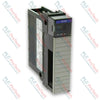
Allen-Bradley 1756-DHRIO ControlLogix Module de communication DH Plus et RIO | Original New | In Stock | View Details |
Expédition express mondiale
Retours et garantie
Les commandes sont traitées et livrées du lundi au vendredi (hors jours fériés).
Pour connaître l'éligibilité complète, les frais de restockage et les détails des retours internationaux, veuillez consulter notre site officiel Politique de remboursement et de retour .
| Color pattern |
Noir
|
| Country of origin |
États-Unis
|
| Power source |
Alimentation DC
|

Une liste de contrôle sur site pour les seuils de signal KL1512, le sens de comptage, les données de processus et la différence de câblage entre le KL1512 et le KS1512.

Une liste de contrôle sur le terrain concernant les limites de courant de l’EPP2008-0001, la tension d’alimentation, les voyants LED des canaux, le codage des connecteurs et les défauts de sortie...

Avant de transférer une licence TwinCAT 3 avec un Beckhoff C9900-L100, vérifiez la version de TwinCAT, la description XML de l’appareil, la référence de commande exacte et les limites de l’armoire...

Une liste de contrôle sur le terrain pour remplacer un Beckhoff EL4032, couvrant la charge de ±10 V, le schéma des bornes, les contacts d’alimentation, l’état EtherCAT et le comportement du chien de...

Avant de remplacer un Yokogawa AAI835, vérifiez le mappage des voies 4 entrées/4 sorties, le comportement de la boucle en cas de perte d’alimentation, le type de barrière, la charge de sortie, le...

L’article ABB PM891K01 3BSE053241R1 est le kit de processeur AC 800M non redondant. Utilisez cette liste de contrôle sur le terrain avant le remplacement.