Capacités de l’équipement et application sur le marché
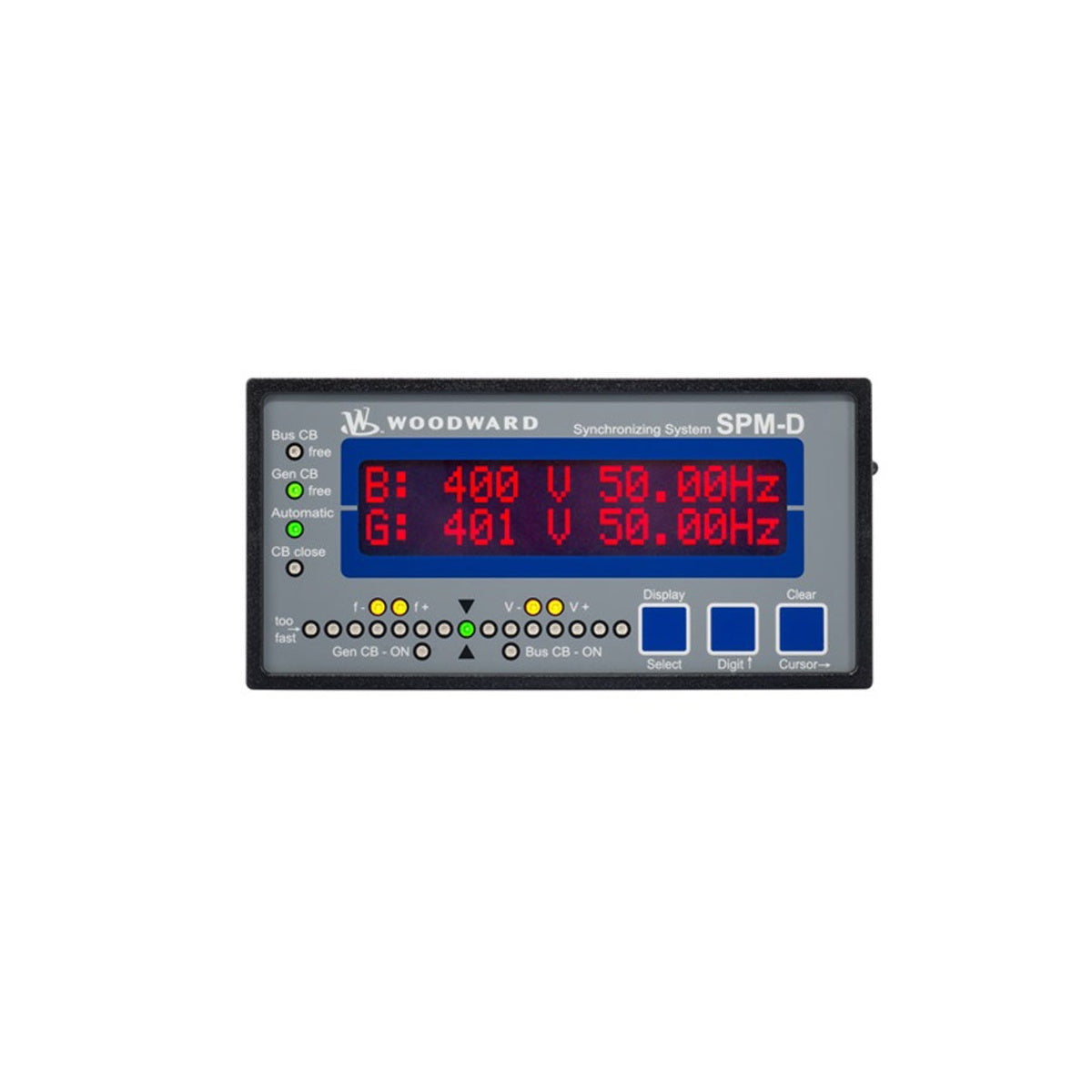
Le SPM-D2-1010B/X (8440-2168), faisant partie de la série Woodward SPM-D2, est un synchroniseur à microprocesseur conçu pour les générateurs AC triphasés équipés de régulateurs de vitesse Woodward ou compatibles ainsi que de régulateurs automatiques de tension. Dans des environnements électriques critiques tels que les systèmes de secours hospitaliers, les micro-réseaux miniers isolés et les usines chimiques à processus continu, le 8440-2168 offre une synchronisation essentielle et une fonction de démarrage sur bus mort. En ajustant précisément la fréquence, la phase et la tension avant la fermeture du disjoncteur, ce contrôleur élimine les contraintes mécaniques catastrophiques et les surtensions électriques liées à une mauvaise synchronisation. Sa capacité à gérer les opérations isolées garantit la stabilité de vos installations de production d’énergie même en cas de défaillance du réseau principal, réduisant ainsi considérablement le risque de dommages matériels et d’arrêts non planifiés.
Logique de contrôle et configuration technique
Le 8440-2168 SPM-D2-1010B/X est conçu pour une détection et une synchronisation haute précision en 2 phases. L’unité intègre les fonctions de contrôle et de surveillance dans un boîtier compact à montage affleurant.
-
Performance de synchronisation : Prend en charge la synchronisation et la mesure en 2 phases pour le générateur (Système A) et le barreau omnibus (Système B), assurant une grande précision dans l’alignement des phases.
-
Biais de contrôle flexible : Dispose de sorties de biais analogiques librement configurables pour une large gamme de signaux incluant +/- 1 V, +/- 3 V, +/- 10 V et 0 à 20 mA. Il supporte également une sortie PWM à 500 Hz pour le contrôle de vitesse.
-
Gestion du bus mort : Comprend une fonction de démarrage sur bus mort « à la demande », permettant une fermeture sécurisée du disjoncteur lorsque le barreau omnibus est hors tension.
-
Options d’interface : Équipé d’une interface série USB frontale pour une configuration rapide sur le terrain via le logiciel Woodward ToolKit.
Spécifications techniques
| Paramètre |
Spécification |
| Modèle |
8440-2168 (SPM-D2-1010B/X) |
| Marque |
Woodward |
| Origine |
USA / Allemagne |
| Alimentation |
90 à 250 VAC / 120 à 375 VDC |
| Fréquence de mesure |
50/60 Hz (Plage : 40 à 70 Hz) |
| Entrée de mesure |
100 VAC |
| Entrées discrètes |
4 entrées d’alarme (isolées) |
| Sorties discrètes |
2 sorties relais |
| Sorties analogiques |
2 configurables (+/- 10 V, +/- 20 mA, PWM) |
| Indice de protection |
IP42 avant (IP54 avec joint optionnel) / IP20 arrière |
| Dimensions |
12,2 cm x 14,4 cm x 7,2 cm |
| Poids |
0,8 kg |
FAQ opérations et maintenance
Comment configurer les sorties analogiques pour différents types d’AVR ?
Les sorties analogiques sont librement configurables via le logiciel Woodward ToolKit. Vous pouvez choisir entre un biais en tension (+/- 10 V) ou en courant (+/- 20 mA) pour correspondre aux exigences spécifiques de votre régulateur automatique de tension (AVR) ou de votre régulateur de vitesse.
Le 8440-2168 supporte-t-il la synchronisation si le barreau omnibus est mort ?
Oui. L’unité dispose de la fonction « Dead Bus Start ». Lorsque le contrôleur détecte un état de bus mort, il peut être commandé pour fermer immédiatement le disjoncteur afin d’alimenter le système, en contournant la vérification standard de synchronisation.
Quelle est la signification de la désignation 1010B/X ?
Cette version spécifique indique la configuration matérielle pour la détection en 2 phases, la capacité discrète de montée/descente pour la vitesse et la tension, ainsi que des ensembles de sorties analogiques conçus pour des groupes moteur-générateur polyvalents.
Guide d’ingénierie et d’installation
-
Étanchéité et protection environnementale : L’indice standard du panneau avant est IP42. Pour les installations en environnements humides ou poussiéreux (courants dans les mines et les armoires extérieures), installez toujours le joint optionnel (P/N 8923-1037) pour améliorer l’étanchéité avant à IP54. Veillez à serrer uniformément les fixations pour maintenir l’intégrité de l’étanchéité.
-
Blindage des signaux : Les sorties de biais analogiques pour la vitesse et la tension sont sensibles aux interférences électromagnétiques. Utilisez toujours des câbles torsadés blindés de haute qualité pour ces connexions. Assurez-vous que le blindage est mis à la terre uniquement côté contrôleur afin d’éviter les boucles de masse pouvant induire des fluctuations de fréquence dans le régulateur.
-
Sécurité du bus mort : Lors de la mise en service de la fonction de démarrage sur bus mort, vérifiez que les transformateurs de détection du générateur et du barreau omnibus sont correctement polarisés. Un mauvais phasage lors de la transition d’un bus mort à un bus sous tension peut entraîner une synchronisation gravement déphasée si le bus est alimenté pendant la séquence de fermeture.