


Allen-Bradley 1771-IG : contrôles de la logique TTL et du câblage 5 V
Vérifiez les seuils logiques HIGH/LOW TTL du 1771-IG, l’ondulation de l’alimentation terrain et le câblage du 1771-WC avant de remplacer un module d’entrée.
Fabricant : Allen-Bradley
N° de produit : 1771-OB
Pays d'origine :États-Unis
Type de produit : Module de sortie numérique
Code-barres : 8537101190
Paiement : Virement bancaire, Western Union
Poids : 900g
Dimensions : 3,5 cm x 13 cm x 14,5 cm
Port d'expédition : Xiamen
Garantie : 12 mois
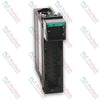
Le 1771-OB est un dispositif électronique numérique à semi-conducteurs à 8 canaux, conçu pour la plateforme d’E/S PLC-5 / 1771 afin de piloter des équipements industriels de commande en courant continu basse tension. Il fournit des voies de commutation électriques pour divers composants de terrain, notamment des variateurs de moteurs CC, des indicateurs d’état et des électrovannes industrielles. La micro-logique de commande interne est alimentée par le rail du fond de panier du châssis d’E/S local et consomme au maximum 165 mA, afin de maintenir une isolation optoélectronique structurelle entre les éléments de terrain de l’installation de haut niveau et les bus du processeur central. L’intégration au système s’effectue au moyen de l’ensemble connecteur-bras de câblage standard 1771-WA, permettant les opérations de remplacement à chaud ou de remplacement de carte sans perturber les connexions des bornes de terrain déjà raccordées.
| Paramètre | Spécification |
|---|---|
| Fabricant | Allen-Bradley / Rockwell Automation |
| Modèle | 1771-OB |
| Série de produits | E/S PLC-5 / 1771 |
| Type de module | Module de commande de sorties numériques CC |
| Sorties par module | 8 |
| Compatibilité du châssis | Châssis d’E/S 1771 |
| Plage de tension de fonctionnement d’entrée | 10 Vcc à 27 Vcc |
| Capacité de courant de sortie | 1,5 A par sortie individuelle (sans dépasser 8 A au total par module) |
| Surtension de courant maximale | 4 A pendant 1 ms, répétable à intervalles de 1 s |
| Courant de fuite à l’état bloqué | 1 mA maximum par sortie |
| Chute de tension à l’état passant | 2 Vcc maximum |
| Retard de transmission du signal | 10 ms (états marche-arrêt et arrêt-marche) |
| Dissipation de puissance | 0,9 watt minimum, 16,9 watts maximum |
| Dissipation thermique | 3,0 BTU/h minimum, 57,6 BTU/h maximum |
| Demande de courant logique du fond de panier | 165 mA à 5 Vcc ±5 % |
| Isolation optoélectrique | 1 500 Vca (efficaces) |
| Plage de températures de fonctionnement | 0 °C à 60 °C |
| Plage de températures de stockage | -40 °C à 85 °C |
| Humidité ambiante relative | 5 % à 95 % (sans condensation) |
| Spécifications du câblage de terrain | Câble flexible de section nominale de 1,5 mm2 |
| Encoches de détrompage en plastique du fond de panier | Entre les positions 4 et 6, et entre les positions 18 et 20 |
| Fusibles internes | Calibre 2 A, 8AG (un fusible individuel par circuit de sortie) |
| Bloc de raccordement des bornes | Bras de câblage 1771-WA |
| Broche de borne du connecteur | Fonction |
|---|---|
| Borne A | Référence de l’entrée d’alimentation en tension CC positive |
| Borne 0 | Ligne de signal du canal de sortie numérique 0 |
| Borne 1 | Ligne de signal du canal de sortie numérique 1 |
| Borne 2 | Ligne de signal du canal de sortie numérique 2 |
| Borne 3 | Ligne de signal du canal de sortie numérique 3 |
| Borne 4 | Ligne de signal du canal de sortie numérique 4 |
| Borne 5 | Ligne de signal du canal de sortie numérique 5 |
| Borne 6 | Ligne de signal du canal de sortie numérique 6 |
| Borne 7 | Ligne de signal du canal de sortie numérique 7 |
| Borne B | Référence du retour de masse commun CC |
Q : Quelle spécification précise de fusible de remplacement faut-il utiliser si un canal se désactive ? R : Chaque commutateur de sortie individuel est associé à un fusible standard de 2 A au format 8AG, accessible sous le capot latéral de la carte.
Q : Ce module pilote CC peut-il être inséré en toute sécurité dans l’emplacement le plus à gauche d’un châssis 1771 ? R : Non, l’emplacement situé à l’extrême gauche de la configuration du châssis 1771 est réservé structurellement au module processeur maître ou à la tête d’adaptateur du réseau d’E/S déportées.
Q : Le module affiche-t-il des indicateurs sur la face avant pour le diagnostic individuel des circuits ? R : Oui, il comporte une LED rouge dédiée signalant un fusible grillé, ainsi que huit LED rouges d’état individuelles qui s’allument lorsqu’un canal de sortie est activé.


Livraison express mondiale
Retours et garantie


| Product Image | Model Number / Title | Condition | Availability | Action |
|---|---|---|---|---|

|
Module de sortie numérique CC Allen-Bradley 1746-OVP16 SLC 500 | Original New | In Stock | View Details |
|
Allen-Bradley 1756-OB8 ControlLogix module de sortie numérique CC | Original New | In Stock | View Details |

|
Processeur de contrôleur PLC-5/40 Allen-Bradley 1785-L40B | Original New | In Stock | View Details |
Expédition express mondiale
Retours et garantie
Les commandes sont traitées et livrées du lundi au vendredi (hors jours fériés).
Pour connaître l'éligibilité complète, les frais de restockage et les détails des retours internationaux, veuillez consulter notre site officiel Politique de remboursement et de retour .
| Color pattern |
Noir
|
| Country of origin |
États-Unis
|
| Power source |
Alimentation DC
|

Vérifiez les seuils logiques HIGH/LOW TTL du 1771-IG, l’ondulation de l’alimentation terrain et le câblage du 1771-WC avant de remplacer un module d’entrée.

Une liste de contrôle sur le terrain pour distinguer les Danfoss 060G2105, 060G1323 et 060G2109 selon la plage de pression, le raccord, le signal de boucle et l’échelle du contrôleur.

Une liste de contrôle sur le terrain pour distinguer les défauts d’entrée 24 VCC, de bus de fond de panier, de déclassement de sortie et de contact d’alarme avant de remplacer un Emerson SE5009.

Une méthode de mise en service contrôlée utilisant le simulateur 140XSM00200 pour vérifier le mappage des entrées et les interverrouillages Modicon Quantum avant de reconnecter le câblage de terrain.

Une liste de contrôle de mise en service du ProSoft PLX32-EIP-MBTCP couvrant la séparation des sous-réseaux, les contrats de registres, la temporisation EtherNet/IP, les tests de défaillance et les...

Une liste de contrôle sur le terrain pour les commandes de relais IC693MDL916, les borniers, le courant de charge, la fréquence de commutation et les mesures côté contacts.