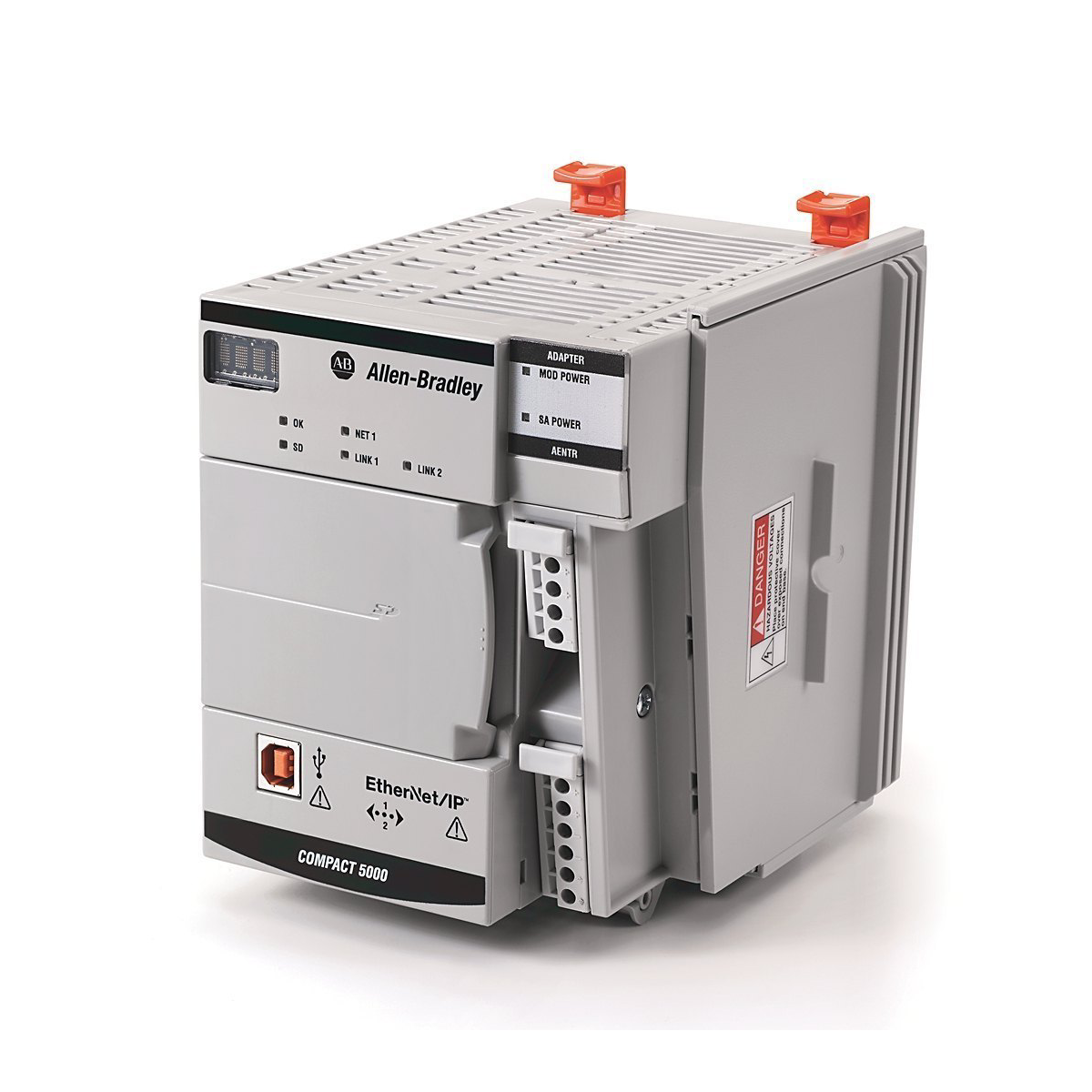
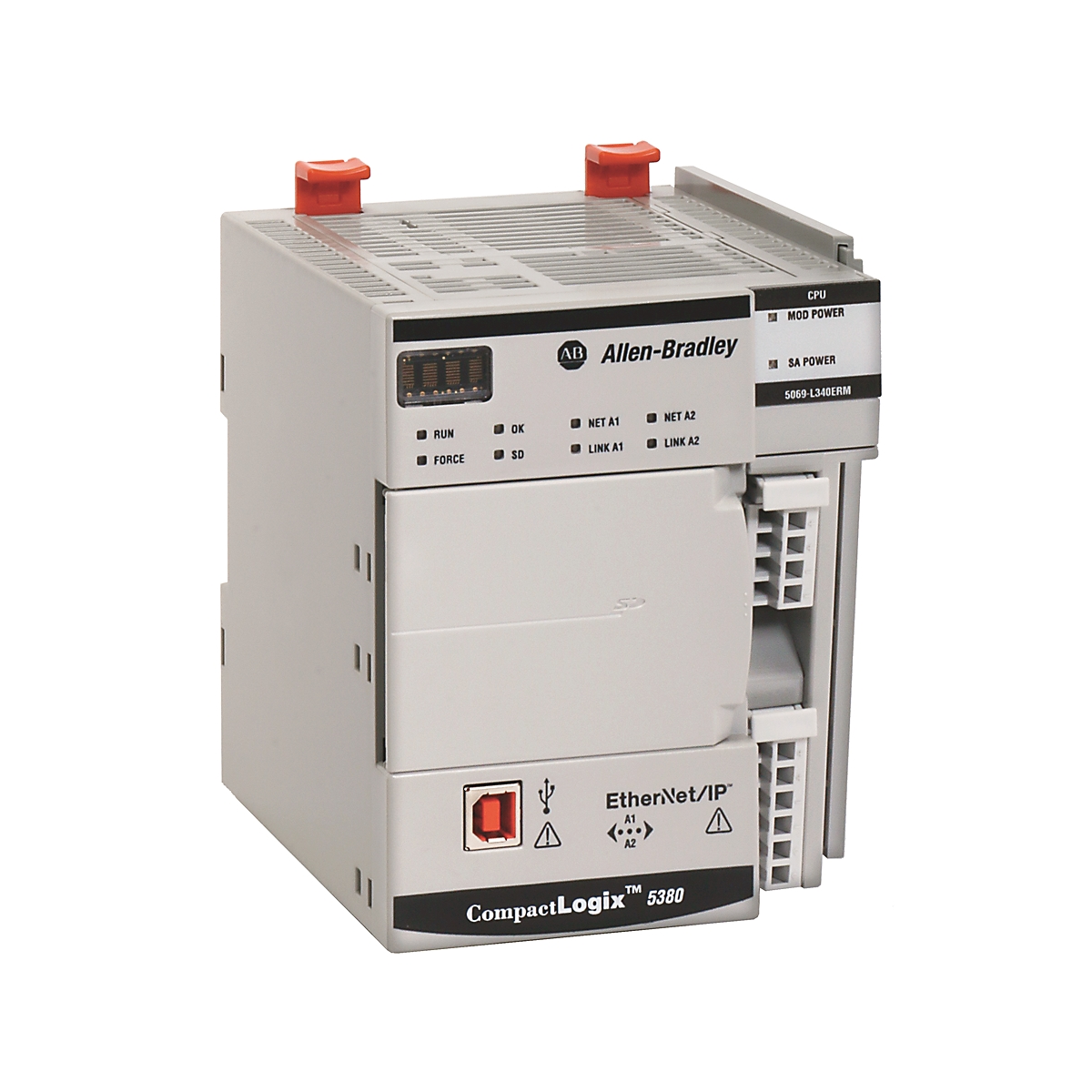
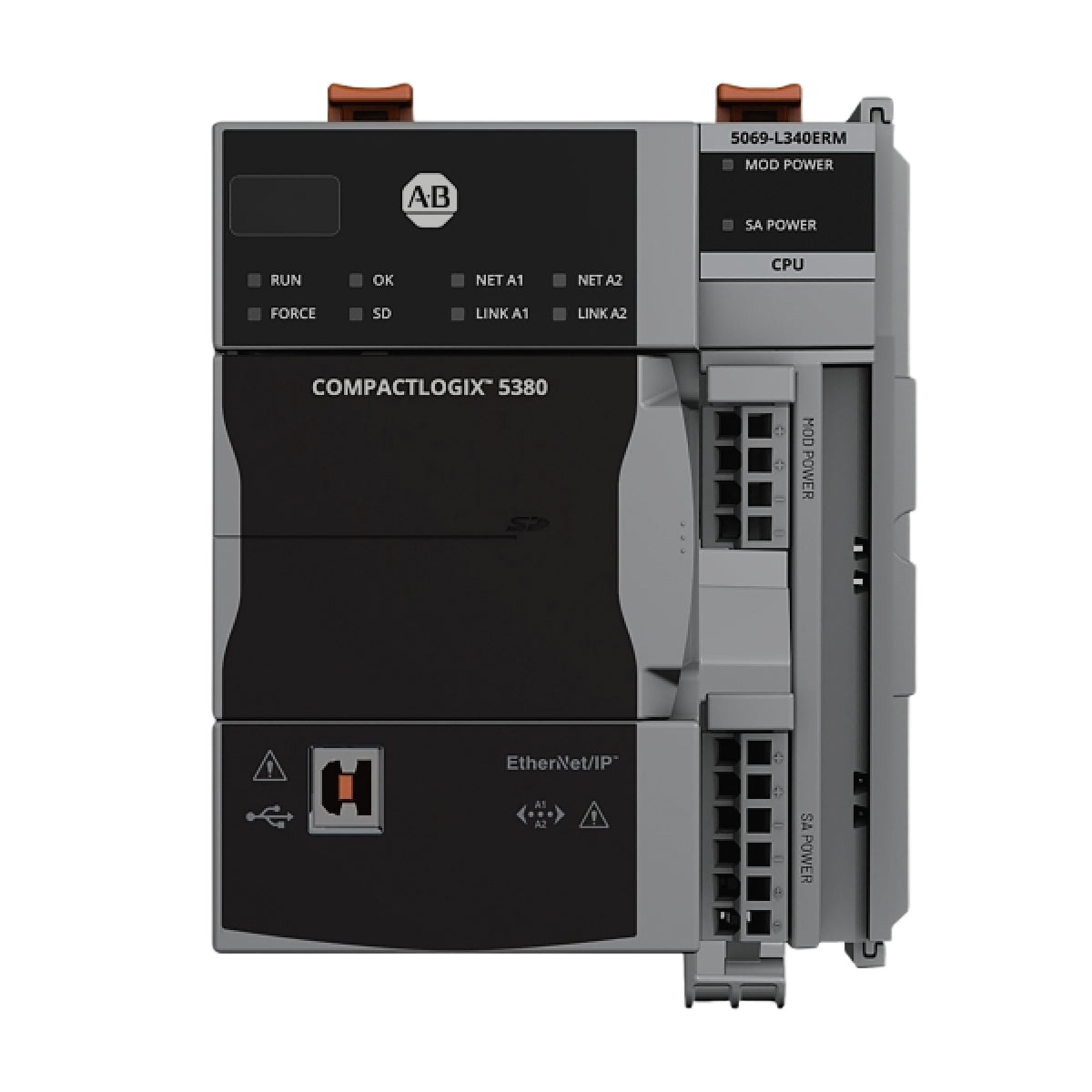
Le 5069-L306ERM est un contrôleur performant de milieu de gamme de la famille CompactLogix 5380 de Rockwell Automation. Conçu pour les applications industrielles modernes, il offre une puissance de traitement accrue, un débit d’E/S à haute vitesse et des capacités intégrées de contrôle de mouvement. Il est particulièrement adapté aux constructeurs de machines nécessitant précision, évolutivité et sécurité renforcée au sein de l’écosystème Logix 5000.
Spécifications techniques clés
| Paramètre |
Détails de la spécification |
| Modèle |
5069-L306ERM |
| Marque |
Allen-Bradley (Rockwell Automation) |
| Mémoire utilisateur |
0,6 MB |
| Mouvement intégré |
Jusqu’à 2 axes CIP Motion |
| Nœuds Ethernet |
Prend en charge jusqu’à 16 nœuds Ethernet/IP |
| Modules d’E/S locaux |
Prend en charge jusqu’à 8 modules d’E/S locaux 5069 |
| Ports de communication |
2 Ethernet (Gigabit) / 1 USB (programmation) |
| Alimentation |
Le module nécessite un 5069-RTB22 externe ou équivalent pour l’alimentation DC |
| Logiciel de programmation |
Studio 5000 Logix Designer (v28 ou ultérieur) |
Fonctionnalités principales
1. Mouvement intégré sur EtherNet/IP
Le « M » dans le nom du modèle signifie la capacité de Mouvement intégré. Le 5069-L306ERM prend en charge jusqu’à 2 axes de mouvement coordonné, permettant un contrôle précis des variateurs et moteurs Kinetix via un câble Ethernet standard, sans besoin de matériel de mouvement dédié.
2. Ports Ethernet Gigabit doubles
Ce contrôleur dispose de deux ports Ethernet 1 Gigabit configurables en deux modes :
-
Mode Dual-IP : attribuez des adresses IP distinctes à chaque port pour isoler le trafic de l’atelier du réseau d’entreprise.
-
Mode Linéaire/DLR : permet des topologies Device Level Ring (DLR), offrant une résilience réseau pour qu’une coupure de câble unique ne stoppe pas le système.
3. Plateforme d’E/S 5069
Il utilise la plateforme 5069 Compact I/O, qui offre des vitesses de bus arrière nettement plus rapides que les générations précédentes. Cela réduit la latence et améliore la performance déterministe des E/S pour les applications de comptage ou détection à haute vitesse.
FAQ techniques
Quelle est la différence entre le 5069-L306ER et le 5069-L306ERM ?
La version ER est un contrôleur standard sans capacité de mouvement intégré. La version ERM inclut la prise en charge de CIP Motion, ce qui lui permet de contrôler des axes servo synchronisés.
Le 5069-L306ERM nécessite-t-il une batterie ?
Non. Comme la plupart des contrôleurs Logix modernes, il utilise une mémoire non volatile interne et des condensateurs pour sauvegarder le programme utilisateur et les données en cas de coupure de courant, éliminant ainsi le besoin de remplacer périodiquement une batterie.
Puis-je utiliser des modules d’E/S de la série 1769 avec ce contrôleur ?
Non. La série 5380 est uniquement compatible avec la plateforme d’E/S 5069 pour les modules locaux. Pour utiliser des modules 1769, il faut les connecter en E/S distante via un adaptateur Ethernet (par exemple, 1769-AENTR).
Guide d’ingénierie et d’installation
-
Architecture d’alimentation : le contrôleur nécessite deux entrées d’alimentation DC distinctes : MOD Power (pour le contrôleur et l’électronique des modules) et SA Power (pour l’alimentation côté terrain des E/S). Ces alimentations doivent être connectées via un bornier amovible (RTB).
-
Fonctions de sécurité : le 5069-L306ERM intègre des fonctions de sécurité basées sur le contrôleur, telles que le firmware signé numériquement et le contrôle d’accès basé sur les rôles, pour protéger contre les modifications non autorisées et les cybermenaces.
-
Montage : il est conçu pour un montage standard sur rail DIN. Veillez à laisser un dégagement suffisant (environ 50 mm) au-dessus et en dessous du module pour permettre un refroidissement par convection passive, car cette série peut chauffer lors de traitements intensifs.
Avantages d’ingénierie
Le 5069-L306ERM se distingue par ses performances à faible latence. Avec un bus arrière Gigabit et une exécution rapide des tâches, il peut gérer des logiques complexes et des tâches de mouvement avec un minimum de gigue. Il constitue une excellente porte d’entrée pour les applications de mouvement ne nécessitant pas la mémoire massive ou le nombre élevé d’axes de la gamme 1756 ControlLogix, tout en offrant la fiabilité et la précision de la marque Allen-Bradley.