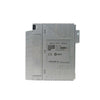
Présentation du produit
Le 7DI135.70 (7DI135.70) est un module E/S spécialisé conçu par B&R, principalement utilisé dans des architectures de contrôle de haute précision. Bien que la classification puisse parfois se chevaucher dans la documentation ancienne, ce module fonctionne comme une interface d’entrée fournissant 4 canaux d’entrée numérique, complétés par 1 canal de sortie. Conçu pour des performances robustes en automatisation industrielle, ce composant assure un traitement rapide des signaux et une commutation fiable, ce qui est essentiel pour maintenir la continuité opérationnelle dans des environnements à processus intensifs. En intégrant plusieurs entrées et une sortie de diagnostic, le 7DI135.70 aide à consolider le câblage terrain et à améliorer le temps de réponse de vos boucles de contrôle PLC.
Configuration technique
L’architecture du module est optimisée pour les configurations de câblage en mode sink, garantissant la compatibilité avec les capteurs et interrupteurs industriels standards. Le design équilibre la densité des canaux avec la fiabilité électrique, le rendant adapté aux agencements compacts d’armoires où l’économie d’espace est une priorité.
-
Architecture d’entrée : Les 4 canaux d’entrée numérique sont conçus pour une réponse rapide, capables d’interfacer avec des signaux industriels standards en 24 VCC.
-
Sortie intégrée : L’inclusion d’une sortie numérique permet une reconnaissance locale du signal ou le contrôle d’un relais, simplifiant la connexion entre le niveau capteur et le niveau actionneur.
-
Intégrité du signal : Le câblage en mode sink est conçu pour minimiser les diaphonies et la susceptibilité au bruit, à condition que les pratiques de mise à la terre en mode commun soient strictement respectées lors de l’installation.
Spécifications techniques
| Caractéristique |
Spécification |
| Modèle |
7DI135.70 |
| Marque |
B&R |
| Entrées numériques |
4 |
| Sorties numériques |
1 |
| Type de câblage |
Sink |
| Poids |
0,4 kg |
| Poids avec emballage |
1,5 kg |
FAQ
Le 7DI135.70 est-il compatible avec des signaux 12 VCC et 24 VCC ?
Le module est principalement conçu pour des niveaux de signaux industriels standards en 24 VCC. L’utilisation de tensions en dehors de cette plage peut entraîner une détection incorrecte des états ou endommager le matériel.
Que signifie la configuration de câblage en mode sink pour le choix de mes capteurs ?
Le câblage en mode sink (NPN) signifie que le module fournit le chemin de masse pour compléter le circuit lorsque l’entrée est active. Assurez-vous que vos capteurs sont configurés en mode source (PNP) ou compatibles avec des entrées sink pour garantir un fonctionnement logique correct.
Comment fonctionne la sortie intégrée dans une boucle de contrôle standard ?
La sortie intégrée est généralement utilisée pour une indication locale d’état, un signalement de défaut ou pour piloter un petit relais. Elle agit comme un canal auxiliaire pour le PLC, réduisant le besoin d’un module de sortie supplémentaire dans les applications à petite échelle.
Consignes d’installation et d’utilisation
-
Mise à la terre pour les entrées sink : Étant donné que le module utilise une configuration sink, assurez-vous que la masse commune (négatif DC) est reliée de manière fiable à la borne de masse du module. Toute différence de potentiel entre la masse du capteur et celle du module doit être minimisée pour éviter les courants de fuite sur les entrées.
-
Séparation des câbles : Pour maintenir l’intégrité du signal, éloignez le câblage des entrées/sorties numériques des lignes AC haute tension et des câbles de moteurs à variateur de fréquence. Utilisez des câbles blindés et torsadés pour les longueurs supérieures à 5 mètres afin d’éviter que les interférences électromagnétiques ne provoquent de fausses entrées.
-
Mise en service initiale : Avant d’alimenter l’ensemble du système, utilisez les outils de diagnostic logiciels B&R pour vérifier l’état de chaque canal d’entrée. Cela permettra de confirmer que votre logique de câblage sink est correctement mappée sur vos registres d’entrée, évitant ainsi les erreurs d’inversion logique au démarrage de la machine.