Description
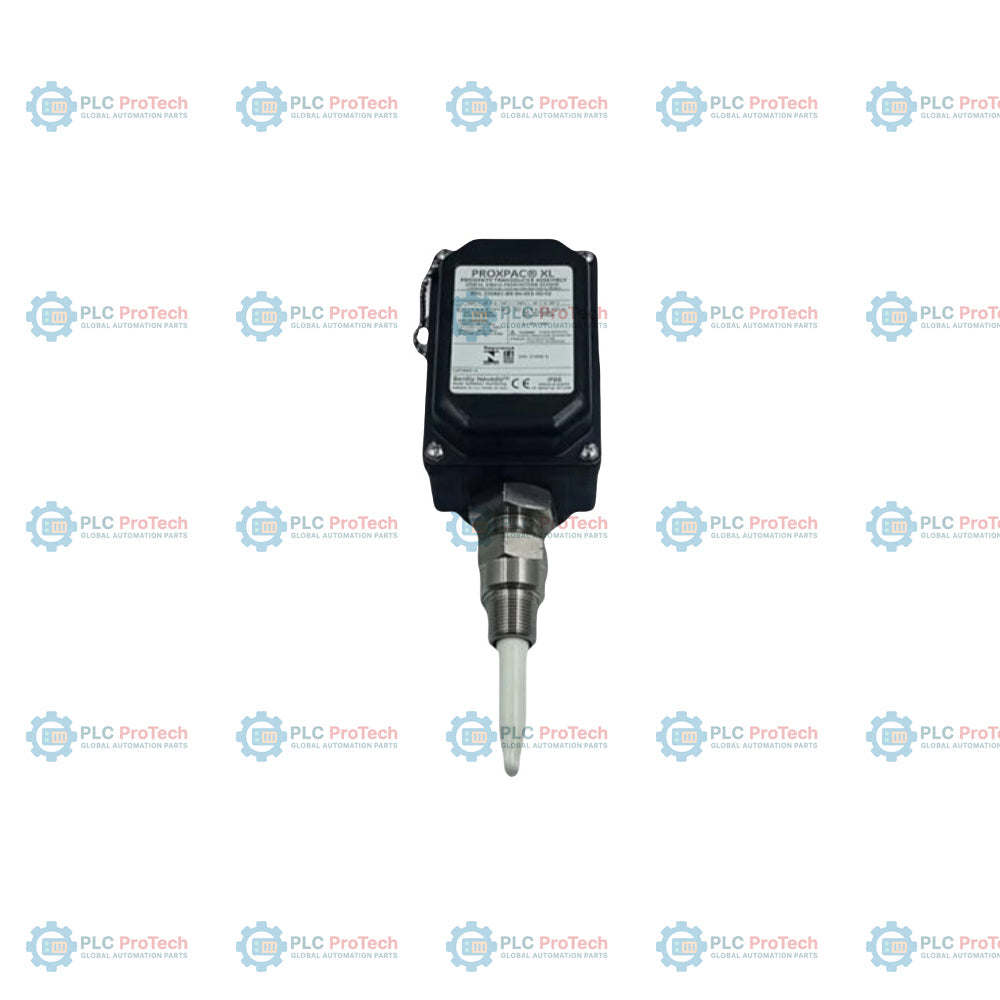
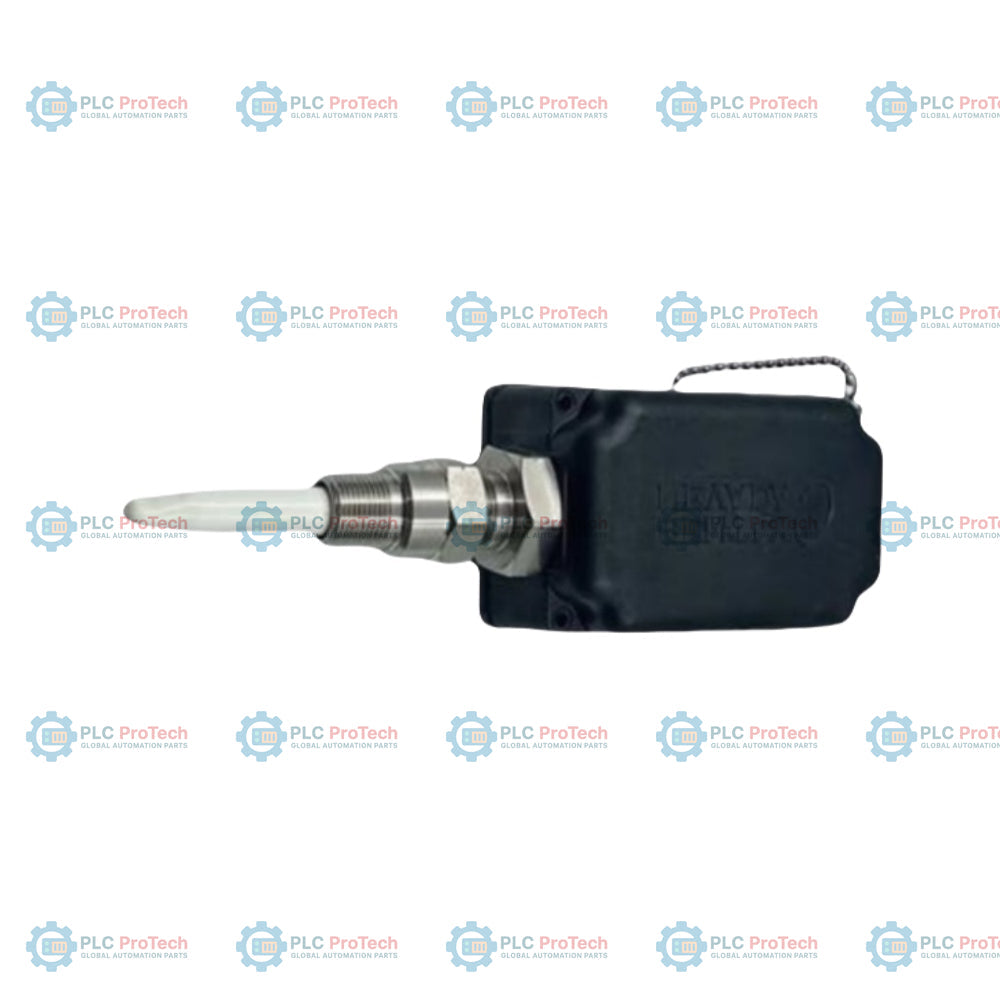
L'option 28 (sonde 3300 XL de 8 mm avec plusieurs homologations) et l'option 04 (longueur de l'adaptateur d'espacement de 40 mm) définissent cette configuration métrique du transducteur de proximité PROXPAC XL — 330881-28-04-034-06-02. Cet ensemble intégré fonctionne comme un système autonome de sonde de proximité à courants de Foucault en intégrant la sonde 3300 XL de 8 mm et le capteur Proximitor 3300 XL dans un seul boîtier durable. Il élimine le besoin d'un câble d'extension externe entre la sonde et le capteur, simplifiant les installations sur site en permettant au câblage sur site de se raccorder directement entre le système de surveillance de la machine et le boîtier du transducteur.
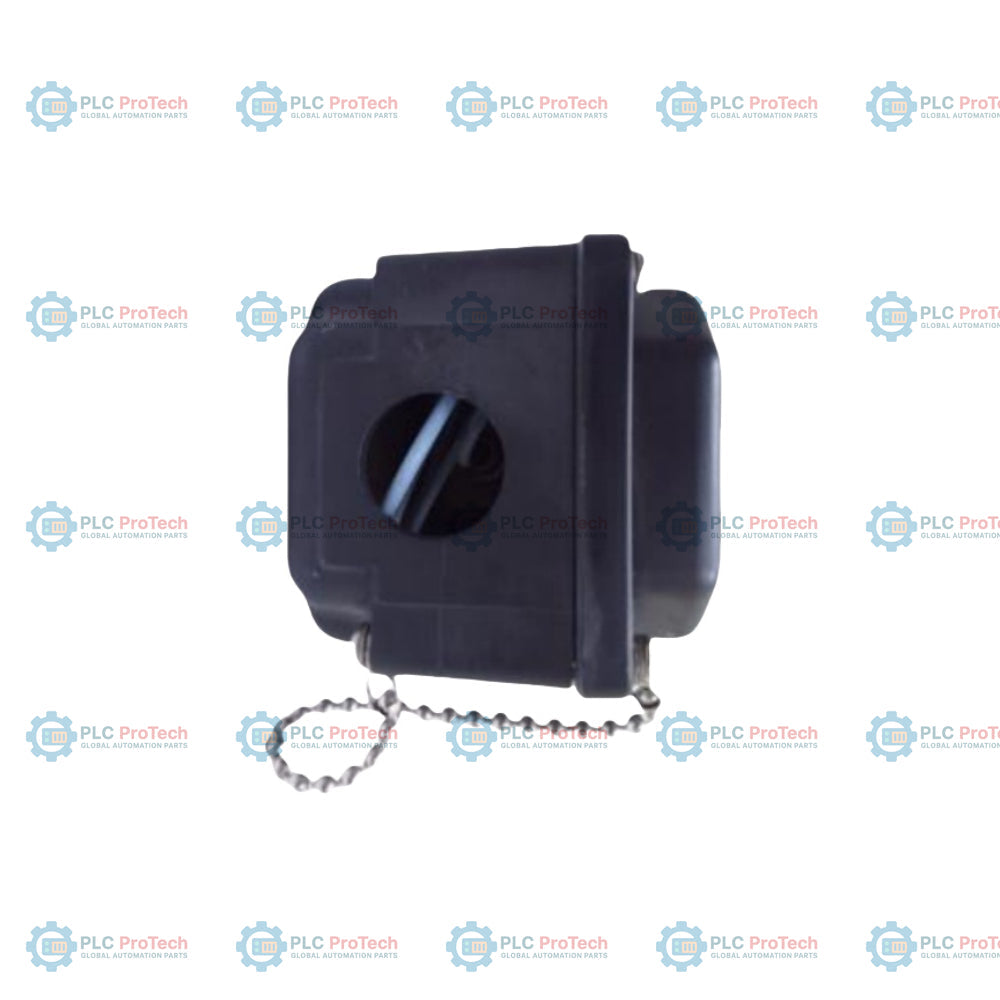
Cette variante spécifique présente une longueur de pénétration de la sonde de 34 mm (option 034), un raccord 3/4-14 NPT avec un réducteur en acier inoxydable de 1-1/2-14 NPT (option 06) et un filetage de montage 3/4-14 NPT (option 02) compatible avec l'adaptateur d'espacement de 40 mm. Le boîtier est moulé en sulfure de polyphénylène (PPS) renforcé de fibres de verre et contenant des fibres conductrices afin de renforcer le corps et de dissiper les charges électrostatiques, offrant une protection de type 4X et IP66. Cette configuration comprend plusieurs homologations d'organismes (option 28) pour les installations en zones dangereuses.
Caractéristiques
-
Conception intégrée de la sonde et du capteur : Intègre une sonde 3300 XL de 8 mm d'un mètre et un capteur Proximitor dans une seule unité, éliminant les boîtiers de capteur séparés et les câbles d'extension intermédiaires.
-
Homologations de l'option 28 : Comprend plusieurs certifications pour zones dangereuses (CSA, ATEX et IECEx) destinées aux installations à sécurité intrinsèque et aux installations non incendiaires.
-
Adaptateur d'espacement de 40 mm (option 04) : Comprend un adaptateur d'espacement métrique pour ajuster la profondeur de montage et éviter les obstacles du boîtier.
-
Longueur de pénétration de 34 mm (option 034) : Offre une profondeur de pénétration précise de la sonde de 34 mm pour un positionnement exact par rapport à l'arbre cible.
-
Boîtier thermoplastique PPS avancé : Moulé en sulfure de polyphénylène chargé de fibres de verre et de fibres conductrices, pour assurer une étanchéité environnementale de type 4X et IP66.
-
Raccords de conduits industriels (option 06) : Fournis avec un raccord 3/4-14 NPT, un réducteur en acier inoxydable de 3/4-14 NPT à 1-1/2-14 NPT et deux bouchons pour assurer une protection robuste du câblage sur site.
Applications
L'ensemble transducteur est utilisé dans les systèmes industriels de surveillance des machines tournantes. Il mesure les vibrations de l'arbre et la position axiale sur des équipements critiques tels que les turbines à vapeur, les turbines à gaz, les compresseurs, les pompes et les boîtes de vitesses. Sa conception intégrée est idéale pour les emplacements où l'espace nécessaire au montage de boîtiers Proximitor séparés est limité ou lorsqu'il est préférable de réduire le nombre de raccordements de câbles intermédiaires afin d'améliorer la fiabilité dans des environnements difficiles.
Informations de commande
| Option / Composant |
Code |
Description / Spécification |
| Numéro de pièce commandable |
330881-28-04-034-06-02 |
Ensemble transducteur de proximité PROXPAC XL (métrique) |
| Option A - Sonde et homologations |
28 |
Sonde 3300 XL de 8 mm avec plusieurs homologations |
| Option B - Adaptateur d'espacement (dimension B) |
04 |
Longueur de l'adaptateur d'espacement de 40 mm |
| Option C - Pénétration de la sonde (dimension C) |
034 |
Longueur de pénétration de la sonde : 34 mm |
| D - Option de raccords |
06 |
Un raccord 3/4-14 NPT, un réducteur en acier inoxydable de 3/4-14 NPT à 1-1/2-14 NPT et deux bouchons |
| E - Option de filetage de montage |
02 |
3/4-14 NPT (requis lors de la commande de l’option adaptateur d’entretoise) |
Spécifications techniques
| Fabricant |
Bently Nevada (Baker Hughes) |
| Numéro de modèle |
330881-28-04-034-06-02 |
| Famille de produits |
Ensemble transducteur de proximité PROXPAC XL (métrique) |
| Compatibilité du système |
Entrées du système de transducteur de proximité 3300 XL |
| Entrée du capteur |
Sonde de proximité 3300 XL de 8 mm avec câble de 1 mètre |
| Plage linéaire |
2 mm (80 mils), commence à environ 0,25 mm (10 mils) de la cible (plage : 0,25 à 2,3 mm) |
| Facteur d’échelle incrémentiel (ISF) |
7,87 V/mm (200 mV/mil) nominal (plus ou moins 5 % sur une plage linéaire de 80 mils) |
| Résistance de sortie |
50 Ohm |
| Réponse en fréquence |
0 à 10 kHz : +0, -3 dB (avec jusqu’à 305 mètres de câblage sur site) |
| Exigences d’alimentation |
Nécessite -17,5 Vcc à -26 Vcc sans barrières à 12 mA maximum ; -23 Vcc à -26 Vcc avec barrières |
| Matériau de la cible standard |
Acier AISI 4140 |
| Taille minimale de la cible |
15,2 mm (0,6 po) de diamètre (cible plane) |
| Diamètre minimal de l’arbre |
50,8 mm (2,0 po) |
| Diamètre minimal recommandé de l’arbre |
76,2 mm (3,0 po) |
| Matériau du boîtier |
Résistant aux ultraviolets (UV), en polyphénylène sulfure (PPS) renforcé de fibres de verre avec fibres conductrices |
| Matériau de la gaine extérieure |
Acier inoxydable AISI 303 |
| Matériau du boîtier de la sonde |
Acier inoxydable AISI 304 |
| Matériau de l’embout de la sonde |
Polyphénylène sulfure (PPS) |
| Câble de sonde |
Longueur de 1 mètre, triaxial 75 Ohm, isolé en polypropylène fluoré (FEP) |
| Étanchéité environnementale |
Type 4X, indice IP66 |
| Température de fonctionnement de la sonde |
-52 degC à +177 degC (-62 degF à +351 degF) |
| Température de fonctionnement du boîtier et du capteur |
-52 degC à +100 degC (-62 degF à +212 degF) |
| Température de stockage |
-52 degC à +105 degC (-62 degF à +221 degF) |
| Humidité relative |
Condensation à 100 %, non submersible lorsque les connecteurs sont protégés |
Directives d’installation
- Veiller à ce que la surface de montage et l’engagement du filetage soient correctement alignés avant le serrage. Le filetage de montage de cette configuration est 3/4-14 NPT.
- Serrer le contre-écrou de la gaine de la sonde au couple recommandé de 39,3 N-m (350 in-lb).
- Utiliser le câblage sur site recommandé (0,2 à 1,5 mm2 ou 16 à 24 AWG, câble triaxial blindé à 3 conducteurs ou câble torsadé blindé avec fil de drainage) pour éviter les interférences externes et l’atténuation du signal.
- Maintenir les longueurs de câblage sur site à moins de 305 mètres (1000 pieds) entre le boîtier du transducteur et le moniteur.
- Veiller à ce que les raccordements de conduits soient correctement étanchéifiés à l’aide des raccords et bouchons de conduit 3/4-14 NPT fournis (option 06) afin de maintenir l’indice IP66 et le type 4X du boîtier. Empêcher toute pénétration d’humidité par le conduit.
Conformité et certifications
- Marquage CE (conformité aux directives de la Communauté européenne)
- Directive CEM 2014/30/UE (EN 61000-6-2, EN 61000-6-4)
- Directive RoHS 2011/65/UE
- Étanchéité environnementale de type 4X et IP66 (vérifiée par BASEEFA)
- Homologations pour zones dangereuses : CSA, ATEX et IECEx, sécurité intrinsèque (Ex ia IIC T4/T5 Ga, Ex ia IIIC T90C/T105C Dc) et non incendiaire / sécurité accrue (Ex nA IIC T4/T5 Gc, Ex ec IIC T4/T5 Gc) lors d’une installation conforme aux schémas 141092 ou 140979.