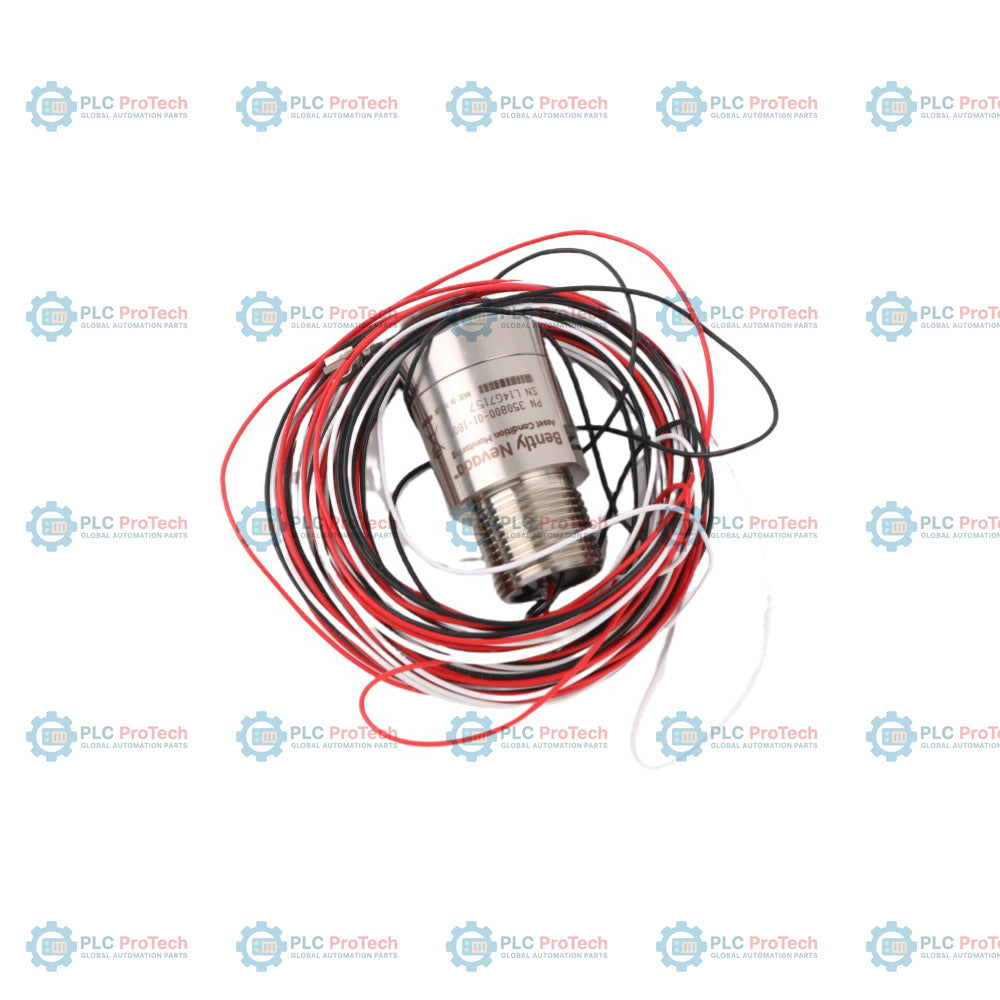
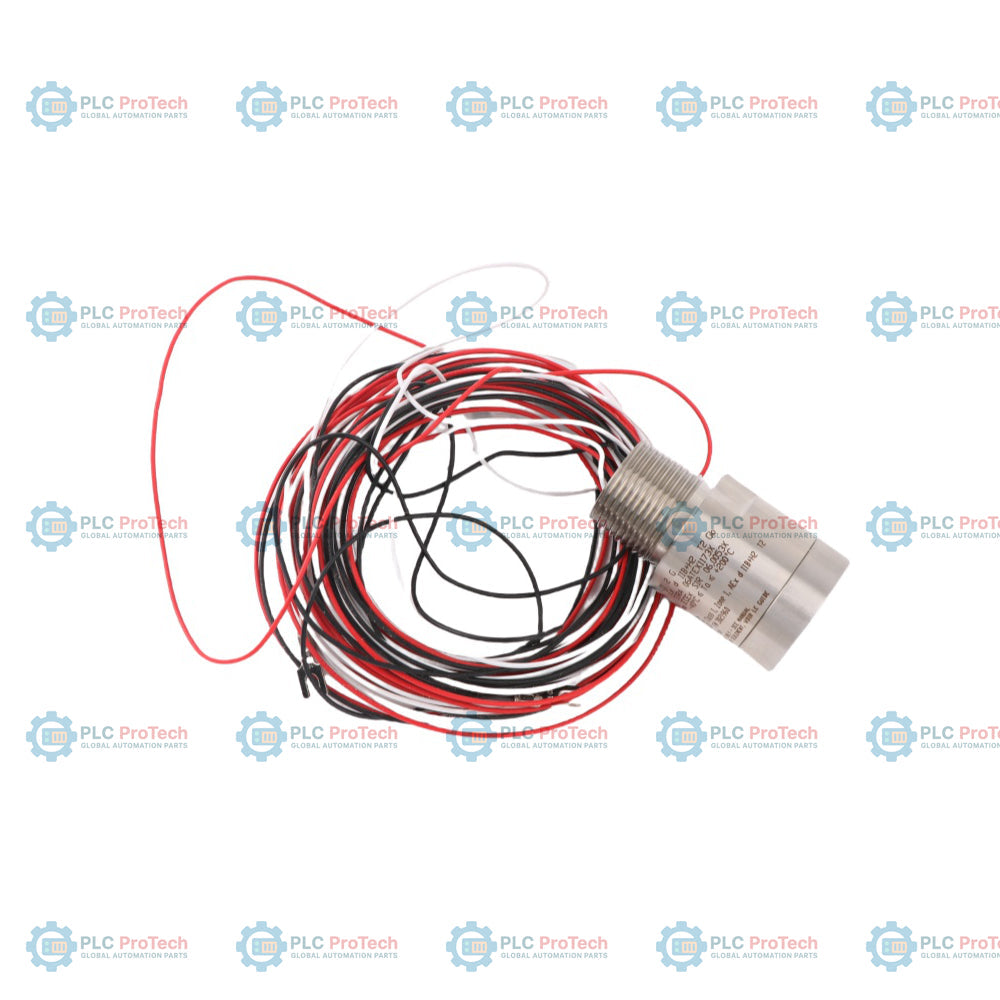
Description
Le Bently Nevada 350800-01-180-00 est un capteur de gaz dangereux haute performance conçu pour une utilisation dans le système de détection de gaz dangereux 3500/63. Ce capteur à perle catalytique à diffusion continue offre une protection critique des machines et du personnel en surveillant en continu les zones pour les gaz combustibles, en se concentrant spécifiquement sur le méthane (CH4) et l'hydrogène (H2).
Le capteur fonctionne via une paire appariée de perles catalytiques et de référence formant une configuration en pont de Wheatstone lorsqu'il est connecté au 3500/63 module de surveillance. La perle catalytique est recouverte d'un catalyseur de haute qualité favorisant l'oxydation, tandis que la perle de référence est spécialement traitée pour inhiber l'oxydation. Lorsque le gaz combustible entre en contact avec la surface sensible, le courant électrique fourni par le moniteur chauffe les perles, initiant une oxydation localisée sur la perle catalytique. Cette réaction chimique augmente la température et la résistance interne de la perle active par rapport à la perle de référence, déséquilibrant le pont de Wheatstone proportionnellement à la concentration du gaz combustible cible jusqu'à 100 % LIE.
Conçu pour une fiabilité extrême, le Bently Nevada 350800-01-180-00 peut être fileté directement dans des conduits structurels standard ou intégré dans un boîtier de jonction antidéflagrant dédié pour optimiser le routage et simplifier les terminaisons de câblage sur le terrain. La configuration du capteur nécessite un courant constant continu de 300 mA provenant d'une source d'alimentation externe régulée directement via le moniteur et le module d'entrée/sortie (E/S) 3500/63.
Caractéristiques
-
Configuration à double perle en pont de Wheatstone : Combine une perle catalytique active et une perle de référence inhibée à l'oxydation pour un suivi différentiel précis.
-
Détection dédiée des gaz cibles : Haute sensibilité et réglage spécifique pour les limites explosives du méthane (CH4) et de l'hydrogène (H2).
-
Fenêtre de température dynamique étendue : Certifié pour une stabilité opérationnelle continue dans des profils de température ambiante allant de -40 Celsius à 200 Celsius.
-
Profil d'installation flexible : Prend en charge le filetage direct standard des conduits industriels ou l'intégration dans un boîtier antidéflagrant pour des cycles de remplacement rapides sur le terrain.
-
Durée de vie prolongée : Construction physique robuste offrant une fenêtre de service opérationnelle minimale de 2 ans et un cycle de vie typique allant jusqu’à 5 ans dans des environnements de fonctionnement standard.
Applications
- Surveillance des gaz combustibles dans les enceintes de turbines
- Systèmes d’huile d’étanchéité de générateurs refroidis à l’hydrogène
- Installations de traitement des hydrocarbures pétroliers et gaziers
- Zones de fabrication chimique et pétrochimique
- Installations de stockage et de distribution de gaz comprimé
- Infrastructure gazière des stations de compression
Informations de commande
-
350800: Capteur de gaz dangereux.
-
01: Fil conducteur de 180 pouces.
-
180: Fil conducteur de 180 pouces.
-
00: Option de boîtier Aucun.
Spécifications techniques
| Paramètre |
Valeur de spécification |
| Fabricant |
Bently Nevada (une entreprise Baker Hughes / General Electric Company) |
| Pays d’origine |
États-Unis d’Amérique |
| Type de capteur |
Antidéflagrant, diffusion continue, bille catalytique |
| Gaz cibles |
Méthane (CH4) et Hydrogène (H2) |
| Plage de mesure |
0 % à 100 % LEL (Limite inférieure d’explosivité) |
| Alimentation en courant constant |
300 mA par canal de capteur |
| Sensibilité initiale |
> 15 mV / % LEL |
| Seuil minimum de calibration |
6 mV / % LEL (Seuil de coupure usé/empoisonné) |
| Dérive zéro à long terme |
< ±2,5 % LEL par mois (à 20 °C, 50 % HR, 101 kPa) |
| Dérive de sensibilité à long terme |
< 2,5 % de signal par mois (à 20 °C, 50 % HR, 101 kPa) |
| Dérive zéro de température |
≤ ±5 % LEL sur la plage -40 Celsius à 200 Celsius |
| Temps de réponse par palier (T50) |
< 10 s pour atteindre 50 % LEL avec un gaz à 100 % LEL appliqué |
| Temps de réponse par palier (T60) |
< 12 s pour atteindre 60 % LEL avec un gaz à 100 % LEL appliqué |
| Débit de calibration manuelle |
0,5 L / min |
| Débit de calibration à distance |
2,0 L / min |
| Plage de température de fonctionnement |
-40 Celsius à 200 Celsius (-40 Fahrenheit à 392 Fahrenheit) |
| Longueur du fil conducteur |
180 pouces |
| Indice de protection du boîtier |
Aucune (Visse directement dans le conduit) |
Connexions/Interfaces
| Broche du connecteur / Couleur du fil |
Fonction / Désignation du signal |
| Blanc |
Vb (Connexion de retour des volts du pont de Wheatstone) |
| Rouge |
Vx (Entrée de courant constant positive / Excitation du pont) |
| Noir |
Retour (Retour de courant constant / Ligne de signal négative) |
Directives d'installation
-
Configurations de câblage : Confirmez toujours la correspondance des fils de terrain et les mesures de continuité sur tous les blocs de terminaison avant de mettre le système sous tension. Ne jamais court-circuiter directement les fils actifs des capteurs structurels à la masse locale du système.
-
Optimisation du câble conducteur : En aucun cas, ne laissez de boucles supplémentaires de longueur excédentaire à l'intérieur du boîtier de jonction du capteur ou des espaces d'enceinte antidéflagrante. Les techniciens sur site doivent couper et dénuder tous les câbles à la distance fonctionnelle réellement requise.
-
Séquence de remplacement à chaud : Lors de la maintenance en direct ou du remplacement physique d'un capteur sous alimentation active du rack système, assurez-vous que l'environnement immédiat est exempt de concentrations de gaz dangereux. Lors du retrait physique, déconnectez la ligne de référence noire en dernier. Lors de la connexion de la nouvelle interface terminale, connectez d'abord le fil noir.
-
Éléments de dégradation environnementale : Évitez tout contact physique direct ou exposition des faces de la pastille catalytique à des agents chimiques ou substances contaminantes croisées, y compris les formulations RTV à base de silicone, les peintures humides et les vapeurs d'échappement de fumée de soudage environnante.
-
Atténuation de l'exposition à l'humidité : Positionnez l'assemblage de la face loin des endroits susceptibles d'accumuler de fortes condensations ou des flux de lavage liquide pour éviter l'entrée d'eau sur la plaque de diffusion du capteur.
-
Orientation et mécanique de flux : Lors de l'installation des capteurs dans des chemins de ventilation structurels, des conduits ou des flux d'air forcé localisés, vérifiez que la fenêtre de détection active fait face directement aux courants d'air principaux.
Conformité et certifications
-
Protection ATEX / IECEx Zone 1 : II 2G Ex d IIB+H2 T2 (classification de protection antidéflagrante certifiée pour les emplacements Zone 1, autorisée pour les environnements méthane et hydrogène avec une température maximale ≤ 300 Celsius).
-
Normes nord-américaines Classe 1 Div 1 / Zone 1 : Classe 1, Zone 1, AEx d IIB+H2 T2 (certifié FM 3021960 pour fonctionnement dans une plage ambiante de -40 Celsius ≤ Ta ≤ 200 Celsius).
FAQ
Quels gaz peuvent être détectés avec le capteur 350800 ?
Le capteur est spécialement conçu pour détecter les concentrations de méthane et d'hydrogène jusqu'à leurs limites inférieures d'explosivité.
Quelle est la longueur du câble conducteur fourni avec ce modèle ?
Ce modèle est livré avec un câble conducteur intégré en usine de 180 pouces.
Quel est le délai minimum de préchauffage requis avant de tenter une étalonnage sur site ?
Le capteur doit être alimenté en continu via le système de surveillance pendant au moins 30 minutes pour se stabiliser avant de commencer l'étalonnage.
Que se passe-t-il si la sensibilité interne du capteur tombe en dessous de 6 mV/% LIE ?
Le capteur échouera aux vérifications de validation du système et ne pourra pas être étalonné, ce qui indique qu'il est usé ou empoisonné.
Peut-on enrouler l'excès de fil conducteur à l'intérieur du boîtier ?
Non, enrouler l'excès de fil conducteur à l'intérieur des boîtes de jonction peut provoquer des interférences et est interdit ; les fils doivent être coupés à la longueur d'installation requise.
Quelle est la limite maximale de température de fonctionnement pour cette tête de capteur ?
Le capteur est conçu pour un fonctionnement continu fiable dans des environnements extrêmes jusqu'à 200 degrés Celsius.
Quel est le mécanisme opérationnel principal du capteur ?
Il utilise un pont de Wheatstone avec une pastille catalytique et une pastille de référence appariées qui détecte la variation de température causée par l'oxydation du gaz.
À quelle fréquence le système de surveillance nécessite-t-il un recalibrage des canaux du capteur ?
Le canal de gaz dangereux et la combinaison du capteur doivent être étalonnés au minimum tous les 90 jours pour respecter la conformité en matière de sécurité.
Quels sont les poisons chimiques principaux qui endommagent l'élément catalytique ?
Les composés RTV à base de silicone, les hydrocarbures chlorés, les hydrures métalliques et les vapeurs d'hydrocarbures lourds empoisonnent ou réduisent la sensibilité de la pastille.
Quel débit d'étalonnage est requis lors d'un étalonnage manuel ?
Un débit régulé de 0,5 litre par minute doit être maintenu lors d'un cycle d'étalonnage manuel standard.
Ce modèle spécifique inclut-il un boîtier antidéflagrant ?
Non, le suffixe d'option indique qu'il est fourni sans boîtier, permettant une intégration directe dans les réseaux de conduits.
Quelle est la durée de vie prévue du capteur en service industriel standard ?
Le capteur offre une durée de vie minimale de 2 ans, avec un cycle de service moyen pouvant atteindre jusqu'à 5 ans dans des conditions normales.
Quelle norme de codage couleur est utilisée pour le câblage des bornes sur le terrain ?
Les connexions du capteur utilisent un format à 3 fils composé d'un fil blanc pour le retour, d'un fil rouge pour l'excitation et d'un fil noir pour le courant constant.
Ce capteur peut-il être déployé dans des emplacements de Zone 1 ?
Oui, le capteur est certifié antidéflagrant avec les marquages ATEX/IEC pour une installation sûre à l'intérieur des environnements dangereux de Zone 1.