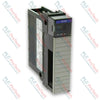
Présentation du produit
Le UR-7HH (UR-7HH) est un module de communication critique pour la sécurité et à haut débit, développé sur mesure par General Electric pour l’architecture de protection électrique Multilin UR Series (relais universels). Conçu pour assurer une transmission stable des données entre relais sur des réseaux distribués, ce module fournit des interfaces à fibre optique à double canal fonctionnant dans une plage nominale de 820 nm avec des LED multimodes. Les opérations d’infrastructure électrique à forte capacité — notamment les blocs d’automatisation de postes, les installations de production d’énergie thermique et les complexes de distribution pétrochimique — s’appuient sur le UR-7HH (UR-7HH) pour gérer la télémétrie de protection en temps réel et les boucles de synchronisation. Grâce à l’intégration de piles Ethernet multiprotocoles et à la prise en charge d’un bus de processus en temps réel, l’unité garantit une coordination différentielle des lignes et une signalisation de déclenchement en moins d’une milliseconde. Cette structure réseau déterministe élimine la latence des paquets lors des pics de trafic, protège la logique de protection en amont contre les interférences électromagnétiques des postes et empêche les arrêts imprévus des installations.
Topologie des sous-systèmes et capacités protocolaires
L’architecture matérielle, les matrices d’intégration réseau et les caractéristiques du micrologiciel du processeur de communication UR-7HH définissent son profil opérationnel au sein des réseaux électriques modernes.
-
Infrastructure optique à double canal : Intègre deux liaisons indépendantes en fibre optique à LED multimode de 820 nm, conçues pour les communications relais pair à pair sur de courtes à moyennes distances, afin de maximiser les vitesses de transmission tout en maîtrisant les coûts de déploiement de l’infrastructure fibre.
-
Matrice Ethernet à trois ports : Équipée de trois interfaces Ethernet physiques dédiées à la gestion de volumes importants de trafic de données, à l’établissement du routage de l’infrastructure réseau et à la réduction des interruptions de communication diagnostique lors des pics de trafic.
-
Pile de protocoles de poste : Exécute un traitement natif et simultané pour les structures de communication avancées des services publics, en intégrant les règles IEC 61850 ainsi que les normes DNP 3.0, Modbus TCP/IP et IEC 60870-5-104 pour un déploiement fluide sur les bus industriels.
-
Interface de synchrophaseurs déterministe : Intègre des paramètres complets pour la diffusion de synchrophaseurs IEEE C37.118 directement sur le fond de panier Ethernet central, permettant aux centres de contrôle d’effectuer en continu des calculs du réseau électrique fondés sur les angles de phase.
Spécifications techniques
| Métrique de protection |
Spécification du système en usine |
| Désignation du modèle |
UR-7HH |
| Fabricant de la marque |
GE Multilin (General Electric) |
| Gamme de systèmes de commande |
Relais universels de la série UR |
| Classification du module |
Carte de communication inter-relais (COMMS) |
| Configuration optique |
2 canaux, longueur d’onde de 820 nm, LED multimode |
| Ports de communication intégrés |
3 interfaces d’infrastructure Ethernet |
| Protocoles de bus intégrés |
IEC 61850, DNP 3.0, Modbus TCP/IP, IEC 60870-5-104 |
| Cartographie dynamique du réseau électrique |
Diffusion de synchrophaseurs IEEE C37.118 |
| Logiciel de configuration |
Utilitaire de configuration EnerVista UR |
| Dimensions physiques de la carte |
15 cm L x 18 cm W x 4 cm H |
| Poids d’expédition du matériel |
1,16 kg (2 lb 9 oz) |
| Plage de températures de fonctionnement |
Plage de température ambiante de -40 à +60 °C |
| Origine de fabrication |
Markham, Ontario, Canada |
FAQ sur les diagnostics du réseau et du système électrique des postes
Comment les ingénieurs évaluent-ils activement l’état du canal et les tendances des données de la carte UR-7HH ?
Les métriques de diagnostic en temps réel peuvent être observées passivement via les indicateurs d’état de la face avant du panneau Universal Relay hôte. Pour des diagnostics complets, les ingénieurs se connectent au réseau à l’aide du logiciel Multilin EnerVista UR, qui propose une interface de surveillance simplifiée permettant de suivre l’atténuation de la liaison, de vérifier la transmission des paquets et d’exporter les journaux d’erreurs de communication.
Quels compromis spécifiques les équipes d’ingénierie doivent-elles évaluer lors du déploiement du canal LED multimode de 820 nm sur l’UR-7HH ?
Le UR-7HH utilise une architecture à LED multimode de 820 nm, qui constitue une alternative particulièrement économique aux cartes laser monomode pour les liaisons locales. Cependant, les structures en fibre multimode subissent une atténuation du signal plus élevée (perte en dB par kilomètre) et une diffusion de la lumière sur les longues distances. Les techniciens chargés de la conception du système doivent vérifier que la longueur totale des câbles ne dépasse pas les budgets d’atténuation définis dans les manuels de la série GE Multilin UR.
Est-il nécessaire de couper l’alimentation du rack de relais universel hôte lors du remplacement ou de l’insertion d’une carte UR-7HH ?
Oui. Pour protéger les registres logiques internes, les composants du processeur et les modules de mesure CT/VT adjacents contre les dommages causés par les transitoires inductifs, vous devez complètement isoler l’alimentation secteur du châssis du relais universel avant de retirer ou d’installer le module de communication.
Guide d’ingénierie et d’installation
-
Propreté des fibres optiques et protocoles de connexion :
Avant de raccorder les câbles à fibre optique multimode aux ports d’émetteur-récepteur de 820 nm situés sur la face avant du UR-7HH, nettoyez les extrémités des férules des câbles optiques avec une lingette imbibée d’alcool isopropylique ou un outil de nettoyage dédié aux fibres optiques. Les particules de poussière ou les huiles cutanées déposées sur la fenêtre de l’émetteur-récepteur augmentent l’atténuation du canal, provoquant des pertes de trames intermittentes, des pertes de paquets et des alarmes de synchronisation sur le bus de données IEC 61850.
-
Rayons de courbure des fibres et gestion des contraintes mécaniques :
Acheminez tous les faisceaux de câbles à fibre optique multimode à l’écart des arêtes internes coupantes du boîtier et des borniers CA haute tension. Maintenez un rayon de courbure structurel permanent minimal de 5 cm sur toute la longueur du cheminement de la fibre. Une tension mécanique excessive ou des courbures trop serrées sollicitent le cœur en verre interne, ce qui entraîne des microfissures dégradant définitivement les performances optiques et perturbant les communications entre relais.
-
Sécurité de retenue du module et mise à la terre :
Faites glisser le module UR-7HH dans l’emplacement prévu de son châssis, le long des rails de guidage intégrés, jusqu’à ce que le connecteur de la face avant soit aligné avec l’interface du fond de panier arrière. Serrez fermement les vis de retenue extérieures du module, avec un couple maximal de 0,6 N-m (5,3 pouces-livres). Une mise en place mécanique correcte assure l’intégration complète au bus logique et établit une mise à la terre à faible résistance via le cadre métallique du châssis afin de rejeter les interférences électromagnétiques haute fréquence de la sous-station.