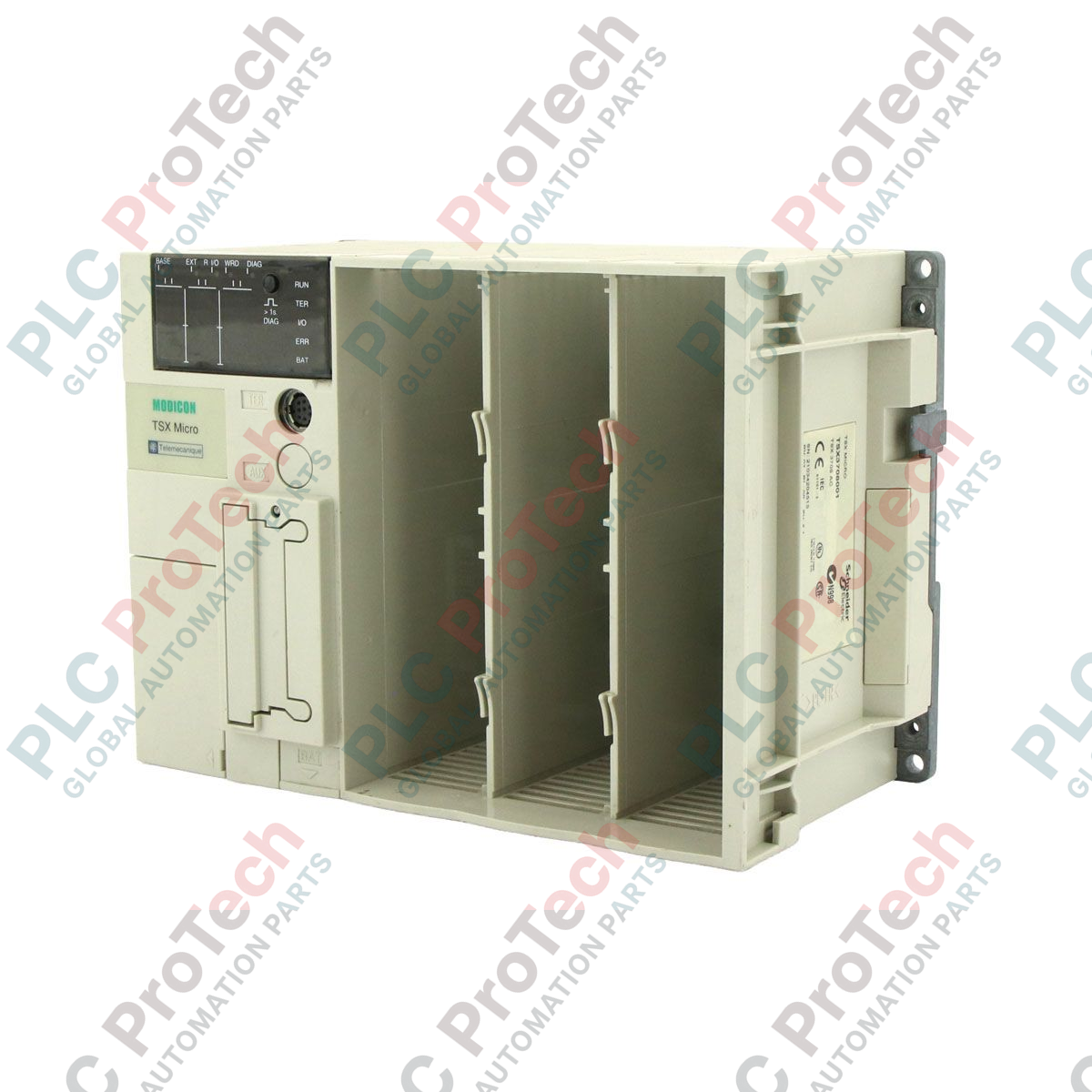
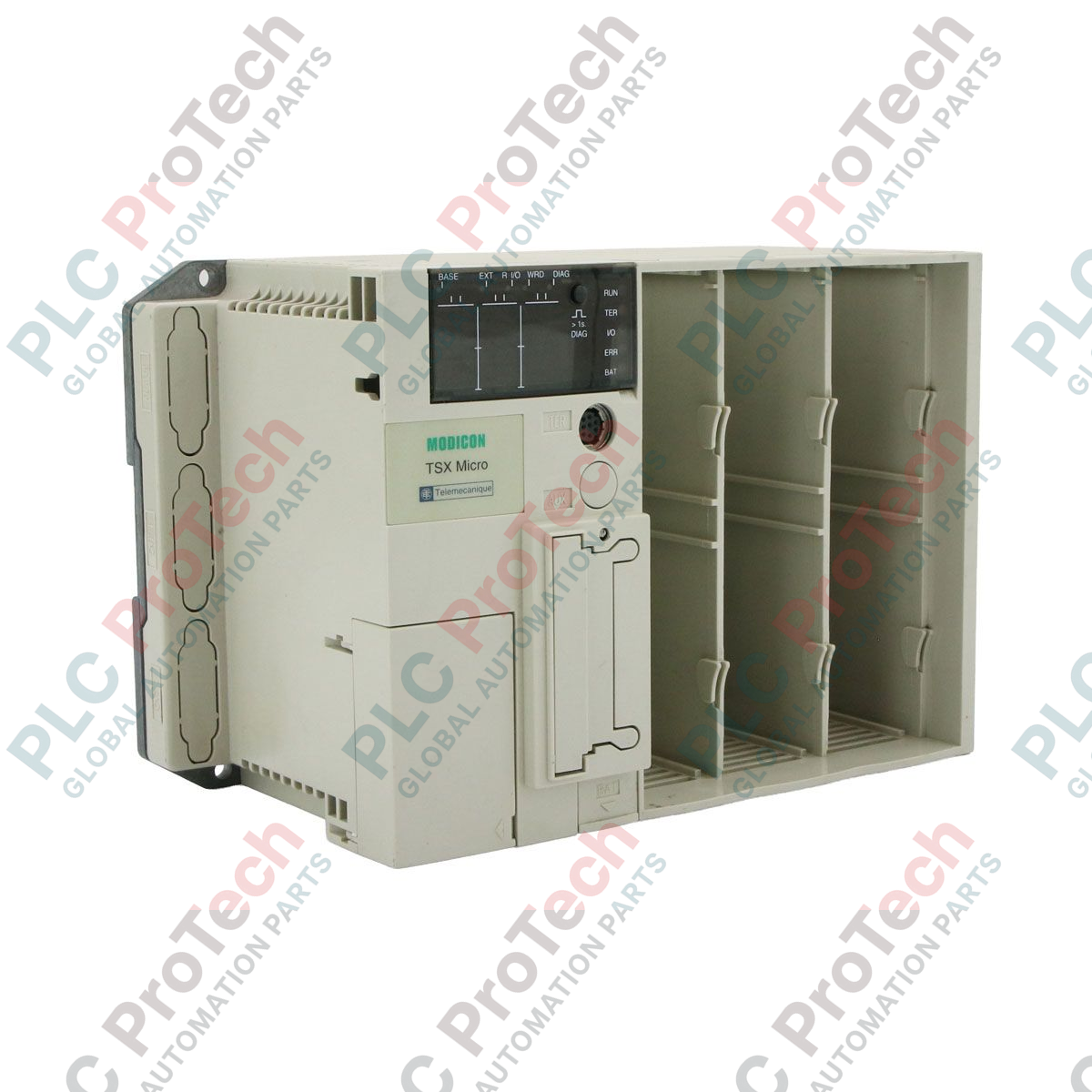
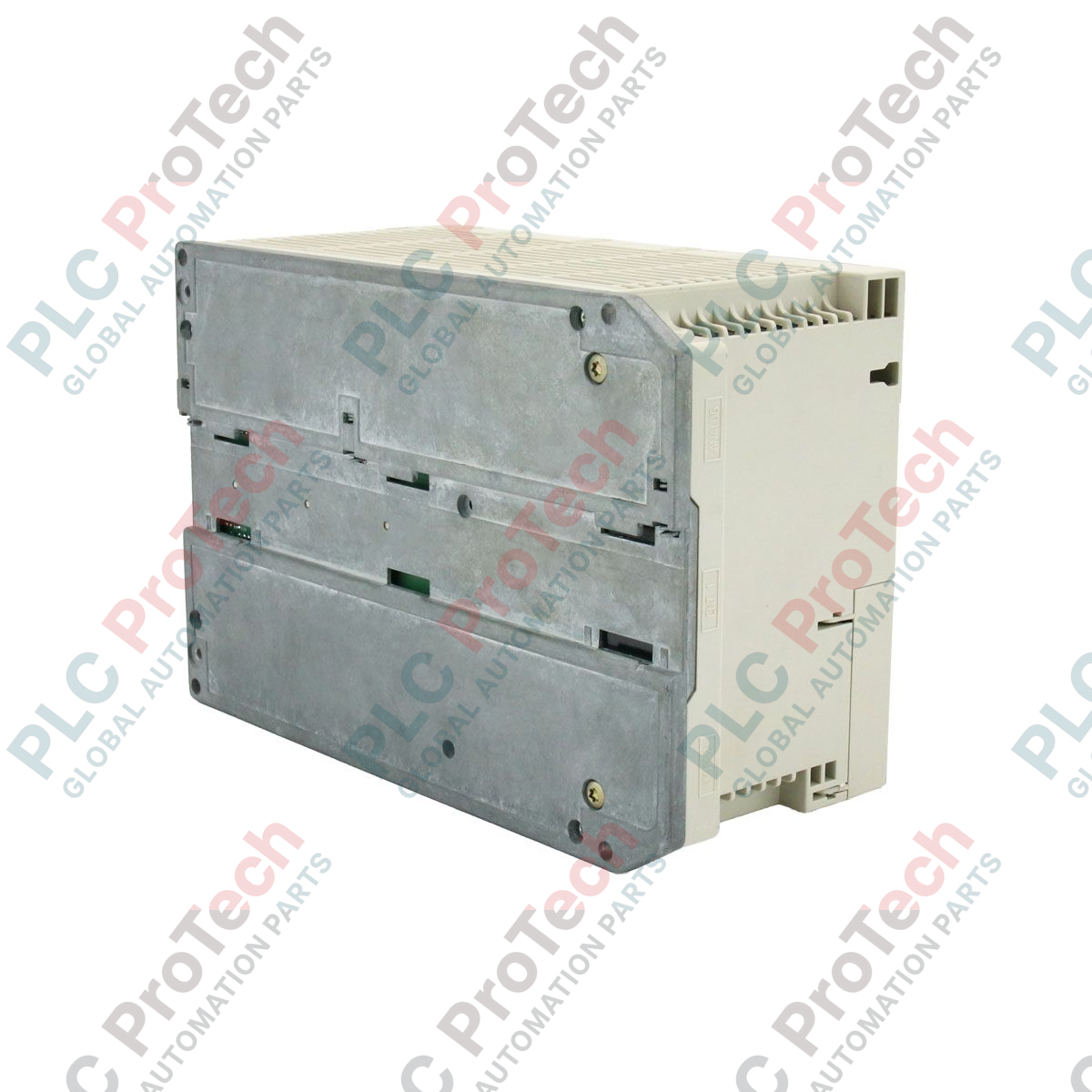
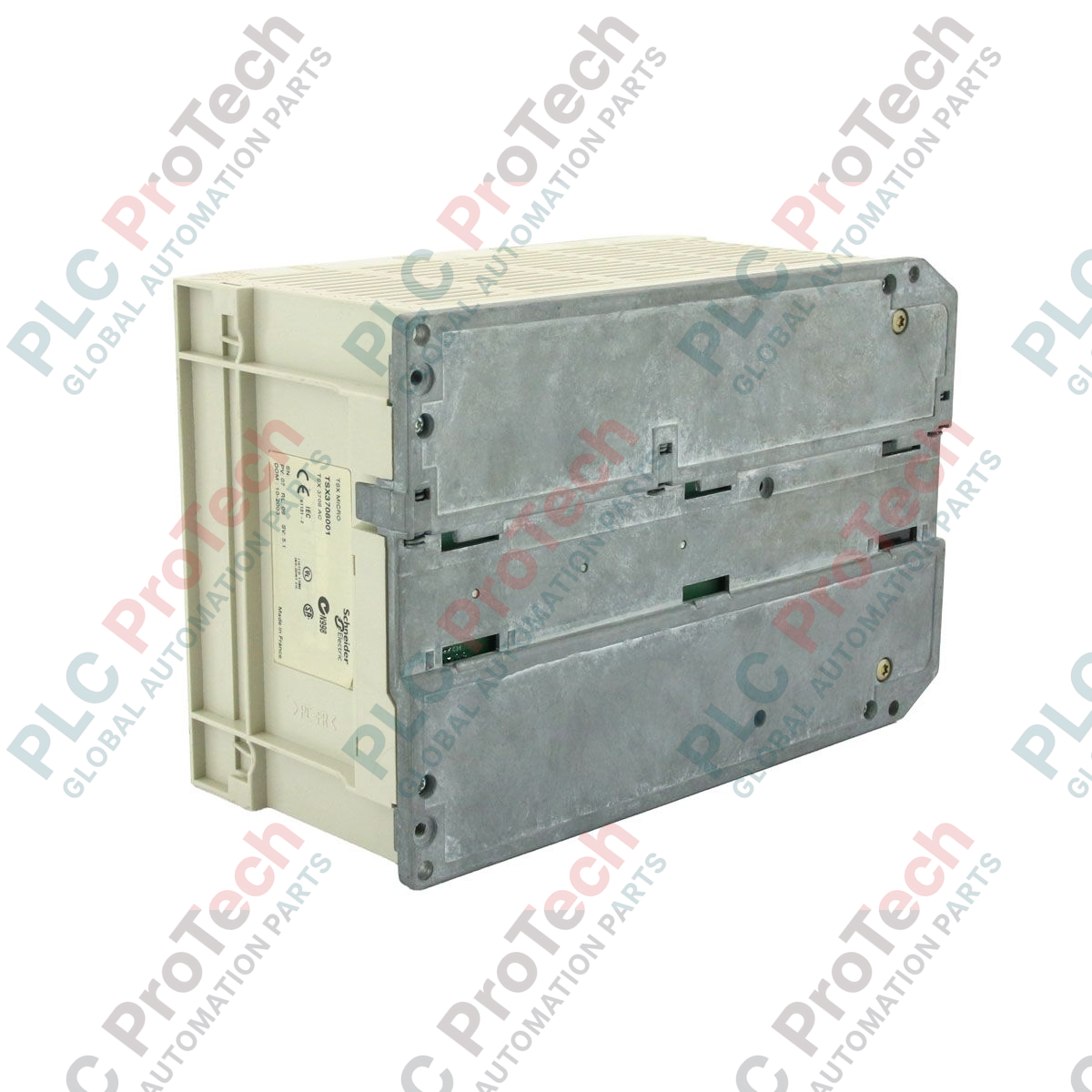
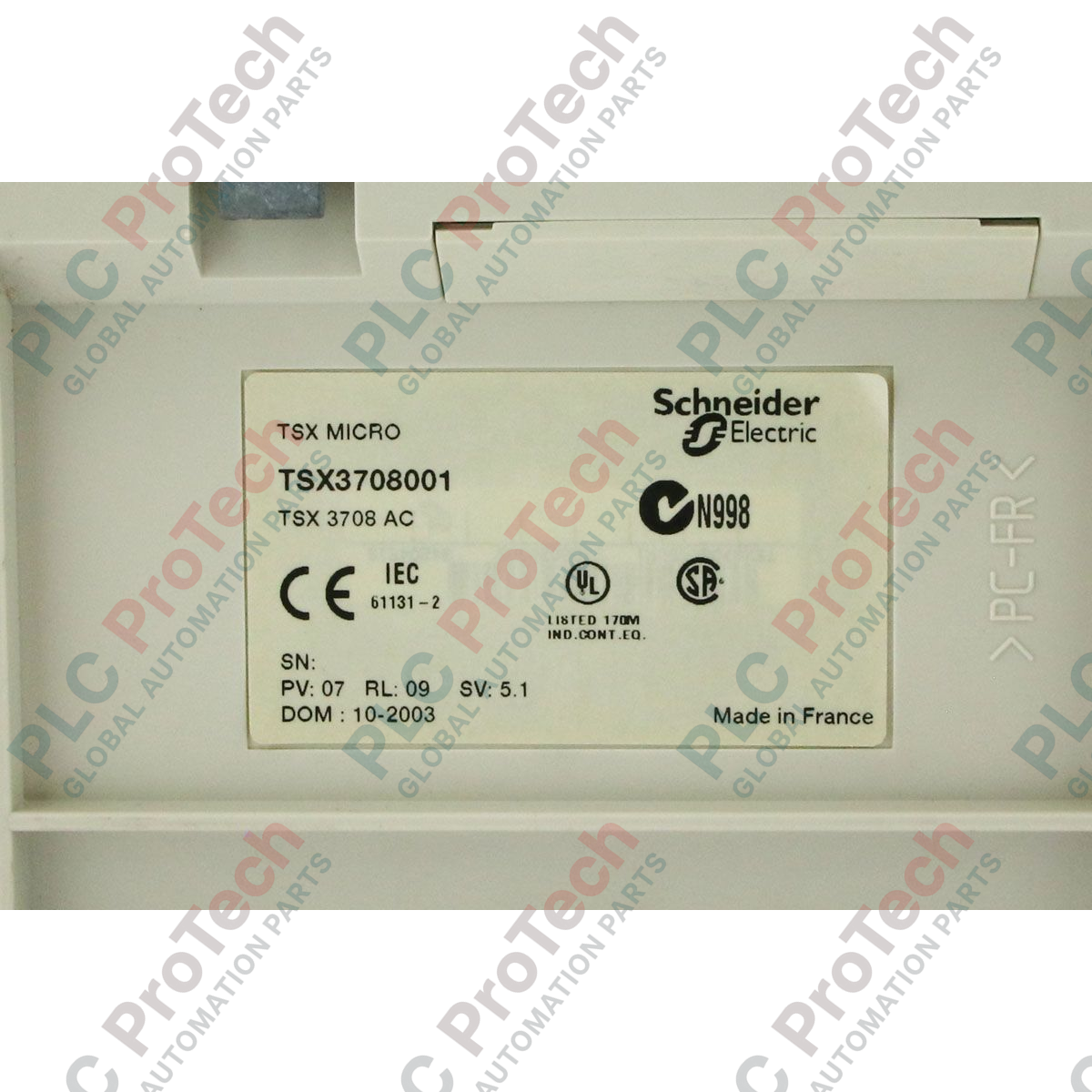
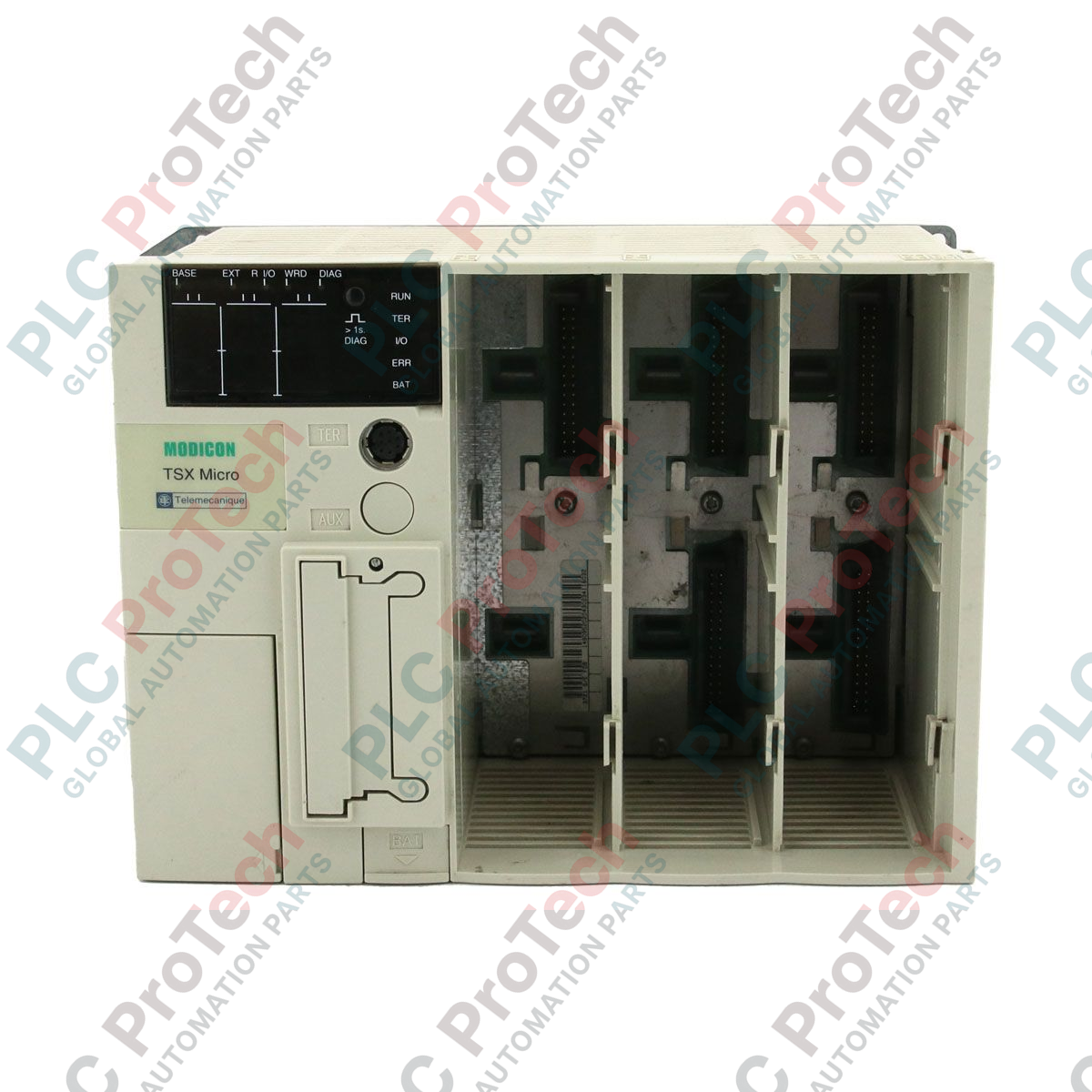
Designed for compact industrial automation architectures, the Schneider Electric TSX3708001 serves as a modular base controller within the Modicon TSX Micro platform. This hardware platform provides localized control, processing, and input/output management for medium-complexity machine automation and process loops. By utilizing a modular slot configuration, the unit allows control engineers to scale system capabilities through the integration of specialized discrete, analog, and communication modules.
Key Features
-
Modular Architecture: Features 2 available slots to accommodate half-format or full-format Modicon TSX Micro I/O and application-specific modules.
-
Integrated Power Supply: Operates on a nominal 24V DC input, simplifying cabinet power distribution.
-
Expandable Memory: Includes a PCMCIA slot for memory expansion cards, ensuring sufficient capacity for complex logic and data logging.
-
Local Communication: Equipped with a dedicated Ter port for direct connection to programming terminals, HMIs, or serial networks.
-
Robust Construction: Industrial-grade housing designed to withstand vibration, thermal stress, and electrical noise in harsh environments.
Applications
- Material handling and automated conveyor sorting systems.
- Packaging machinery and assembly line control.
- Water treatment pumping stations and localized environmental control.
- Legacy system upgrades and drop-in replacements for existing Modicon TSX Micro architectures.
Technical Specifications
| Parameter |
Specification |
| Manufacturer |
Schneider Electric |
| Model Number |
TSX3708001 |
| Product Series |
Modicon TSX Micro |
| Device Type |
Modular Base Controller |
| Input Voltage |
24V DC |
| Number of Slots |
2 Slots (for I/O or communication modules) |
| Programming Software |
PL7 Micro / PL7 Pro |
| Product Lifecycle Phase |
Obsolete / Legacy |
| Dimensions |
16.40 x 14.20 x 7.40 cm |
| Shipping Weight (Calculated) |
0.54 kg |
| Commodity Code |
85371099 |
| ECCN |
N |
Connections and Interfaces
| Interface Port / Terminal |
Functional Assignment |
| Power Terminal Block |
24V DC main power input and system ground connection |
| TER Port (Mini-DIN) |
Uni-Telway programming terminal, HMI interface, or serial link |
| PCMCIA Slot |
Memory expansion card or network communication card interface |
Empirical Engineering Insights
Alternative Models & Compatibility
The TSX3708001 is a legacy hardware component. When replacing this unit in existing systems, ensure that the application program compiled in PL7 Micro/Pro is fully backed up. If migrating to modern platforms, the Modicon M340 or M241 series serves as the recommended upgrade path, though this requires a complete rewrite of the control logic within EcoStruxure Control Expert or Machine Expert.
Application Pitfalls & Engineering Notes
Ensure adequate thermal management inside the enclosure. Because this unit relies on natural convection cooling, maintaining a minimum clearance of 50 mm above and below the chassis is critical. Operating the controller in ambient temperatures exceeding 60 degC without active ventilation will accelerate component degradation and may lead to unexpected CPU faults.
Commissioning & Wiring Tips
Always use high-quality shielded cabling for the TER port connection to mitigate electromagnetic interference (EMI) from adjacent variable frequency drives (VFDs). Ensure that the DIN rail mounting clips are fully engaged and that the rail itself is bonded directly to the central cabinet ground busbar to maintain proper noise immunity.
Installation Guidelines
CRITICAL WARNING: Prior to initiating installation, maintenance, or module insertion, completely de-energize the main cabinet power supply. Verify that no residual voltage is present on the 24V DC terminal block. Failure to isolate power can result in permanent damage to the CPU backplane and connected I/O modules.
1
Mount the TSX3708001 base controller horizontally onto a standard 35 mm DIN rail, ensuring the locking latch securely clicks into place.
2
Connect the functional ground wire to the dedicated grounding terminal on the base unit using a low-impedance conductor.
3
Insert any required expansion modules into the designated slots, ensuring they are fully seated and locked before applying power.
4
Wire the 24V DC power supply to the input terminal block, paying strict attention to correct polarity markings.