


Menerapkan Logika Tangga XOR 3 Sakelar dengan Bit Internal
Implementasikan rangkaian lampu XOR dengan sakelar 3-SPST di LogixPro atau RSLogix 500 menggunakan bit relai internal. Mencakup tabel kebenaran, persamaan Boolean, dan telah diverifikasi.

Dirancang untuk pengambilan data suhu terdesentralisasi di lingkungan industri yang berat, kotak fieldbus Beckhoff IP3202-B200 ini memproses sensor RTD secara presisi langsung di tingkat mesin tanpa memerlukan kabinet kontrol pelindung. Modul ini mengintegrasikan konversi analog-ke-digital berperforma tinggi dengan sistem komunikasi serat optik Lightbus yang tahan terhadap gangguan, sehingga memungkinkan transmisi sinyal jarak jauh yang andal dalam kondisi interferensi tinggi. Enklosur fisiknya dibuat untuk menahan tekanan mekanis ekstrem, kelembapan, dan debu, serta memungkinkan pemasangan langsung pada mesin guna meminimalkan loop pengkabelan lapangan.
| Parameter | Nilai Spesifikasi |
|---|---|
| Produsen | Beckhoff Automation |
| Model / Nomor Suku Cadang | IP3202-B200 |
| Sistem Fieldbus | Lightbus (Cincin Serat Optik) |
| Kecepatan Transfer Data | 2,5 Mbaud |
| Koneksi Bus | 2 x soket serat optik untuk konektor ZS1020-0010 |
| Tegangan Kontrol | 24 V DC (-15% / +20%) |
| Koneksi Daya | Hulu: 1 x M8 jantan (4-pin); Hilir: 1 x M8 betina (4-pin) |
| Isolasi Listrik | Tegangan kontrol ke fieldbus: Ya |
| Suhu Pengoperasian | 0 hingga +55 degC |
| Suhu Penyimpanan | -25 hingga +85 degC |
| Ketahanan terhadap Getaran / Guncangan | Sesuai dengan EN 60068-2-6 / EN 60068-2-27 |
| Tingkat Perlindungan | IP65 / IP66 / IP67 (sesuai dengan EN 60529) |
| Persetujuan | CE, UL |
| Negara Asal | Jerman |
| Berat (Bersih) | 250 g |
| Berat Pengiriman (Dihitung) | 0,55 kg |
| Dimensi Kemasan (Dihitung) | 180 mm x 110 mm x 60 mm |
| Lokasi Pin M8 | Fungsi / Penetapan Sirkuit |
|---|---|
| Pin 1 | Hulu: Tegangan kontrol +24 V DC / Hilir: Tegangan kontrol +24 V DC |
| Pin 2 | Umpan: Tegangan Bantu/Beban +24 V DC / Hilir: Tegangan Bantu/Beban +24 V DC |
| Pin 3 | Umpan: GND Tegangan Kontrol / Hilir: GND Tegangan Kontrol |
| Pin 4 | Umpan: GND Tegangan Bantu/Beban / Hilir: GND Tegangan Bantu/Beban |
Modul IP3202-B200 dirancang khusus untuk arsitektur Beckhoff Lightbus. Jika bermigrasi atau berintegrasi dengan platform kontrol yang lebih baru, perlu diingat bahwa Lightbus memerlukan kartu master PCI/PCIe khusus (misalnya FC2001) atau pengontrol terminal bus tertentu. Untuk aplikasi yang ingin bermigrasi ke EtherCAT tanpa mengubah tata letak fisik, model setara dari seri EP (seperti EP3202-0002) dapat dipertimbangkan, meskipun diperlukan perubahan arsitektur jaringan dan pengkabelan dari serat optik ke Ethernet industri.
Saat menangani koneksi serat optik pada ring industri, mempertahankan standar clean room optik sangat penting selama pemasangan fisik. Hindari melebihi radius tekuk minimum kabel serat optik (biasanya 30 mm untuk rakitan ZS1020) guna mencegah kehilangan sinyal atau kerusakan fisik permanen pada serat polimer. Selain itu, semua port M8 atau serat optik yang terbuka atau tidak digunakan harus ditutup menggunakan penutup pelindung IP67 tersertifikasi. Membiarkan koneksi ini terbuka di lingkungan basah dapat menyebabkan masuknya kelembapan secara kapiler, yang seiring waktu dapat menimbulkan korosi pada komponen internal.
Untuk mengonfigurasi karakteristik operasional kanal analog, gunakan paket perangkat lunak Beckhoff KS2000 yang terhubung melalui kabel konfigurasi serial, atau akses registri internal secara langsung melalui parameter startup PLC di TwinCAT. Pastikan pelindung kabel sensor diakhiri dekat kuping pemasangan logam modul fieldbus untuk menyediakan jalur impedansi rendah ke ground bumi lokal, sehingga mencegah derau common-mode frekuensi tinggi mengganggu pengukuran RTD yang sensitif.
Global Express Shipping
Returns & Warranty

Produsen: BECKHOFF
Nomor Produk: IP3202-B200
Negara asal:Jerman
Jenis Produk: Modul Fieldbus
Pembayaran: T/T, Western Union
Berat: 500g
Dimensi: 180 mm x 110 mm x 60 mm
Pelabuhan pengiriman: Xiamen
Garansi: 12 bulan
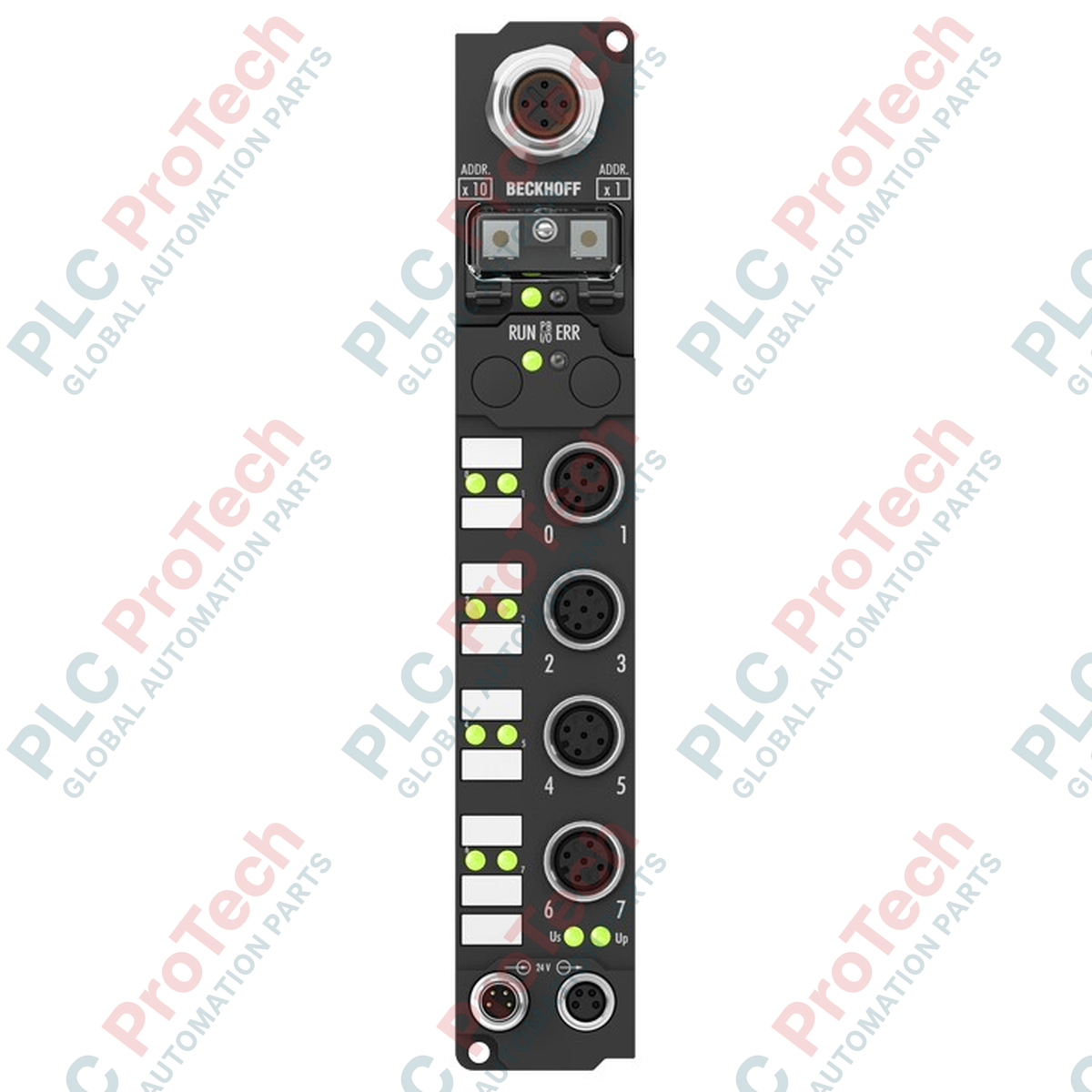
Dirancang untuk pengambilan data suhu terdesentralisasi di lingkungan industri yang berat, kotak fieldbus Beckhoff IP3202-B200 ini memproses sensor RTD secara presisi langsung di tingkat mesin tanpa memerlukan kabinet kontrol pelindung. Modul ini mengintegrasikan konversi analog-ke-digital berperforma tinggi dengan sistem komunikasi serat optik Lightbus yang tahan terhadap gangguan, sehingga memungkinkan transmisi sinyal jarak jauh yang andal dalam kondisi interferensi tinggi. Enklosur fisiknya dibuat untuk menahan tekanan mekanis ekstrem, kelembapan, dan debu, serta memungkinkan pemasangan langsung pada mesin guna meminimalkan loop pengkabelan lapangan.
| Parameter | Nilai Spesifikasi |
|---|---|
| Produsen | Beckhoff Automation |
| Model / Nomor Suku Cadang | IP3202-B200 |
| Sistem Fieldbus | Lightbus (Cincin Serat Optik) |
| Kecepatan Transfer Data | 2,5 Mbaud |
| Koneksi Bus | 2 x soket serat optik untuk konektor ZS1020-0010 |
| Tegangan Kontrol | 24 V DC (-15% / +20%) |
| Koneksi Daya | Hulu: 1 x M8 jantan (4-pin); Hilir: 1 x M8 betina (4-pin) |
| Isolasi Listrik | Tegangan kontrol ke fieldbus: Ya |
| Suhu Pengoperasian | 0 hingga +55 degC |
| Suhu Penyimpanan | -25 hingga +85 degC |
| Ketahanan terhadap Getaran / Guncangan | Sesuai dengan EN 60068-2-6 / EN 60068-2-27 |
| Tingkat Perlindungan | IP65 / IP66 / IP67 (sesuai dengan EN 60529) |
| Persetujuan | CE, UL |
| Negara Asal | Jerman |
| Berat (Bersih) | 250 g |
| Berat Pengiriman (Dihitung) | 0,55 kg |
| Dimensi Kemasan (Dihitung) | 180 mm x 110 mm x 60 mm |
| Lokasi Pin M8 | Fungsi / Penetapan Sirkuit |
|---|---|
| Pin 1 | Hulu: Tegangan kontrol +24 V DC / Hilir: Tegangan kontrol +24 V DC |
| Pin 2 | Umpan: Tegangan Bantu/Beban +24 V DC / Hilir: Tegangan Bantu/Beban +24 V DC |
| Pin 3 | Umpan: GND Tegangan Kontrol / Hilir: GND Tegangan Kontrol |
| Pin 4 | Umpan: GND Tegangan Bantu/Beban / Hilir: GND Tegangan Bantu/Beban |
Modul IP3202-B200 dirancang khusus untuk arsitektur Beckhoff Lightbus. Jika bermigrasi atau berintegrasi dengan platform kontrol yang lebih baru, perlu diingat bahwa Lightbus memerlukan kartu master PCI/PCIe khusus (misalnya FC2001) atau pengontrol terminal bus tertentu. Untuk aplikasi yang ingin bermigrasi ke EtherCAT tanpa mengubah tata letak fisik, model setara dari seri EP (seperti EP3202-0002) dapat dipertimbangkan, meskipun diperlukan perubahan arsitektur jaringan dan pengkabelan dari serat optik ke Ethernet industri.
Saat menangani koneksi serat optik pada ring industri, mempertahankan standar clean room optik sangat penting selama pemasangan fisik. Hindari melebihi radius tekuk minimum kabel serat optik (biasanya 30 mm untuk rakitan ZS1020) guna mencegah kehilangan sinyal atau kerusakan fisik permanen pada serat polimer. Selain itu, semua port M8 atau serat optik yang terbuka atau tidak digunakan harus ditutup menggunakan penutup pelindung IP67 tersertifikasi. Membiarkan koneksi ini terbuka di lingkungan basah dapat menyebabkan masuknya kelembapan secara kapiler, yang seiring waktu dapat menimbulkan korosi pada komponen internal.
Untuk mengonfigurasi karakteristik operasional kanal analog, gunakan paket perangkat lunak Beckhoff KS2000 yang terhubung melalui kabel konfigurasi serial, atau akses registri internal secara langsung melalui parameter startup PLC di TwinCAT. Pastikan pelindung kabel sensor diakhiri dekat kuping pemasangan logam modul fieldbus untuk menyediakan jalur impedansi rendah ke ground bumi lokal, sehingga mencegah derau common-mode frekuensi tinggi mengganggu pengukuran RTD yang sensitif.
Pengiriman Ekspres Global
Pengembalian & Garansi
Pesanan diproses dan dikirimkan Senin-Jumat (tidak termasuk hari libur nasional).
Untuk kelayakan penuh, biaya pengisian ulang, dan detail pengembalian internasional, silakan lihat resmi kami Kebijakan Pengembalian & Pengembalian Dana .
| Country of origin |
Jerman
|

Implementasikan rangkaian lampu XOR dengan sakelar 3-SPST di LogixPro atau RSLogix 500 menggunakan bit relai internal. Mencakup tabel kebenaran, persamaan Boolean, dan telah diverifikasi.

Integrasikan Allen-Bradley CompactLogix, Caterpillar ATS, dan generator ke dalam DeltaV DCS melalui Modbus RTU. Mencakup gateway ProSoft MVI69-MCM dan Miille DIN266.

Instruksi ONS aktif, tetapi koil OTE tidak pernah mengunci di Studio 5000 karena one-shot hanya bernilai benar selama satu pemindaian. Gunakan OTL/OTU atau logika seal-in sebagai gantinya.

Konfigurasikan drive servo Allen-Bradley Kinetix 5500 di EtherNet/IP. Mencakup CIP Sync, pengaturan waktu IEEE 1588 V2, pemilihan Stratix, topologi DLR, dan HMI.

Filter rata-rata bergerak adalah penghalus jendela geser yang paling sering dipasang oleh teknisi instrumentasi ke jalur analog DCS dan PLC. Berikut cara kerja jendelanya, bagaimana N dan waktu...

Pada turbin gas Frame 5–9, GE Mark VI dan Mark VIe menjalankan kontrol sebagai perangkat lunak aplikasi berbasis blok fungsi. Artikel ini memetakan fungsi proses, proteksi, dan pengurutan—serta...