ProSoft

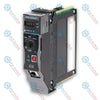
ProSoft MVI56-ADM ControlLogix 'C' Programmable Application Development Module

SKU MVI56-ADM

Disponibile
  • 12-month warranty
  • Free returns within 30 days
  • Manufacturer: ProSoft
  • Product No.: MVI56-ADM
  • Origin United States
  • Product Type: PLC Communication Modules
  • Payment: T/T, Western Union
  • Weight: 2.0 kg
  • Dimensions: 250 mm x 150 mm x 80 mm
  • Shipping port: Xiamen
  • Warranty: 12 months

Tags

Quantità

Product Description

Description

Executing custom user-written software applications directly within standard Rockwell Automation backplanes is facilitated by the ProSoft MVI56-ADM co-processor, a single-slot module designed for the ControlLogix platform. This development module allows industrial system integrators to build and load proprietary C-language applications, making it possible to integrate specialized field devices or construct non-standard communication protocols that are not supported by native controller configurations.

Key Features

  • Custom programmable environment supporting user-compiled C-code execution.
  • Direct integration with ControlLogix backplanes for high-speed register data exchange.
  • Two independent serial ports configurable for RS-232, RS-422, or RS-485 communications.
  • Onboard industrial-grade flash memory for reliable storage of compiled applications and configurations.
  • Active backplane communication utilizing ladder logic interface or direct I/O data transfers.

Applications

  • Implementation of proprietary or legacy serial protocol drivers.
  • Localized high-speed mathematical algorithms and data preprocessing.
  • Direct serial interface to legacy SCADA systems, barcode readers, and scales.
  • Stand-alone data logging and specialized event archiving within the ControlLogix chassis.

Technical Specifications

Parameter Specification
Manufacturer ProSoft Technology
Model Number MVI56-ADM
Module Type 'C' Programmable Application Development Module
Platform Compatibility ControlLogix System (Single-slot)
Backplane Current Load 800 mA at 5 V DC
Operating Temperature 0 to 60 degC (32 to 140 degF)
Storage Temperature -40 to 85 degC (-40 to 185 degF)
Relative Humidity 5% to 95% RH (non-condensing)
Shipping Weight (Calculated) 2.0 kg (4.4 lbs)
Package Dimensions (Calculated) 250 mm x 150 mm x 80 mm

Connections and Interfaces

Port Reference Interface Type Function / Circuit Assignment
PRT1 RS-232, RS-422, or RS-485 (Jumper Selectable) Application communication port for peripheral devices.
PRT2 RS-232, RS-422, or RS-485 (Jumper Selectable) Application communication port for peripheral devices.
CFG RS-232 (RJ45 Connection) Configuration and debugging interface for application deployment.

Empirical Engineering Insights

Alternative Models & Compatibility

The MVI56-ADM serves as a legacy-style programmable co-processor. When upgrading systems or looking for Ethernet-enabled development environments, consider the MVI56E-ADM or modern Ethernet-based application modules, though existing compiled C-code may require migration paths or library updates depending on the target processor environment.

Application Pitfalls & Engineering Notes

This module demands 800 mA at 5 V DC directly from the ControlLogix backplane. It is essential to perform a chassis power supply calculation prior to installation, especially in multi-module setups, to prevent voltage drops or system resets. Additionally, memory management must be handled carefully within the custom C-application to prevent memory leaks and watchdog timeouts that could lock up module-to-backplane communications.

Commissioning & Wiring Tips

When configuring RS-485 interfaces on PRT1 or PRT2, ensure proper termination resistors are engaged at the physical ends of the communication run. Use high-quality shielded twisted-pair (STP) cabling to minimize industrial high-frequency noise interference, grounding the shield strictly at one end to avoid ground loop currents.

Installation Guidelines

CRITICAL WARNING

Isolate all electrical power feeding the ControlLogix chassis before inserting or removing the MVI56-ADM module. Live insertion or extraction (RIUP) in unsafe environments can damage internal circuitry or result in unexpected process disruption.

1
Set the physical jumpers on the side of the module to match the required physical communication standards (RS-232, RS-422, or RS-485) for PRT1 and PRT2 prior to chassis insertion.
2
Align the MVI56-ADM module with the card guides of an empty slot in the ControlLogix chassis and slide it inward until it sits firmly in the backplane connectors.
3
Tighten the top and bottom chassis locking tabs to secure the module mechanically within the rack.
4
Connect the communication cables to the respective front ports and restore system power to load and execute your compiled application binaries.
Shipping & Returns

Global Express Shipping

  • Standard Delivery: 4–6 business days via DHL, FedEx, and UPS.
  • Express Dispatch: Same-day dispatch for in-stock orders placed before 2:00 PM (GMT+8).
  • Worldwide Coverage: Serving over 150 countries.

Returns & Warranty

  • 30-Day Guarantee: Returns accepted for in-stock products in original, factory-sealed packaging.
  • 12-Month Warranty: Every industrial component is backed by our technical warranty.
FAQ
What is the primary function of the ProSoft MVI56-ADM module?
The module operates as an independent, C-programmable co-processor within the ControlLogix chassis, allowing users to execute custom compiled C-code algorithms and run proprietary communication protocols directly on the backplane.
What are the configuration options for the serial ports on this module?
The module features two application serial ports (PRT1 and PRT2) that are independently configurable via physical jumpers for RS-232, RS-422, or RS-485 physical signaling standards.
Does this module require external power?
No, the module is powered entirely through the ControlLogix chassis backplane. It draws a current load of 800 mA at 5 V DC, which must be accounted for in the overall system power budget.
How do I upload custom C-code to the MVI56-ADM?
Custom compiled C-programs are loaded onto the module using the RJ45 RS-232 CFG (Configuration) port, using standard terminal emulation or file-transfer software compatible with the system's development tools.
Reviews

MVI56-ADM

Stock & lead time on request

Call
1 su 1

ProSoft MVI56-ADM ControlLogix 'C' Programmable Application Development Module

Only 10 item(s) left in stock
  • Manufacturer: ProSoft

  • Product No.: MVI56-ADM

  • Country of origin:United States

  • Product Type: PLC Communication Modules

  • Payment: T/T, Western Union

  • Weight: 2000g

  • Dimensions: 250 mm x 150 mm x 80 mm

  • Shipping port: Xiamen

  • Warranty: 12 months

Quantità
Visualizza dettagli completi

Product Description

Description

Executing custom user-written software applications directly within standard Rockwell Automation backplanes is facilitated by the ProSoft MVI56-ADM co-processor, a single-slot module designed for the ControlLogix platform. This development module allows industrial system integrators to build and load proprietary C-language applications, making it possible to integrate specialized field devices or construct non-standard communication protocols that are not supported by native controller configurations.

Key Features

  • Custom programmable environment supporting user-compiled C-code execution.
  • Direct integration with ControlLogix backplanes for high-speed register data exchange.
  • Two independent serial ports configurable for RS-232, RS-422, or RS-485 communications.
  • Onboard industrial-grade flash memory for reliable storage of compiled applications and configurations.
  • Active backplane communication utilizing ladder logic interface or direct I/O data transfers.

Applications

  • Implementation of proprietary or legacy serial protocol drivers.
  • Localized high-speed mathematical algorithms and data preprocessing.
  • Direct serial interface to legacy SCADA systems, barcode readers, and scales.
  • Stand-alone data logging and specialized event archiving within the ControlLogix chassis.

Technical Specifications

Parameter Specification
Manufacturer ProSoft Technology
Model Number MVI56-ADM
Module Type 'C' Programmable Application Development Module
Platform Compatibility ControlLogix System (Single-slot)
Backplane Current Load 800 mA at 5 V DC
Operating Temperature 0 to 60 degC (32 to 140 degF)
Storage Temperature -40 to 85 degC (-40 to 185 degF)
Relative Humidity 5% to 95% RH (non-condensing)
Shipping Weight (Calculated) 2.0 kg (4.4 lbs)
Package Dimensions (Calculated) 250 mm x 150 mm x 80 mm

Connections and Interfaces

Port Reference Interface Type Function / Circuit Assignment
PRT1 RS-232, RS-422, or RS-485 (Jumper Selectable) Application communication port for peripheral devices.
PRT2 RS-232, RS-422, or RS-485 (Jumper Selectable) Application communication port for peripheral devices.
CFG RS-232 (RJ45 Connection) Configuration and debugging interface for application deployment.

Empirical Engineering Insights

Alternative Models & Compatibility

The MVI56-ADM serves as a legacy-style programmable co-processor. When upgrading systems or looking for Ethernet-enabled development environments, consider the MVI56E-ADM or modern Ethernet-based application modules, though existing compiled C-code may require migration paths or library updates depending on the target processor environment.

Application Pitfalls & Engineering Notes

This module demands 800 mA at 5 V DC directly from the ControlLogix backplane. It is essential to perform a chassis power supply calculation prior to installation, especially in multi-module setups, to prevent voltage drops or system resets. Additionally, memory management must be handled carefully within the custom C-application to prevent memory leaks and watchdog timeouts that could lock up module-to-backplane communications.

Commissioning & Wiring Tips

When configuring RS-485 interfaces on PRT1 or PRT2, ensure proper termination resistors are engaged at the physical ends of the communication run. Use high-quality shielded twisted-pair (STP) cabling to minimize industrial high-frequency noise interference, grounding the shield strictly at one end to avoid ground loop currents.

Installation Guidelines

CRITICAL WARNING

Isolate all electrical power feeding the ControlLogix chassis before inserting or removing the MVI56-ADM module. Live insertion or extraction (RIUP) in unsafe environments can damage internal circuitry or result in unexpected process disruption.

1
Set the physical jumpers on the side of the module to match the required physical communication standards (RS-232, RS-422, or RS-485) for PRT1 and PRT2 prior to chassis insertion.
2
Align the MVI56-ADM module with the card guides of an empty slot in the ControlLogix chassis and slide it inward until it sits firmly in the backplane connectors.
3
Tighten the top and bottom chassis locking tabs to secure the module mechanically within the rack.
4
Connect the communication cables to the respective front ports and restore system power to load and execute your compiled application binaries.

What is the primary function of the ProSoft MVI56-ADM module?

The module operates as an independent, C-programmable co-processor within the ControlLogix chassis, allowing users to execute custom compiled C-code algorithms and run proprietary communication protocols directly on the backplane.

What are the configuration options for the serial ports on this module?

The module features two application serial ports (PRT1 and PRT2) that are independently configurable via physical jumpers for RS-232, RS-422, or RS-485 physical signaling standards.

Does this module require external power?

No, the module is powered entirely through the ControlLogix chassis backplane. It draws a current load of 800 mA at 5 V DC, which must be accounted for in the overall system power budget.

How do I upload custom C-code to the MVI56-ADM?

Custom compiled C-programs are loaded onto the module using the RJ45 RS-232 CFG (Configuration) port, using standard terminal emulation or file-transfer software compatible with the system's development tools.

Global Express Shipping

  • Standard Delivery: 4-6 Business Days via DHL, FedEx, and UPS.
  • Express Dispatch: Same-day dispatch for in-stock orders placed before 2:00 PM (GMT+8).
  • Worldwide Coverage: Serving over 150 countries, including rapid delivery to Saudi Arabia and UAE.

Returns & Warranty

  • 30-Day Guarantee: Returns accepted for in-stock products in original, factory-sealed packaging.
  • 12-Month Warranty: Every industrial component is backed by our professional technical warranty.

Orders are processed and delivered Monday-Friday (excluding public holidays).


For full eligibility, restocking fees, and international return details, please view our official Refund & Return Policy .

TECHNICAL SPECIFICATIONS

Country of origin
United States

Technical knowledge

1756-L73 Firmware Upgrade Guide: v19 vs v21/v31 Decision

Replacing a 1756-L73 does not automatically mean upgrading its firmware. This guide compares v19.013, v21.011 and v31.011, focusing on project compatibility, HMI communications, legacy networks and...

Implementing 3-Switch XOR Ladder Logic with Internal Bit

Implement a 3-SPST switch XOR light circuit in LogixPro or RSLogix 500 using an internal relay bit. Includes truth tables, boolean equations, and verified.

Building a Modbus RTU Network with CompactLogix and DeltaV

Integrate Allen-Bradley CompactLogix, Caterpillar ATS, and generators into DeltaV DCS over Modbus RTU. Covers ProSoft MVI69-MCM, Miille DIN266 gateways.

ONS Instruction Not Energizing OTE in Studio 5000 Ladder Logic

ONS instruction fires but the OTE coil never latches in Studio 5000 because the one-shot is only true for one scan. Use OTL/OTU or seal-in logic instead.

Kinetix 5500 EtherNet/IP Network Switch Requirements and Topology

Configure Allen-Bradley Kinetix 5500 servo drives on EtherNet/IP. Covers CIP Sync, IEEE 1588 V2 timing, Stratix selection, DLR topology, and HMI.

Moving Average Filtering in DCS and PLC Analog Control

A moving-average filter is the sliding-window smoother most instrument engineers drop into DCS and PLC analog paths. Here is how the window works, how N and sample time set lag, and when a...