


Melaksanakan Logik Tangga XOR 3 Suis dengan Bit Dalaman
Laksanakan litar lampu XOR suis 3-SPST dalam LogixPro atau RSLogix 500 menggunakan bit geganti dalaman. Termasuk jadual kebenaran, persamaan Boolean dan pengesahan.

Direka untuk kawalan gerakan berbilang paksi berprestasi tinggi, Mitsubishi Electric MR-J4W2-1010B ialah penguat servo AC dwi-paksi dalam barisan produk MELSERVO-J4. Unit ini mengintegrasikan dua paksi pemacu 1.0 kW yang berasingan ke dalam satu perumah fizikal, sekali gus mengurangkan jejak panel dengan ketara dan memudahkan pendawaian. Dengan komunikasi gentian optik SSCNET III/H berkelajuan tinggi, unit ini menyediakan kawalan segerak berkelajuan tinggi dengan maklum balas masa nyata. Penguat ini direka untuk menyokong motor servo berputar, linear dan pemacu terus, serta menyesuaikan diri dengan profil gerakan kompleks melalui penindasan getaran bersepadu dan fungsi penalaan lanjutan.
| Parameter | Nilai spesifikasi |
|---|---|
| Pengilang | Mitsubishi Electric |
| Kod model | MR-J4W2-1010B |
| Nama siri | MELSERVO-J4 (Siri MR-J4) |
| Bilangan paksi dikawal | 2 Paksi (Paksi A dan Paksi B) |
| Kuasa output terkadar | 1.0 kW (Paksi A) + 1.0 kW (Paksi B) |
| Bekalan kuasa litar utama | 3 fasa 200 V AC hingga 240 V AC, 50/60 Hz |
| Bekalan kuasa litar kawalan | 1 fasa 200 V AC hingga 240 V AC, 50/60 Hz |
| Antara muka komunikasi | SSCNET III/H (Rangkaian Optik Berkelajuan Tinggi) |
| Kaedah kawalan | Kawalan PWM gelombang sinus / sistem kawalan arus |
| Kaedah penyejukan | Kipas penyejuk paksa |
| Suhu operasi persekitaran | 0 hingga 55 darjah Celsius (tidak membeku) |
| Kelembapan operasi persekitaran | Kelembapan relatif 5% hingga 90% (tanpa pemeluwapan) |
| Berat unit | 2.3 kg |
| Dimensi (W x T x D) | 85 mm x 168 mm x 195 mm |
| Terminal / Port sambungan | Penetapan fungsi / litar |
|---|---|
| CN1A | Sambungan hadapan SSCNET III/H (Input optik daripada pengawal atau pemacu sebelumnya) |
| CN1B | Sambungan belakang SSCNET III/H (Output optik ke pemacu seterusnya dalam talian rangkaian) |
| CN2A | Penyambung input pengekod Paksi A |
| CN2B | Penyambung input pengekod Paksi B |
| L1, L2, L3 | Terminal input kuasa utama (AC tiga fasa 200–240 V) |
| L11, L21 | Terminal input kuasa kawalan (AC satu fasa 200–240 V) |
| U, V, W (Paksi A) | Terminal kuasa keluaran motor servo Paksi A |
| U, V, W (Paksi B) | Terminal Output Kuasa Motor Servo Paksi B |
Apabila beralih daripada dua penguat MR-J4-100B paksi tunggal yang berasingan kepada satu unit MR-J4W2-1010B, pastikan anda menggunakan MR Configurator2 (versi 1.20W atau lebih baharu). Perisian tersebut mengendalikan unit dwipaksi ini di bawah satu alamat stesen fizikal dengan tab parameter subpaksi. Semak bahawa peta konfigurasi rangkaian PLC anda telah menetapkan alamat Paksi A dan Paksi B berturutan dalam persediaan Simple Motion Module atau Motion Controller.
Memandangkan Paksi A dan Paksi B berkongsi satu perintang penjanaan semula terbina dalam, penyahpecutan serentak bagi kedua-dua beban berinersia tinggi akan mencetuskan kerosakan voltan lampau penjanaan semula dengan cepat (Kerosakan AL.30 atau AL.33). Jika kedua-dua paksi beroperasi dalam urutan mula/henti kitaran pantas, kami amat mengesyorkan pemasangan pilihan penjanaan semula luaran (seperti MR-RB12) untuk memintas had dalaman dan mencegah beban terma lampau pada bas bersepadu.
Kabel gentian optik SSCNET III/H (CN1A dan CN1B) amat sensitif terhadap pencemaran zarah. Gunakan cecair pembersih khusus dan kain lap tanpa serabut pada hujung gentian sebelum menyambungkannya. Zarah habuk yang sangat kecil boleh merendahkan keamatan isyarat, lalu menyebabkan ralat arahan SSCNET berselang-seli (AL.37 atau AL.E4). Patuhi jejari lenturan minimum 25 mm untuk kabel gentian standard; lenturan yang lebih ketat boleh melemahkan isyarat pautan optik secara kekal.
AMARAN PENTING
Asingkan dan kunci keluar semua litar bekalan utama 3 fasa (L1/L2/L3) serta kuasa kawalan (L11/L21) sebelum mengendalikan pendawaian. Cas voltan tinggi kekal tersimpan dalam kapasitor bas DC dalaman selepas kuasa diputuskan. Sentiasa tunggu sekurang-kurangnya 15 minit dan sahkan bahawa voltan merentasi terminal P+ dan N- adalah di bawah 50 VDC menggunakan multimeter digital berkadar sesuai sebelum memulakan penyelenggaraan.
Global Express Shipping
Returns & Warranty

Pengilang: Mitsubishi Electric
No. Produk: MR-J4W2-1010B
Negara asal:Amerika Syarikat
Jenis Produk: Penguat Servo AC
Pembayaran: T/T, Western Union
Berat: 2300g
Dimensi: 85 mm x 168 mm x 195 mm
Pelabuhan penghantaran: Xiamen
Jaminan: 12 bulan
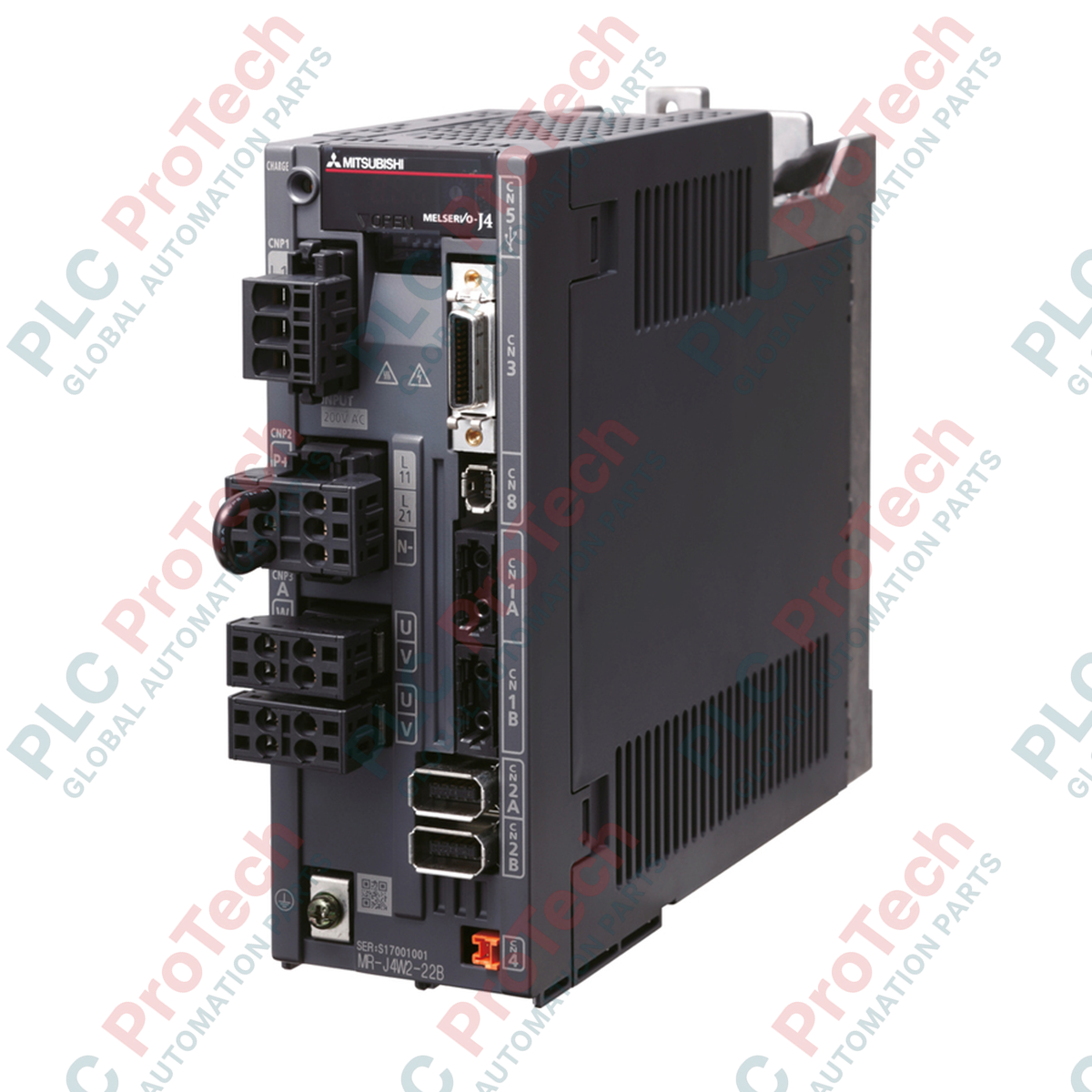
Direka untuk kawalan gerakan berbilang paksi berprestasi tinggi, Mitsubishi Electric MR-J4W2-1010B ialah penguat servo AC dwi-paksi dalam barisan produk MELSERVO-J4. Unit ini mengintegrasikan dua paksi pemacu 1.0 kW yang berasingan ke dalam satu perumah fizikal, sekali gus mengurangkan jejak panel dengan ketara dan memudahkan pendawaian. Dengan komunikasi gentian optik SSCNET III/H berkelajuan tinggi, unit ini menyediakan kawalan segerak berkelajuan tinggi dengan maklum balas masa nyata. Penguat ini direka untuk menyokong motor servo berputar, linear dan pemacu terus, serta menyesuaikan diri dengan profil gerakan kompleks melalui penindasan getaran bersepadu dan fungsi penalaan lanjutan.
| Parameter | Nilai spesifikasi |
|---|---|
| Pengilang | Mitsubishi Electric |
| Kod model | MR-J4W2-1010B |
| Nama siri | MELSERVO-J4 (Siri MR-J4) |
| Bilangan paksi dikawal | 2 Paksi (Paksi A dan Paksi B) |
| Kuasa output terkadar | 1.0 kW (Paksi A) + 1.0 kW (Paksi B) |
| Bekalan kuasa litar utama | 3 fasa 200 V AC hingga 240 V AC, 50/60 Hz |
| Bekalan kuasa litar kawalan | 1 fasa 200 V AC hingga 240 V AC, 50/60 Hz |
| Antara muka komunikasi | SSCNET III/H (Rangkaian Optik Berkelajuan Tinggi) |
| Kaedah kawalan | Kawalan PWM gelombang sinus / sistem kawalan arus |
| Kaedah penyejukan | Kipas penyejuk paksa |
| Suhu operasi persekitaran | 0 hingga 55 darjah Celsius (tidak membeku) |
| Kelembapan operasi persekitaran | Kelembapan relatif 5% hingga 90% (tanpa pemeluwapan) |
| Berat unit | 2.3 kg |
| Dimensi (W x T x D) | 85 mm x 168 mm x 195 mm |
| Terminal / Port sambungan | Penetapan fungsi / litar |
|---|---|
| CN1A | Sambungan hadapan SSCNET III/H (Input optik daripada pengawal atau pemacu sebelumnya) |
| CN1B | Sambungan belakang SSCNET III/H (Output optik ke pemacu seterusnya dalam talian rangkaian) |
| CN2A | Penyambung input pengekod Paksi A |
| CN2B | Penyambung input pengekod Paksi B |
| L1, L2, L3 | Terminal input kuasa utama (AC tiga fasa 200–240 V) |
| L11, L21 | Terminal input kuasa kawalan (AC satu fasa 200–240 V) |
| U, V, W (Paksi A) | Terminal kuasa keluaran motor servo Paksi A |
| U, V, W (Paksi B) | Terminal Output Kuasa Motor Servo Paksi B |
Apabila beralih daripada dua penguat MR-J4-100B paksi tunggal yang berasingan kepada satu unit MR-J4W2-1010B, pastikan anda menggunakan MR Configurator2 (versi 1.20W atau lebih baharu). Perisian tersebut mengendalikan unit dwipaksi ini di bawah satu alamat stesen fizikal dengan tab parameter subpaksi. Semak bahawa peta konfigurasi rangkaian PLC anda telah menetapkan alamat Paksi A dan Paksi B berturutan dalam persediaan Simple Motion Module atau Motion Controller.
Memandangkan Paksi A dan Paksi B berkongsi satu perintang penjanaan semula terbina dalam, penyahpecutan serentak bagi kedua-dua beban berinersia tinggi akan mencetuskan kerosakan voltan lampau penjanaan semula dengan cepat (Kerosakan AL.30 atau AL.33). Jika kedua-dua paksi beroperasi dalam urutan mula/henti kitaran pantas, kami amat mengesyorkan pemasangan pilihan penjanaan semula luaran (seperti MR-RB12) untuk memintas had dalaman dan mencegah beban terma lampau pada bas bersepadu.
Kabel gentian optik SSCNET III/H (CN1A dan CN1B) amat sensitif terhadap pencemaran zarah. Gunakan cecair pembersih khusus dan kain lap tanpa serabut pada hujung gentian sebelum menyambungkannya. Zarah habuk yang sangat kecil boleh merendahkan keamatan isyarat, lalu menyebabkan ralat arahan SSCNET berselang-seli (AL.37 atau AL.E4). Patuhi jejari lenturan minimum 25 mm untuk kabel gentian standard; lenturan yang lebih ketat boleh melemahkan isyarat pautan optik secara kekal.
AMARAN PENTING
Asingkan dan kunci keluar semua litar bekalan utama 3 fasa (L1/L2/L3) serta kuasa kawalan (L11/L21) sebelum mengendalikan pendawaian. Cas voltan tinggi kekal tersimpan dalam kapasitor bas DC dalaman selepas kuasa diputuskan. Sentiasa tunggu sekurang-kurangnya 15 minit dan sahkan bahawa voltan merentasi terminal P+ dan N- adalah di bawah 50 VDC menggunakan multimeter digital berkadar sesuai sebelum memulakan penyelenggaraan.
Penghantaran Ekspres Global
Pemulangan & Jaminan
Pesanan diproses dan dihantar Isnin-Jumaat (tidak termasuk cuti umum).
Untuk kelayakan penuh, yuran penyimpanan semula, dan butiran pemulangan antarabangsa, sila lihat rasmi kami Polisi Pemulangan & Bayaran Balik .
| Country of origin |
Amerika Syarikat
|

Laksanakan litar lampu XOR suis 3-SPST dalam LogixPro atau RSLogix 500 menggunakan bit geganti dalaman. Termasuk jadual kebenaran, persamaan Boolean dan pengesahan.

Integrasikan Allen-Bradley CompactLogix, Caterpillar ATS dan penjana ke dalam DeltaV DCS melalui Modbus RTU. Meliputi get laluan ProSoft MVI69-MCM dan Miille DIN266.

Arahan ONS tercetus tetapi gegelung OTE tidak pernah terkunci dalam Studio 5000 kerana one-shot hanya benar untuk satu imbasan. Gunakan OTL/OTU atau logik pengekalan sebaliknya.

Konfigurasikan pemacu servo Allen-Bradley Kinetix 5500 pada EtherNet/IP. Meliputi CIP Sync, pemasaan IEEE 1588 V2, pemilihan Stratix, topologi DLR dan HMI.

Penapis purata bergerak ialah pelicin tetingkap gelongsor yang paling kerap digunakan oleh jurutera instrumentasi dalam laluan analog DCS dan PLC. Begini cara tetingkap itu berfungsi, cara N dan masa...

Pada turbin gas Frame 5–9, GE Mark VI dan Mark VIe menjalankan kawalan sebagai perisian aplikasi blok fungsi. Artikel ini memetakan fungsi proses, perlindungan dan penjujukan—serta perkara yang...