


Melaksanakan Logik Tangga XOR 3 Suis dengan Bit Dalaman
Laksanakan litar lampu XOR suis 3-SPST dalam LogixPro atau RSLogix 500 menggunakan bit geganti dalaman. Termasuk jadual kebenaran, persamaan Boolean dan pengesahan.

Direka bentuk untuk pelaksanaan jujukan berkelajuan tinggi dan integrasi rangkaian kilang yang lancar, Mitsubishi Electric Q03UDVCPU berfungsi sebagai unit pemprosesan pusat berprestasi tinggi dalam platform automasi MELSEC Q Series. CPU berkelajuan tinggi universal ini direka untuk memenuhi tuntutan ketat sistem pembuatan kompleks, dengan menawarkan kelajuan pelaksanaan arahan ultra pantas 1.9 ns bagi operasi LD asas. Dengan port Ethernet RJ45 terbina dalam, modul ini membolehkan komunikasi peringkat peranti, telemetri diagnostik, dan akses pemprograman yang kukuh tanpa memerlukan antara muka rangkaian khusus. Seni binanya menyokong kapasiti program sebanyak 30K langkah, bersama kebolehskalaan dwi-slot melalui kad SD/SDHC standard, menjadikannya pilihan ideal untuk pengelogan intensif data dan penyelarasan kawalan gerakan berketepatan tinggi merentas seni bina industri moden.
| Parameter | Nilai Spesifikasi |
|---|---|
| Pengilang | Mitsubishi Electric |
| Kod Model | Q03UDVCPU |
| Kaedah Kawalan | Operasi lelaran program tersimpan |
| Kapasiti Program | 30K langkah (120 KB) |
| Kelajuan Arahan LD | 1.9 ns |
| Titik I/O Fizikal | 4096 titik |
| RAM / ROM Standard | 192 KB / 1025.5 KB |
| Penggunaan Arus Dalaman (5 VDC) | 0.58 A (Unit Asas) / 0.60 A (dengan Kaset SRAM) |
| Storan yang Disokong | Kad memori SD/SDHC (sehingga 32 GB) |
| Port Terbina Dalam | Ethernet RJ45, Mini-USB, Slot Kad SD |
| Suhu Ambien Operasi | 0 hingga 55 degC |
| Berat Bersih | 0.20 kg |
| Dimensi (W x T x D) | 27.4 mm x 98 mm x 115 mm |
| Berat Penghantaran (Dikira) | 1.20 kg |
Q03UDVCPU ialah evolusi universal berkelajuan tinggi bagi Q03UDECPU yang lebih lama. Semasa menaik taraf sistem legasi sedia ada, ambil perhatian bahawa siri V menggunakan slot kad SD/SDHC bersepadu dan bukannya pilihan kad CompactFlash atau PCMCIA legasi. Untuk memastikan logik sistem dan peruntukan tugas dikompilasi dengan betul, pasukan kejuruteraan anda mesti mengemas kini jenis PLC sasaran kepada 'Q03UDV' dalam GX Works2 (versi 1.98C atau lebih baharu) atau GX Works3 sebelum melakukan muat turun kod.
Walaupun memori program tidak meruap, pengekalan parameter selak, daftar (D, W) dan data jam sistem dalaman bergantung pada bateri sandaran litium Q6BAT. Dalam persekitaran dengan suhu operasi ambien yang sentiasa melebihi 45 darjah C, kadar kemerosotan bateri meningkat. Anda amat disyorkan untuk memantau daftar khas SD8005 (Bendera Bateri Lemah) melalui sistem SCADA atau HMI tempatan bagi menjadualkan penyelenggaraan pencegahan sebelum kehilangan data berlaku.
Untuk sambungan Ethernet yang boleh dipercayai, pastikan kabel industri RJ45 berperisai (S/FTP) dan dialihkan jauh daripada kabel keluaran penyongsang voltan tinggi. Semasa mengkonfigurasi parameter Ethernet terbina dalam dalam suite pengaturcaraan GX anda, semak semula bahawa julat alamat IP tidak bercanggah dengan laluan IP aktif pada rangkaian syarikat anda. Selain itu, anda hendaklah sentiasa menyambungkan terminal pembumian berfungsi (FG) unit asas terus ke bumi dengan impedans rendah untuk melindunginya daripada hingar pensuisan transien berfrekuensi tinggi.
Sentiasa asingkan semua bekalan kuasa elektrik utama yang membekalkan pemasangan plat belakang (seperti unit asas utama Q38B atau Q312B) sebelum memasukkan atau menanggalkan modul Q03UDVCPU. Percubaan melakukan penggantian ketika kuasa hidup atau mengendalikan CPU semasa unit bekalan kuasa aktif akan menyebabkan kerosakan serta-merta pada antara muka bas plat belakang dan berpotensi menyebabkan kegagalan modul I/O bersebelahan.
Global Express Shipping
Returns & Warranty

Pengilang: Mitsubishi Electric
No. Produk: Q03UDVCPU
Negara asal:Amerika Syarikat
Jenis Produk: Modul CPU PLC
Pembayaran: T/T, Western Union
Berat: 1200g
Dimensi: 27.4 mm x 98 mm x 115 mm
Pelabuhan penghantaran: Xiamen
Jaminan: 12 bulan
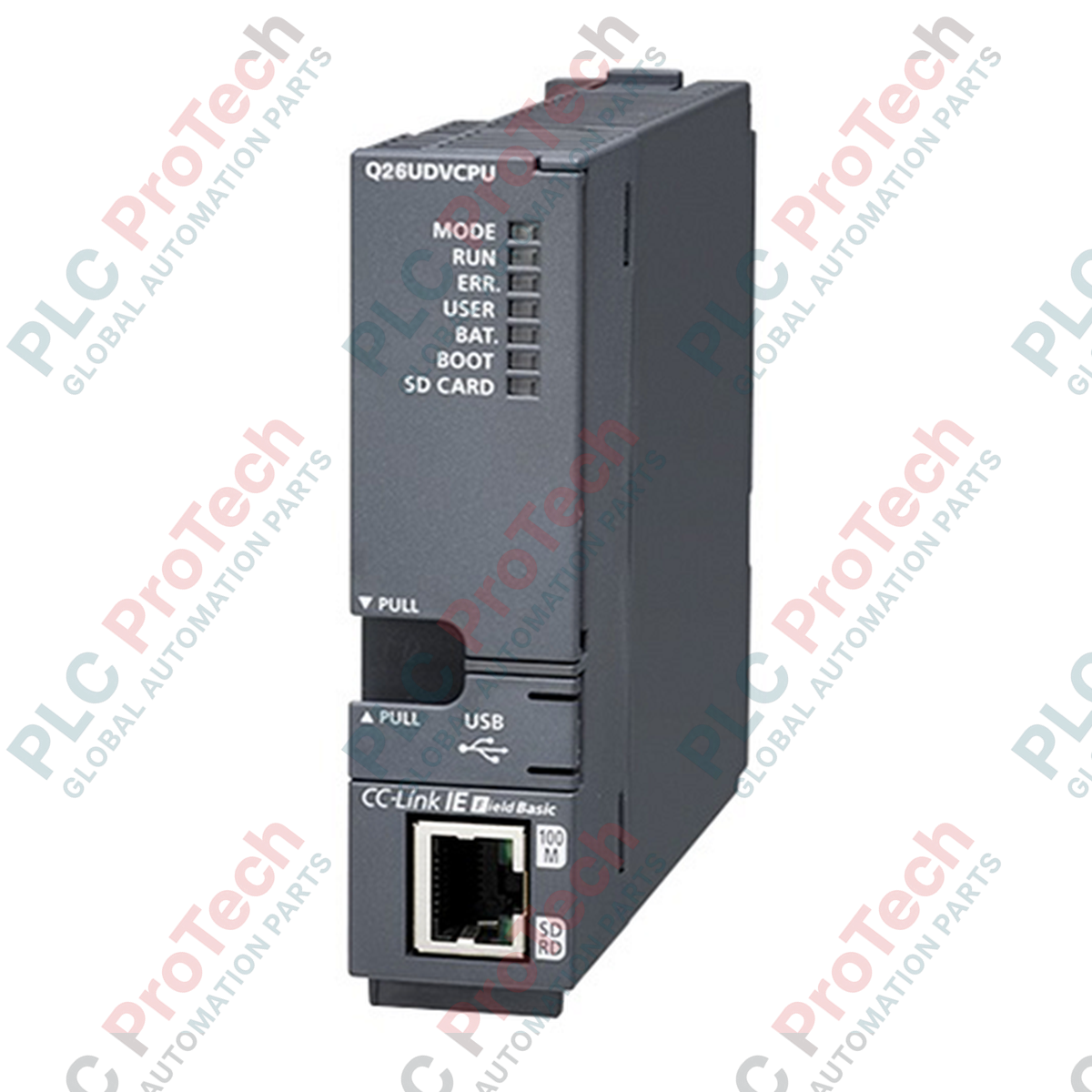
Direka bentuk untuk pelaksanaan jujukan berkelajuan tinggi dan integrasi rangkaian kilang yang lancar, Mitsubishi Electric Q03UDVCPU berfungsi sebagai unit pemprosesan pusat berprestasi tinggi dalam platform automasi MELSEC Q Series. CPU berkelajuan tinggi universal ini direka untuk memenuhi tuntutan ketat sistem pembuatan kompleks, dengan menawarkan kelajuan pelaksanaan arahan ultra pantas 1.9 ns bagi operasi LD asas. Dengan port Ethernet RJ45 terbina dalam, modul ini membolehkan komunikasi peringkat peranti, telemetri diagnostik, dan akses pemprograman yang kukuh tanpa memerlukan antara muka rangkaian khusus. Seni binanya menyokong kapasiti program sebanyak 30K langkah, bersama kebolehskalaan dwi-slot melalui kad SD/SDHC standard, menjadikannya pilihan ideal untuk pengelogan intensif data dan penyelarasan kawalan gerakan berketepatan tinggi merentas seni bina industri moden.
| Parameter | Nilai Spesifikasi |
|---|---|
| Pengilang | Mitsubishi Electric |
| Kod Model | Q03UDVCPU |
| Kaedah Kawalan | Operasi lelaran program tersimpan |
| Kapasiti Program | 30K langkah (120 KB) |
| Kelajuan Arahan LD | 1.9 ns |
| Titik I/O Fizikal | 4096 titik |
| RAM / ROM Standard | 192 KB / 1025.5 KB |
| Penggunaan Arus Dalaman (5 VDC) | 0.58 A (Unit Asas) / 0.60 A (dengan Kaset SRAM) |
| Storan yang Disokong | Kad memori SD/SDHC (sehingga 32 GB) |
| Port Terbina Dalam | Ethernet RJ45, Mini-USB, Slot Kad SD |
| Suhu Ambien Operasi | 0 hingga 55 degC |
| Berat Bersih | 0.20 kg |
| Dimensi (W x T x D) | 27.4 mm x 98 mm x 115 mm |
| Berat Penghantaran (Dikira) | 1.20 kg |
Q03UDVCPU ialah evolusi universal berkelajuan tinggi bagi Q03UDECPU yang lebih lama. Semasa menaik taraf sistem legasi sedia ada, ambil perhatian bahawa siri V menggunakan slot kad SD/SDHC bersepadu dan bukannya pilihan kad CompactFlash atau PCMCIA legasi. Untuk memastikan logik sistem dan peruntukan tugas dikompilasi dengan betul, pasukan kejuruteraan anda mesti mengemas kini jenis PLC sasaran kepada 'Q03UDV' dalam GX Works2 (versi 1.98C atau lebih baharu) atau GX Works3 sebelum melakukan muat turun kod.
Walaupun memori program tidak meruap, pengekalan parameter selak, daftar (D, W) dan data jam sistem dalaman bergantung pada bateri sandaran litium Q6BAT. Dalam persekitaran dengan suhu operasi ambien yang sentiasa melebihi 45 darjah C, kadar kemerosotan bateri meningkat. Anda amat disyorkan untuk memantau daftar khas SD8005 (Bendera Bateri Lemah) melalui sistem SCADA atau HMI tempatan bagi menjadualkan penyelenggaraan pencegahan sebelum kehilangan data berlaku.
Untuk sambungan Ethernet yang boleh dipercayai, pastikan kabel industri RJ45 berperisai (S/FTP) dan dialihkan jauh daripada kabel keluaran penyongsang voltan tinggi. Semasa mengkonfigurasi parameter Ethernet terbina dalam dalam suite pengaturcaraan GX anda, semak semula bahawa julat alamat IP tidak bercanggah dengan laluan IP aktif pada rangkaian syarikat anda. Selain itu, anda hendaklah sentiasa menyambungkan terminal pembumian berfungsi (FG) unit asas terus ke bumi dengan impedans rendah untuk melindunginya daripada hingar pensuisan transien berfrekuensi tinggi.
Sentiasa asingkan semua bekalan kuasa elektrik utama yang membekalkan pemasangan plat belakang (seperti unit asas utama Q38B atau Q312B) sebelum memasukkan atau menanggalkan modul Q03UDVCPU. Percubaan melakukan penggantian ketika kuasa hidup atau mengendalikan CPU semasa unit bekalan kuasa aktif akan menyebabkan kerosakan serta-merta pada antara muka bas plat belakang dan berpotensi menyebabkan kegagalan modul I/O bersebelahan.
Penghantaran Ekspres Global
Pemulangan & Jaminan
Pesanan diproses dan dihantar Isnin-Jumaat (tidak termasuk cuti umum).
Untuk kelayakan penuh, yuran penyimpanan semula, dan butiran pemulangan antarabangsa, sila lihat rasmi kami Polisi Pemulangan & Bayaran Balik .
| Country of origin |
Amerika Syarikat
|

Laksanakan litar lampu XOR suis 3-SPST dalam LogixPro atau RSLogix 500 menggunakan bit geganti dalaman. Termasuk jadual kebenaran, persamaan Boolean dan pengesahan.

Integrasikan Allen-Bradley CompactLogix, Caterpillar ATS dan penjana ke dalam DeltaV DCS melalui Modbus RTU. Meliputi get laluan ProSoft MVI69-MCM dan Miille DIN266.

Arahan ONS tercetus tetapi gegelung OTE tidak pernah terkunci dalam Studio 5000 kerana one-shot hanya benar untuk satu imbasan. Gunakan OTL/OTU atau logik pengekalan sebaliknya.

Konfigurasikan pemacu servo Allen-Bradley Kinetix 5500 pada EtherNet/IP. Meliputi CIP Sync, pemasaan IEEE 1588 V2, pemilihan Stratix, topologi DLR dan HMI.

Penapis purata bergerak ialah pelicin tetingkap gelongsor yang paling kerap digunakan oleh jurutera instrumentasi dalam laluan analog DCS dan PLC. Begini cara tetingkap itu berfungsi, cara N dan masa...

Pada turbin gas Frame 5–9, GE Mark VI dan Mark VIe menjalankan kawalan sebagai perisian aplikasi blok fungsi. Artikel ini memetakan fungsi proses, perlindungan dan penjujukan—serta perkara yang...