


Diagnosing IC693MDL916 Relay Outputs Before Module Replacement
A field checklist for IC693MDL916 relay commands, terminal blocks, load current, switching rate and contact-side measurements.
Manufacturer: Bently Nevada
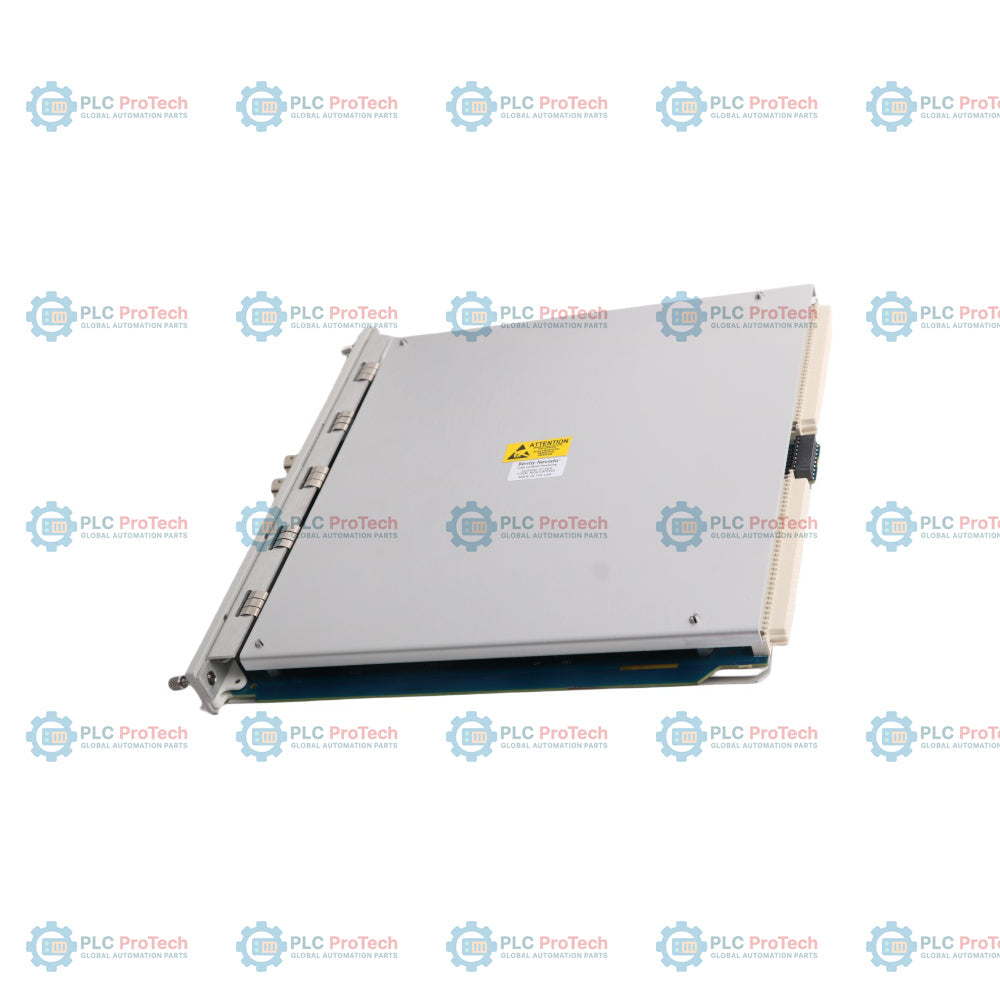
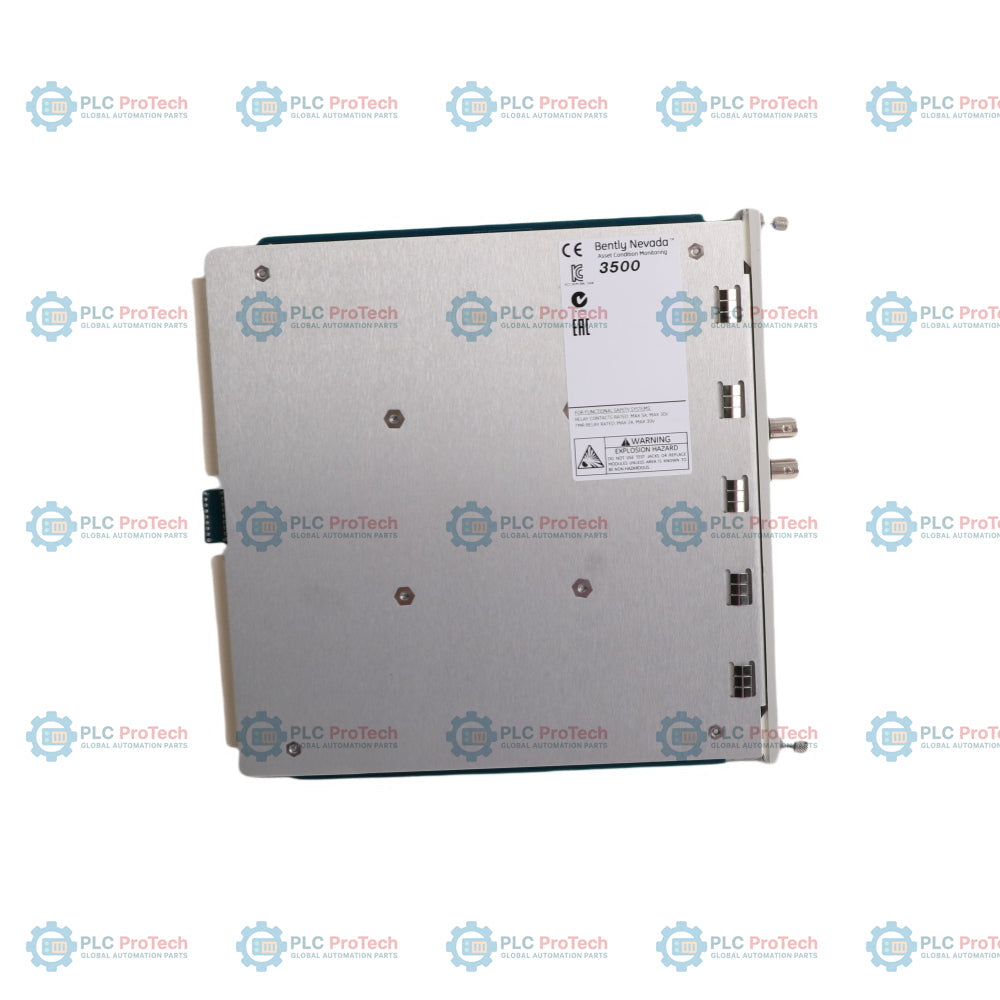
Product No.: 3500/50M-01-00 288062-02
Country of origin:United States
Product Type: Tachometer Module
Barcode: 8537101190
Payment: T/T, Western Union
Weight: 1020g
Dimensions: 241.3 mm x 24.4 mm x 241.8 mm
Shipping port: Xiamen
Warranty: 12 months
The 3500/50M, full part number 3500/50M-01-00 (incorporating main board spare 288062-02), is a 2-channel hardware module designed within the 3500 Machinery Protection System to process pulse inputs from proximity probe Proximitor sensors or passive magnetic pickups to compute shaft rotative speed, rotor acceleration, or rotor direction. The instrument operates via standard 20 kΩ input impedance circuitry (40 kΩ for TMR architectures) to execute speed monitoring logic, driving dual-level alarm setpoints (Alarm 1 and Alarm 2) with independent, sub-second time delays across user-programmed configurations such as zero speed notification, speed band alarming, and reverse rotation notification. It converts physical rotor events into continuous digital variables, hosting the technical capability to synthesize and supply conditioned Keyphasor signals straight to the 3500 rack backplane for wide-system synchronicity while simultaneously delivering individual +4 to +20 mA proportional recorder currents and unconditioned front-panel coaxial buffered voltages for machine diagnostic investigations.
| Parameter | Specification |
|---|---|
| Manufacturer | Bently Nevada |
| Model / Part Number | 3500/50M-01-00 (Main Board: 288062-02) |
| Channel Count | 2 Independent channels |
| Input Signal Range | +10.0 V to -24.0 V (limited internally) |
| Standard Input Impedance | 20 kΩ |
| TMR Input Impedance | 40 kΩ |
| Internal Power Consumption | 5.8 W (Typical) |
| Transducer Power Supply | 24 VDC, 40 mA maximum per channel |
| Analog Recorder Output | +4 to +20 mA proportional to programmed full-scale |
| Recorder Load Resistance | 0 to 600 Ω (0 to +12 VDC voltage compliance) |
| Recorder Current Resolution | 0.3662 µA per bit |
| Recorder Accuracy Error | ± 0.25% at room temperature, ± 0.7% over full range |
| Recorder Output Update Rate | 100 ms |
| Maximum Input Frequency | 20 kHz |
| Maximum Full Scale Range | 99,999 rpm |
| Proximity Sensor Min Frequency | 0.0167 Hz (1 rpm for 1 event per revolution) |
| Magnetic Pickup Min Frequency | 3.3 Hz |
| RPM Resolution & Accuracy |
< 100 rpm = ± 0.1 rpm
100 to 10,000 rpm = ± 1 rpm
10,000 to 99,999 rpm = ± 0.01% of true speed |
| Rotor Acceleration Accuracy | ± 20 rpm/min |
| Combined Total Assembly Weight | 1.02 kg (0.82 kg main board + 0.20 kg internal termination I/O) |
| Monitor Main Card Dimensions | 241.3 mm x 24.4 mm x 241.8 mm |
| I/O Module Dimensions | 241.3 mm x 24.4 mm x 99.1 mm |
Q: Can the 3500/50M-01-00 directly replace a dedicated Keyphasor module within a 3500 protection rack?
A: Yes, the 3500/50M can be configured to condition raw speed signals and inject them onto the rack backplane bus as standard Keyphasor pulses, making a separate Keyphasor module unnecessary for adjacent monitors.
Q: Why does the front panel OK LED flash or drop out when utilizing a magnetic pickup at low turbine rotor speeds?
A: Passive magnetic pickups generate voltage amplitudes proportional to speed; if the rotor speed drops below 3.3 Hz, the output voltage drops below the trigger threshold, causing a sensor detection failure.
Q: What is the physical distinction between the 288062-02 part number and the 3500/50M-01-00 catalog designation?
A: The 3500/50M-01-00 is the complete commercial kit number specifying the front card and specific rear I/O board, while 288062-02 is the engineering spare part number for the main front monitor board alone.


Global Express Shipping
Returns & Warranty


Global Express Shipping
Returns & Warranty
Orders are processed and delivered Monday-Friday (excluding public holidays).
For full eligibility, restocking fees, and international return details, please view our official Refund & Return Policy .
| Color pattern |
Greyish White
Silver
|
| Country of origin |
United States
|

A field checklist for IC693MDL916 relay commands, terminal blocks, load current, switching rate and contact-side measurements.

A field checklist for KL1512 signal thresholds, counter direction, process data and the KL1512-to-KS1512 wiring difference.

A field checklist for EPP2008-0001 current limits, supply voltage, channel LEDs, connector coding and load-related output faults.

Before moving a TwinCAT 3 license with a Beckhoff C9900-L100, verify the TwinCAT build, XML device description, exact order code and cabinet limits.

A field checklist for replacing a Beckhoff EL4032, covering the ±10 V load, terminal map, power contacts, EtherCAT state, and watchdog behavior.

Before replacing a Yokogawa AAI835, verify the 4-in/4-out channel map, power-loss loop behavior, barrier type, output load, cable, and redundancy.