


Troubleshooting Beckhoff EPP2008-0001 Output Faults
A field checklist for EPP2008-0001 current limits, supply voltage, channel LEDs, connector coding and load-related output faults.
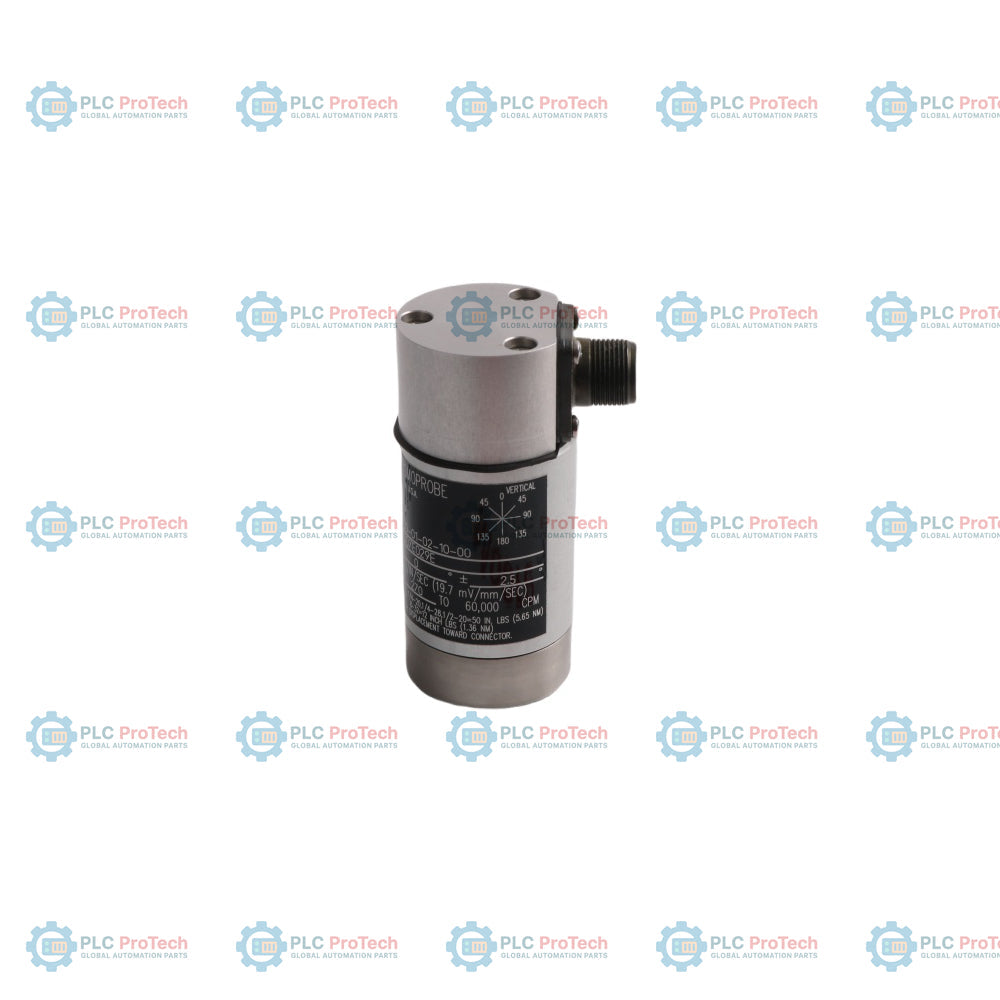
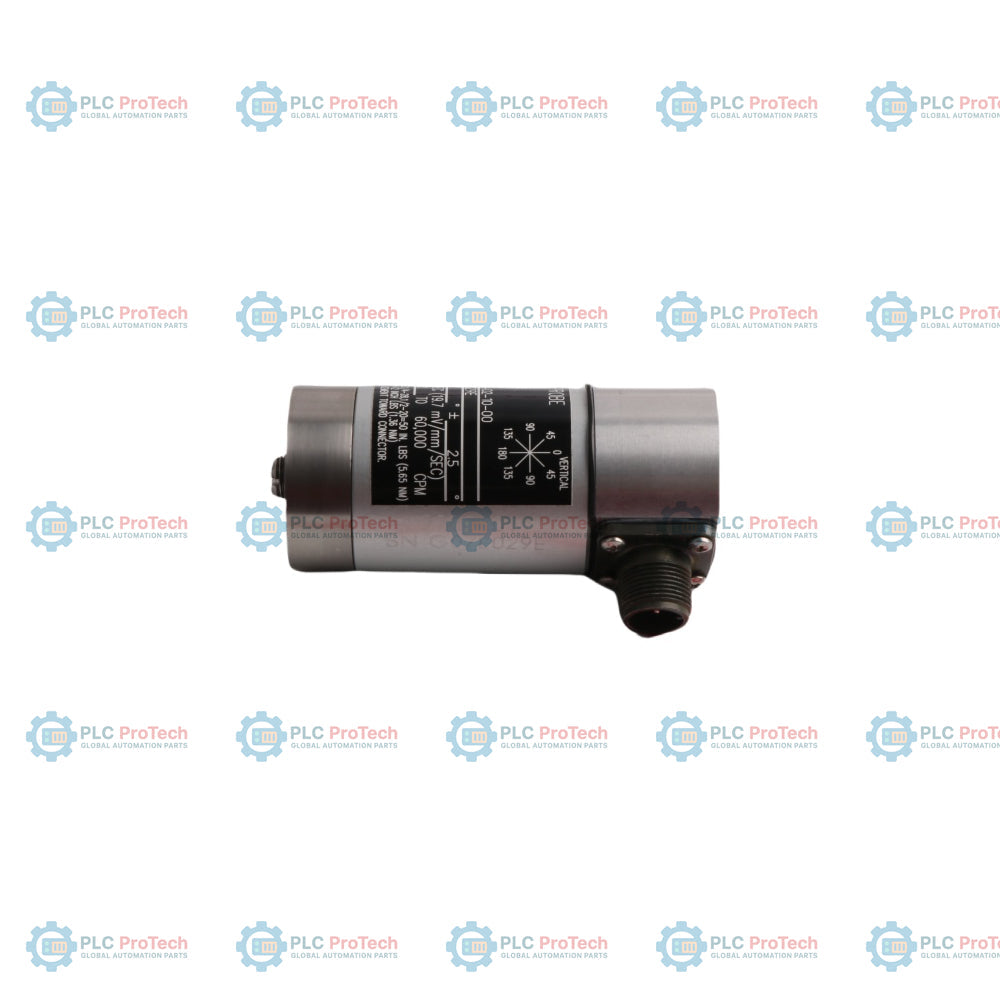
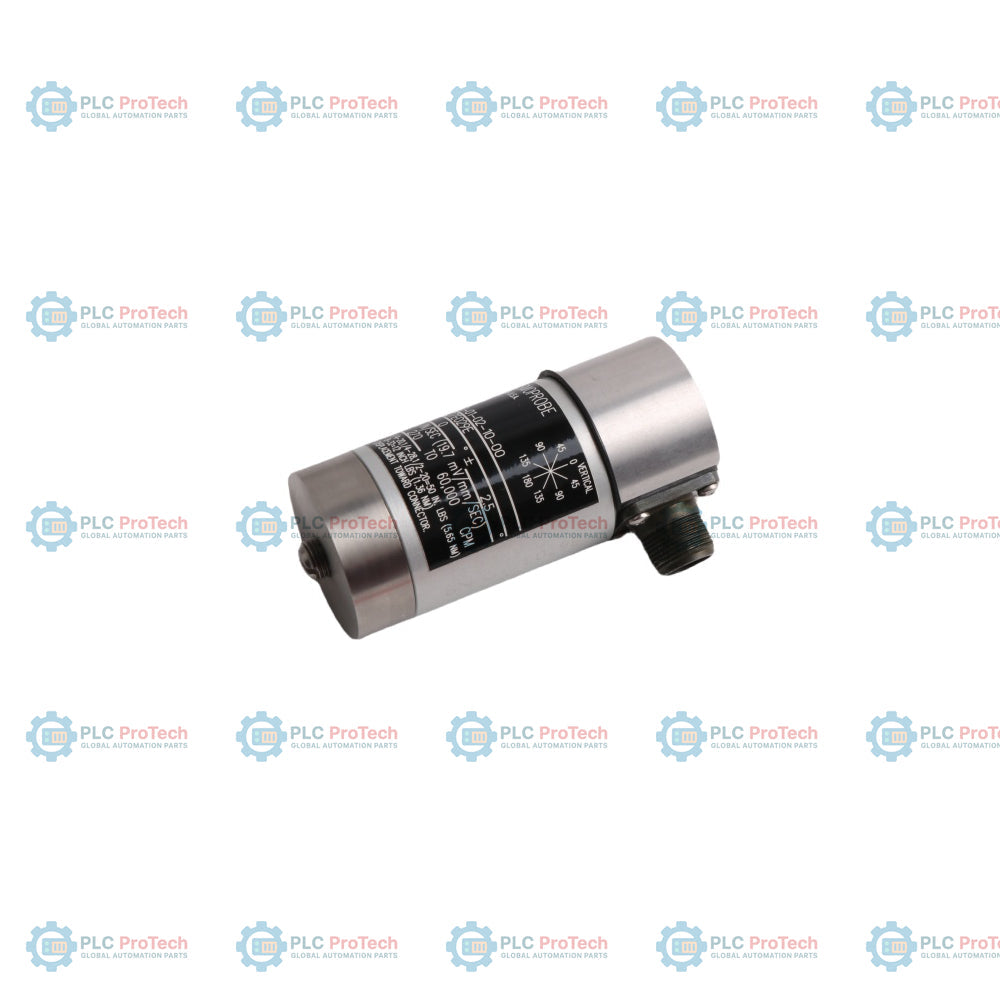
Manufacturer: Bently Nevada
Product No.: 9200-01-02-10-00
Country of origin:United States
Product Type: Seismoprobe Transducer
Barcode: 8537101190
Payment: T/T, Western Union
Weight: 480g
Dimensions: 9.5cm x 4cm x 5.4cm
Shipping port: Xiamen
Warranty: 12 months
The Bently Nevada 9200-01-02-10-00 is a two-wire Seismoprobe Velocity Transducer designed to measure absolute casing vibration on rotating machinery. This moving-coil transducer provides a voltage output directly proportional to the vibration velocity of the machine housing. It operates without external power, utilizing a self-generating design that simplifies field wiring and integration into continuous monitoring systems. The 9200-01-02-10-00 is typically connected to machinery protection systems, such as the Bently Nevada 3500 series, to provide continuous machinery diagnostics, early fault detection, and structural vibration evaluation.
| Parameter | Specification |
| Manufacturer | Bently Nevada |
| Country of Origin | United States |
| Product Type | Seismoprobe Velocity Transducer |
| Sensitivity | 20 mV/mm/s (500 mV/in/s) plus or minus 5 percent at 100 Hz |
| Frequency Response | 10 Hz to 1000 Hz plus or minus 3 dB |
| Operating Temperature Range | -29 to +121 Celsius (-20 to +250 deg C) |
| Mounting Orientation | Vertical or horizontal based on option selection |
| Case Material | Stainless steel |
| Connection Type | Integral cable or top connector variant |
| Estimated Weight | Approximately 0.30 kg |
| Dimensions | Approx. 41 mm diameter by 102 mm height |
| Connector Pin | Function |
| Pin A / Red Wire | Positive (+) Signal |
| Pin B / White Wire | Negative (-) Signal / Common |
| Shield | Case Ground / Shield Termination |
What is the core operating principle of the transducer?
It utilizes a moving-coil and permanent magnet assembly that generates a voltage output directly proportional to the velocity of the physical vibration without external electrical power.
Does this model require an external proximity probe driver or transmitter?
No, it is a self-generating velocity sensor that interfaces directly with the processing monitor card.
What happens if a vertical transducer is mounted horizontally?
The internal spring-mass assembly will misalign, causing internal friction, inaccurate readings, and potential damage to the internal coil suspension.
How should the cable shield be terminated for field installations?
The shield must be insulated at the transducer housing and connected cleanly to the instrument ground inside the monitoring cabinet.
Can this unit be repaired in the field if the housing is damaged?
No, the transducer is a factory-sealed unit and must be replaced or returned to the manufacturer for recalibration and service.
What is the typical output impedance of this sensor?
It features a low output impedance design making it suitable for driving long transmission cables without significant signal degradation.
Is calibration required during initial installation?
The unit is factory-calibrated and does not require field adjustment, though periodic verification of the sensitivity parameter is recommended.
What causes signal distortion or clipping in this type of sensor?
Severe mechanical shocks exceeding the physical limits of the internal mass suspension can cause internal bottoming and signal distortion.
Can the transducer be painted during routine machinery maintenance?
Painting the sensor body is not recommended as it can trap heat, obscure identification labels, and potentially foul the mounting base coupling.
How does ambient temperature affect the sensitivity of the unit?
The sensitivity remains highly stable across the specified operating temperature range, with minor variance accounted for in the engineering verification data.


Global Express Shipping
Returns & Warranty


Global Express Shipping
Returns & Warranty
Orders are processed and delivered Monday-Friday (excluding public holidays).
For full eligibility, restocking fees, and international return details, please view our official Refund & Return Policy .
| Country of origin |
United States
|

A field checklist for EPP2008-0001 current limits, supply voltage, channel LEDs, connector coding and load-related output faults.

Before moving a TwinCAT 3 license with a Beckhoff C9900-L100, verify the TwinCAT build, XML device description, exact order code and cabinet limits.

A field checklist for replacing a Beckhoff EL4032, covering the ±10 V load, terminal map, power contacts, EtherCAT state, and watchdog behavior.

Before replacing a Yokogawa AAI835, verify the 4-in/4-out channel map, power-loss loop behavior, barrier type, output load, cable, and redundancy.

ABB PM891K01 article 3BSE053241R1 is the non-redundant AC 800M processor kit. Use this field checklist before replacement.

Replacement checks for ABB TP853 3BSE018126R1: identify the installed CI853, CI855, CI857, or CI861 interface, record wiring, and verify communication after installation.