Description
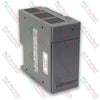
Designed to supply reliable, regulated power to critical DCS cabinets, the Honeywell 51109456-200 chassis-mounted power supply delivers stable performance under heavy industrial workloads. This unit is engineered to support legacy Honeywell process control environments, offering high-current output and wide AC input tolerance to protect sensitive electronic components from voltage fluctuations.
With its robust mechanical build and highly efficient thermal dissipation design, this module ensures long-term operational continuity in demanding automation systems. It integrates seamlessly into standard system racks, providing a straightforward replacement or upgrade path for older revision modules (such as REV E) with identical physical and electrical interfaces.
Features
- Wide-range AC input capability supporting global voltage standards.
- High current capacity output rating up to 15 Amps to drive multi-module system loads.
- Heavy-duty metal enclosure engineered for industrial cabinet deployment.
- Integrated overcurrent and short-circuit protection circuits.
- Direct compatibility with Honeywell chassis backplanes.
Applications
- Distributed Control Systems (DCS) infrastructure
- Refinery and petrochemical plant control cabinets
- Power generation and utility control systems
- Pulp and paper industrial process automation
Technical Specifications
| Manufacturer |
Honeywell |
| Part Number / Model |
51109456-200 |
| Revision Level |
REV G (Compatible with REV E and alternative revisions) |
| Input Voltage |
115 / 230 VAC (Selectable/Auto-ranging) |
| Input Frequency |
50 / 60 Hz |
| Output Current Rating |
15 A |
| Total Power Output |
536 W |
| Mounting Type |
Chassis / Panel Mount |
| Shipping Weight |
13 kg |
Installation Guidelines
Ensure that all upstream AC power sources are completely de-energized before mounting the Honeywell 51109456-200 power supply. Secure the chassis firmly to the panel or rack utilizing the designated mounting points. Because this high-capacity unit generates heat during operation under full load, maintain proper ventilation clearance around the cooling vents. Establish a solid protective earth (PE) ground connection before executing any operational tests to prevent electrical hazards and reduce signal noise.