Beschreibung
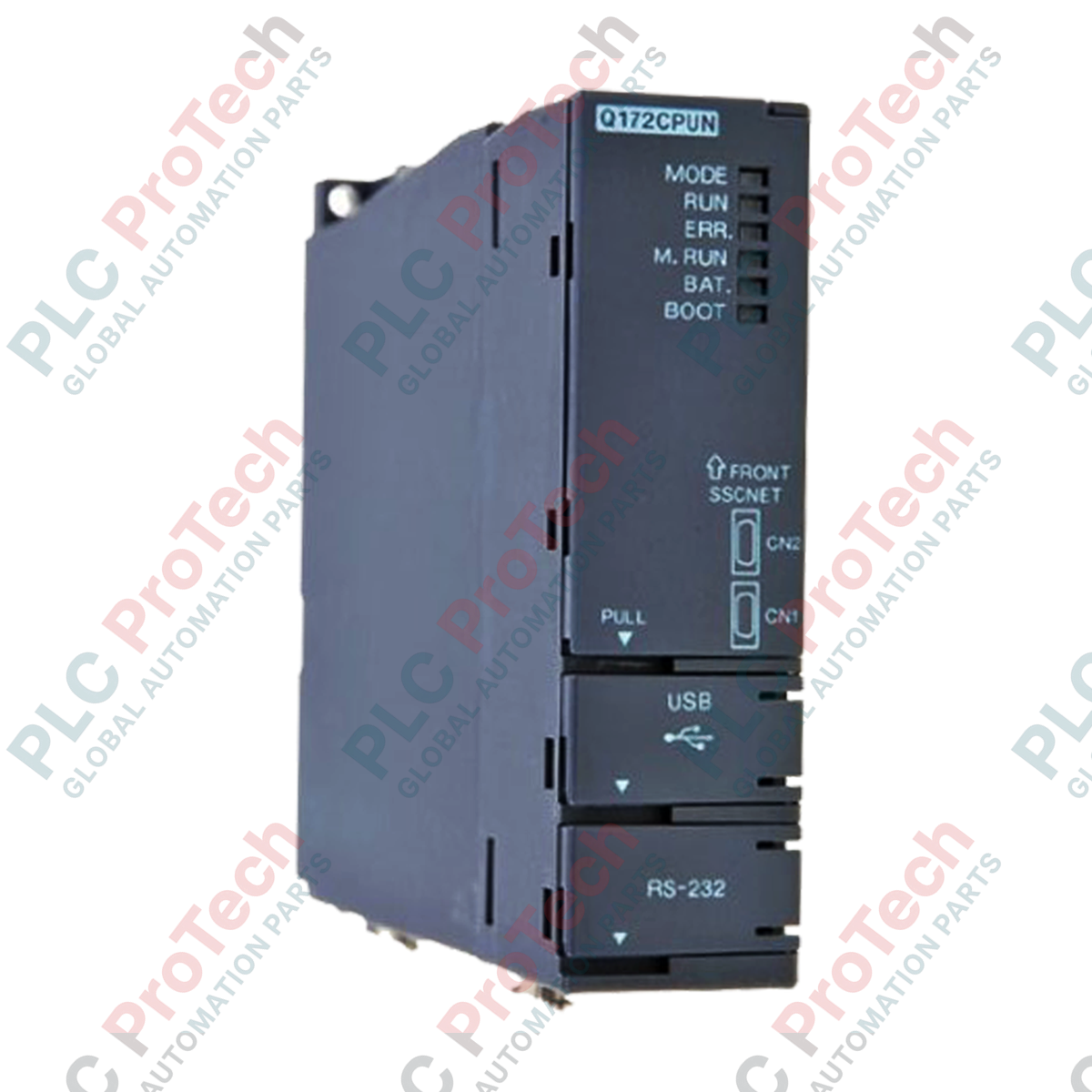
Der Mitsubishi Electric Q173CPUN wurde für die leistungsstarke Synchronisierung mehrerer Achsen entwickelt und dient als dedizierte Motion-CPU innerhalb der MELSEC-Q-Serie. Dieser Controller wird nahtlos auf derselben Basiseinheit neben standardmäßigen SPS-CPUs der Q-Serie integriert und verteilt die Verarbeitungslast, um eine präzise Synchronisierung komplexer Maschinen zu erreichen. Er unterstützt fortschrittliche Motion-Control-Aufgaben wie die Konfiguration virtueller Achsen, elektronische Kurvenscheiben und synchronisierte Getriebefunktionen und nutzt dabei störsichere Lichtwellenleiter-Schnittstellen zur Kommunikation mit externen Servoverstärkern.
Merkmale
-
Multi-CPU-Architektur: Wird direkt auf der Rückwandplatine der Q-Serie installiert, um Daten mit der Haupt-PLC-CPU des Hostsystems über den Hochgeschwindigkeitsbus auszutauschen.
-
Robuste Synchronisierung: Führt komplexe elektronische Kurvenscheiben, mechanische Koordinatentransformationen und elektronische Übersetzungsverhältnisse gleichzeitig über mehrere Kanäle aus.
-
SSCNET-III-Integration: Nutzt Lichtwellenleiter für eine störsichere Hochgeschwindigkeitsdatenübertragung zu den Servoantrieben.
-
Erweiterte E/A-Verwaltung: Verwaltet bis zu 8192 Punkte des Steuerungssystems zur Verarbeitung komplexer Systemrückmeldungen und Signalzuordnungen.
Anwendungen
- Hochgeschwindigkeits-Verpackungs- und Umhüllungsmaschinen
- Mehrere Achsen umfassende Druckmaschinen und Papierverarbeitungsanlagen
- Automatisierte Pick-and-Place-Systeme und Fertigungslinien für Halbleiter
- Synchronisierte Positioniersysteme für Portalkräne
Tabelle der technischen Daten
| Hersteller |
Mitsubishi Electric |
| Modell |
Q173CPUN |
| Serie |
MELSEC-Q-Serie |
| Modultyp |
Motion-Controller-CPU-Modul |
| Anzahl der Steuerachsen |
Bis zu 32 Achsen |
| E/A-Punkte |
8192 Punkte |
| Programmspeicher |
14.000 Schritte |
| Motion-Netzwerk |
SSCNET III (Lichtwellenleiter) |
| Betriebstemperatur |
0 bis 55 °C |
| Lagertemperatur |
-25 bis 75 °C |
| Versandgewicht (berechnet) |
3,0 kg |
| Abmessungen der Verpackung (berechnet) |
150 mm x 120 mm x 100 mm |
Anschlüsse und Schnittstellen
| Schnittstellentyp |
Physische Beschreibung und Funktion |
| SSCNET-III-Ports |
Anschlüsse für Lichtwellenleiter zur Hochgeschwindigkeits-Synchronkommunikation mit Servoverstärkern der Serien MR-J3/MR-J4. |
| Multi-CPU-Schnittstelle |
Hochgeschwindigkeits-Rückwandbusstecker passend zur Steckplatzzuordnung der MELSEC-Q-Hauptbasiseinheit. |
| USB-Anschluss |
Peripherer Kommunikationsanschluss für Inbetriebnahme, Konfigurations-Downloads und Echtzeit-Trace-Diagnose. |
Erkenntnisse aus der Praxis
Alternative Modelle und Kompatibilität
Prüfen Sie bei der Migration von älteren Nicht-N-Modellen wie dem Q173CPU das physische Netzwerkdesign. Der Standard-Q173CPU verwendet kupferbasierte SSCNET-Kommunikation, während der Q173CPUN das faseroptische SSCNET III nutzt. Daher müssen die Kommunikationskabel auf Glasfaserkabel umgestellt werden, und die entsprechenden Servoantriebe müssen SSCNET-III-Protokolle unterstützen.
Typische Anwendungsfehler und technische Hinweise
Die Berechnung der Rückwandbus-Stromaufnahme ist entscheidend. Da eine Motion-Controller-CPU mehr Strom aus der 5-V-Rückwandbusversorgung aufnimmt als Standard-Digital-I/O-Module, müssen Sie die Stromaufnahme der SPS-CPU, des Q173CPUN und aller Hostmodule addieren, um eine Überlastung der Systemstromversorgung zu verhindern (z. B. Q61P gegenüber Q63P).
Tipps für Inbetriebnahme und Verdrahtung
Behandeln Sie die optischen SSCNET-III-Glasfaserkabel bei der Schaltschrankverdrahtung äußerst vorsichtig. Die Einhaltung eines minimalen Biegeradius von 25 mm ist entscheidend; wird dieser Grenzwert unterschritten, kann dies zu einer Dämpfung des optischen Signals und dadurch zu schwer nachvollziehbaren Kommunikationsausfällen oder sporadischen Achsenfehlern (z. B. Code 32 oder 10) während schneller Betriebszyklen führen.
Installationsrichtlinien
WICHTIGER WARNHINWEIS: Stellen Sie vor der Installation, dem Ausbau oder der Verdrahtung des Q173CPUN an der Basiseinheit sicher, dass alle Phasen der vom System verwendeten externen Stromversorgung vollständig abgeschaltet sind. Wird die Baugruppe nicht spannungsfrei geschaltet, kann dies zu einem Modulausfall, einer Beeinträchtigung der Kommunikation oder einem Stromschlag führen.
1
Richten Sie den unteren Haken des Q173CPUN-Moduls an der Modulbefestigungsöffnung der MELSEC-Q-Hauptbasiseinheit aus und stellen Sie sicher, dass die Einheit in einem dafür vorgesehenen Motion-CPU-Steckplatz sitzt.
2
Drücken Sie die Oberseite des Moduls fest auf die Basiseinheit, bis es einrastet, und ziehen Sie anschließend die Befestigungsschraube des Moduls mit dem vorgeschriebenen Drehmoment an.
3
Entfernen Sie die Schutzstaubkappen von den optischen SSCNET-III-Ports und stecken Sie die Glasfaserkabel ein, bis sie sicher einrasten. Bewahren Sie die Staubkappen für künftige Wartungsarbeiten sicher auf.