1 de 3

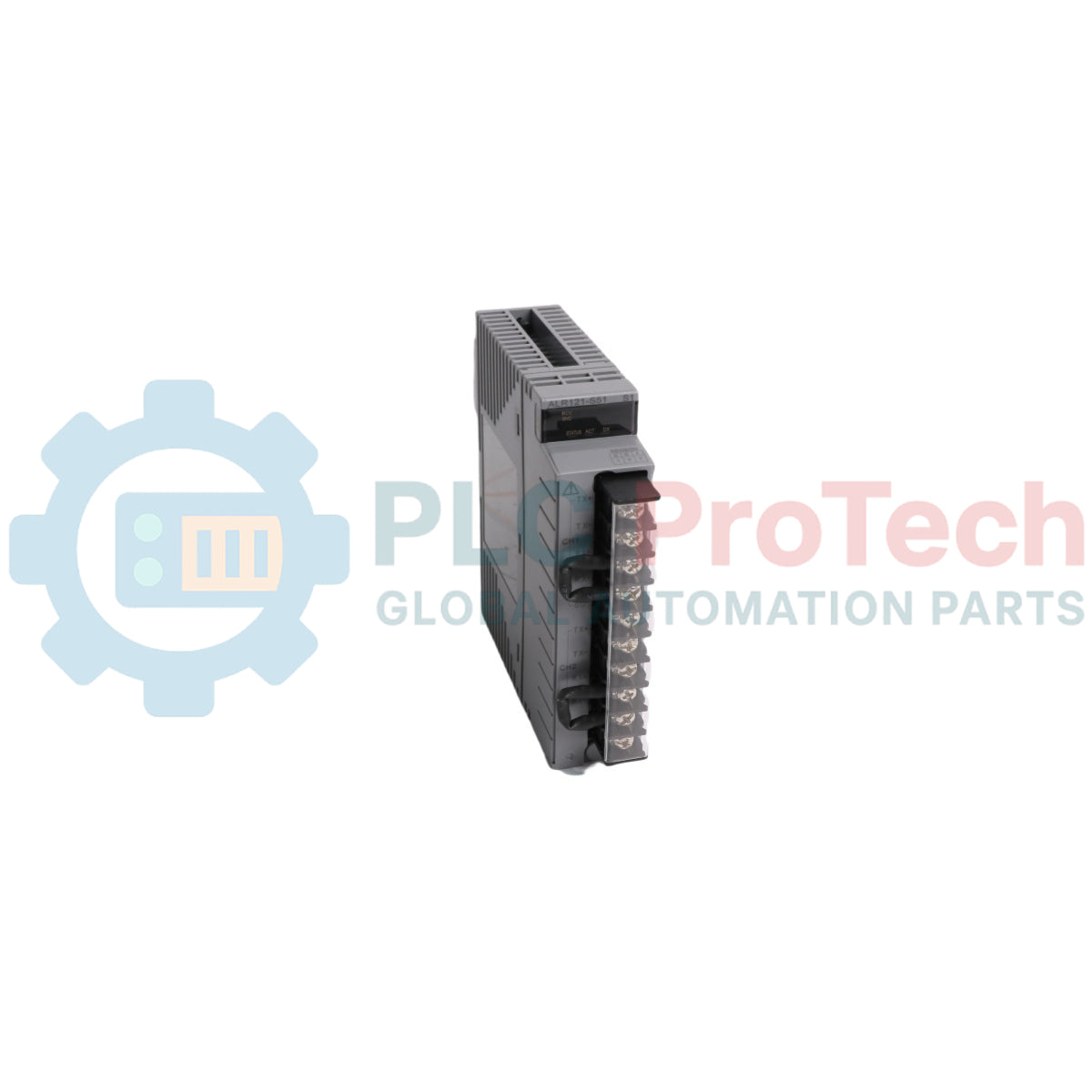
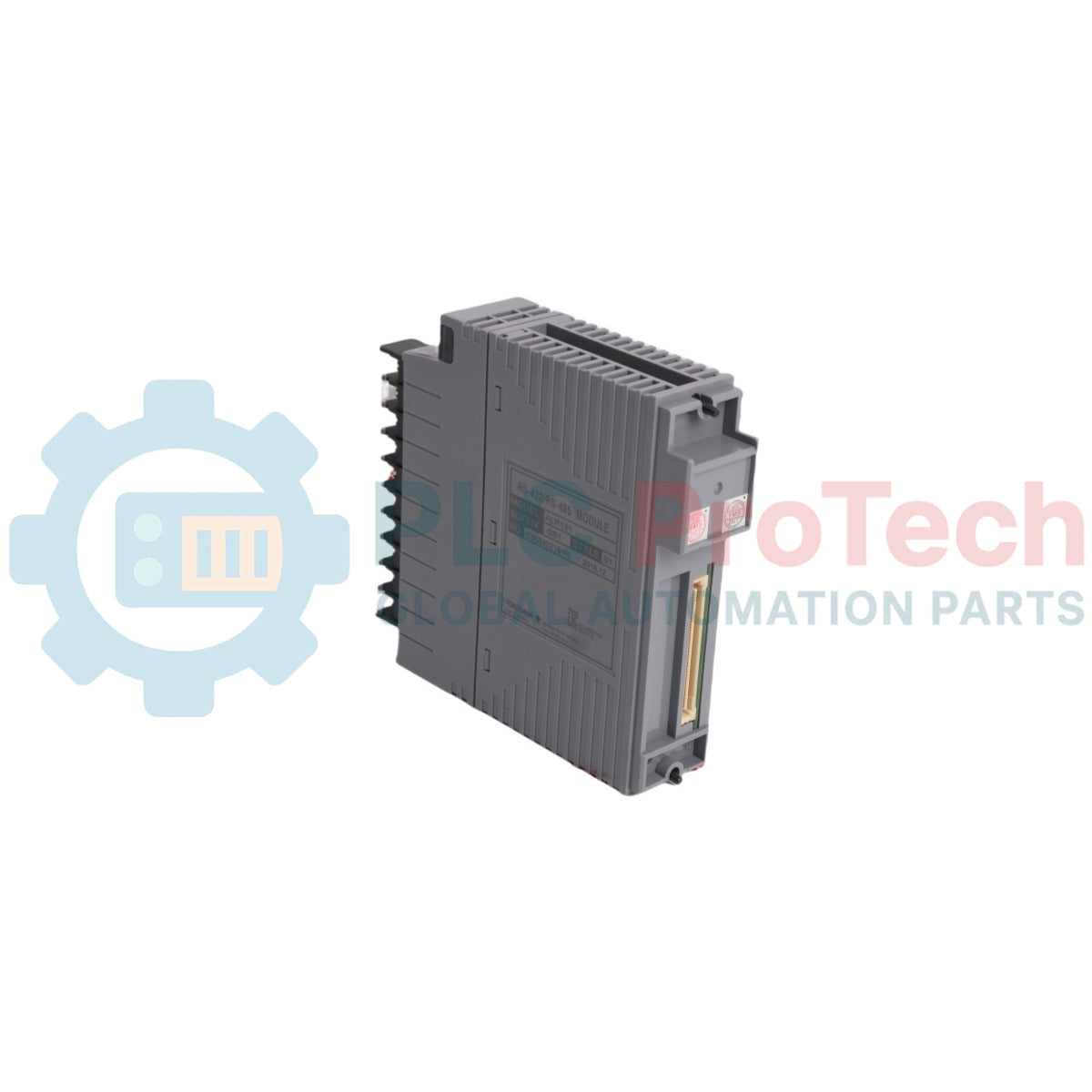
Module de communication série CENTUM VP Yokogawa ALR121-S51 S1

Module de communication série CENTUM VP Yokogawa ALR121-S51 S1

Il ne reste que 10 article(s) en stock
  • Fabricant : Yokogawa

  • N° de produit : ALR121-S51 S1

  • Pays d'origine :Japon

  • Type de produit : Module de communication

  • Code-barres : 8537101190

  • Paiement : Virement bancaire, Western Union

  • Poids : 300g

  • Dimensions : 14 cm x 13 cm x 3,2 cm

  • Port d'expédition : Xiamen

  • Garantie : 12 mois

Quantité
Voir les détails complets

Product Overview

The Yokogawa ALR121-S51 S1 is a high-reliability, 2-port serial communication module designed for the CENTUM VP Distributed Control System (DCS). Operating as a key data exchange bridge, this module is widely used in refineries, power stations, and chemical processing facilities to integrate subsystems—such as PLCs, safety systems, and analytical instruments—directly into the Field Control Station (FCS). By supporting both point-to-point RS-422 (4-wire) and multipoint RS-485 serial communication protocols, the module allows seamless connection to Modbus, MELSEC, or Allen-Bradley SLC500 subsystems. Featuring an ISA Standard G3 corrosion protection coating, this Style 1 module ensures continuous, uninterrupted process monitoring. This high-availability data link actively prevents signal blackouts and eliminates communication bottlenecks, directly protecting critical operational runtimes and reducing unplanned plant downtime.

Suffix Breakdown

The system ordering code for the ALR121-S51 S1 module defines its hardware durability, environmental protections, and production style revision:

  • ALR121: Base model designator for the 2-Port Serial Communication Module (RS-422/RS-485).

  • -S: Standard type module designed for standard industrial networks.

  • 5: Configured with no specialized explosion protection (suitable for standard control room or purged rack installations).

  • 1: Equipped with ISA Standard G3 conformal coating for superior protection against corrosive gases.

  • S1: Style 1 design revision, indicating the physical hardware build standard for FIO slot compatibility.

Technical Specifications

Parameter Certified Specification Value
Model ALR121-S51 S1
Brand Yokogawa Electric Corporation
Origin Japan
Ports 2 ports (RS-422 or RS-485 4-wire system)
Interface Speed 1200 / 2400 / 4800 / 9600 / 19200 / 38400 bps
Connection Topologies Point-to-point (RS-422); Multipoint (RS-485)
Communication Mode Half-duplex
Synchronizing Method Start-stop synchronization
Data Word Capacity 1000 words per module
Communication Definitions Up to 128 definitions per module
Maximum Transmission Distance 1200 m (total extended cable length)
System Current Consumption 0.5 A at 5 V DC
I/O Wiring Interfaces Cable with 3-pair shield, AKB161, or AKB162 cables
Physical Weight 0.30 kg

Technical FAQs

  • Q: Can the two ports on the ALR121-S51 S1 run different communication protocols simultaneously?

    A: No. A single communication module selects only one communication function at a time. Both port 1 and port 2 must be configured with identical communication functions (for example, both ports running Modbus RTU). You cannot configure port 1 for Modbus and port 2 for MELSEC-A on the same module.

  • Q: Is the ALR121-S51 S1 compatible with dual-redundant communication?

    A: Yes. Dual-redundant communication is fully supported when utilizing FA-M3, Modbus, or MELSEC-A communication functions. This requires installing a matched pair of ALR121 modules in adjacent slots of a compatible FCS node unit.

  • Q: What is the significance of the "Lag time after data transmission" parameter?

    A: The 1 ms lag time is the mandatory hardware delay the module enforces to transition from transmitter mode to receiver mode. This precise delay prevents transceiver signal collision, ensuring that the module only begins scanning for incoming subsystem data after its own transmission is completely clear.


Engineering & Installation Guide

  • Shield Grounding and Cable Routing: Always use a high-quality 3-pair shielded cable (such as Yokogawa AKB161 or AKB162) for serial links. Connect the overall cable shield to the cabinet frame ground at the FCS end only. Keep the shield isolated at the field device end to prevent hazardous ground loops from introducing noise onto the RS-422/RS-485 communication line.

  • Terminal Block Connection Protocol: Secure the field wires directly to the module's 5-poles-by-2 terminal block using M4 ring terminal lugs. Tighten the terminal screws to the recommended standard torque to prevent loose connections in high-vibration control environments, which can cause intermittent CRC errors.

  • Line Termination Requirements: For long-distance RS-485 multipoint networks (approaching the 1200 m maximum), always install a 120 Ohm terminating resistor across the RX+ and RX- terminal lines at the physically last device on the bus. This prevents signal reflections from distorting the start-stop data bits.

Expédition express mondiale

  • Livraison standard : 4 à 6 jours ouvrables via DHL, FedEx et UPS.
  • Expédition express : Expédition le jour même pour les commandes en stock passées avant 14h00 (GMT+8).
  • Couverture mondiale : Service dans plus de 150 pays, avec livraison rapide en Arabie Saoudite et aux Émirats arabes unis.

Retours et garantie

  • Garantie de 30 jours : Retours acceptés pour les produits en stock dans leur emballage d’origine scellé en usine.
  • Garantie de 12 mois : Chaque composant industriel est couvert par notre garantie technique professionnelle.

Les commandes sont traitées et livrées du lundi au vendredi (hors jours fériés).


Pour connaître les conditions d’éligibilité complètes, les frais de restockage et les détails des retours internationaux, veuillez consulter notre site officiel Politique de remboursement et de retour .

TECHNICAL SPECIFICATIONS

Color pattern
Blanc grisâtre
Country of origin
Japon
Power source
Alimentation DC

Produits récemment consultés

Connaissances techniques

Guide des préhenseurs robotiques : de la manipulation délicate à l'automatisation lourde

Les pinces robotiques modernes évoluent au-delà des mâchoires mécaniques traditionnelles. Des systèmes adhésifs inspirés du gecko et des pinces souples de qualité alimentaire aux outils d'entrepôt...

Retour en arrière : comment les premiers moteurs électriques ont transformé l'exploitation minière souterraine

Des compresseurs à courant continu entraînés par corde aux wagonnets de mine alimentés par batterie, les premières opérations minières ont marqué un tournant dans l’électrification industrielle. Cet...

Factory I/O : un outil moderne de simulation PLC pour la formation à l'automatisation industrielle

Factory I/O révolutionne l'enseignement des automates programmables industriels (API) en proposant des simulations industrielles 3D immersives pour les étudiants, les ingénieurs et les équipes de...

Programmation des cycles de mouvement à axe unique sur un servo-variateur CMZ

Ce tutoriel examine comment la fonctionnalité PLC intégrée dans un servo-variateur CMZ SBD peut exécuter des programmes de mouvement autonomes, y compris la logique de référencement, le contrôle de...

Configuration de contrôle de mouvement à axe unique avec les servomoteurs CMZ

Ce tutoriel explore la mise en service d'un système de mouvement servo à un seul axe utilisant un variateur CMZ SBD, couvrant l'installation matérielle, la mise à l'échelle de l'axe, la configuration...

Intégration du PLC Mitsubishi FX avec le variateur FR-D700 et le contrôle HMI

Ce tutoriel explique comment les automates programmables Mitsubishi FX s'intègrent avec les variateurs de fréquence FR-D700 et les panneaux HMI pour le contrôle avant/arrière des moteurs. Il couvre...