


Menerapkan Logika Tangga XOR 3 Sakelar dengan Bit Internal
Implementasikan rangkaian lampu XOR dengan sakelar 3-SPST di LogixPro atau RSLogix 500 menggunakan bit relai internal. Mencakup tabel kebenaran, persamaan Boolean, dan telah diverifikasi.

Untuk mengoptimalkan arsitektur kontrol motor yang memiliki keterbatasan ruang, micro-drive Mitsubishi Electric FR-D720-0.75K menghadirkan pengaturan kecepatan yang presisi dan kinerja torsi tinggi untuk motor induksi tiga fase hingga 0,75 kW (1 HP). Variable frequency drive ini beroperasi dengan input kelas 200 V tiga fase, menggunakan kontrol vektor fluks magnetik serbaguna yang canggih untuk mencapai torsi awal lebih dari 150% pada 1 Hz. Rangkanya yang sangat ringkas menjadikannya pilihan ideal untuk konveyor, mesin pengemasan, penggerak kipas dan pompa, serta sistem penanganan material otomatis yang memerlukan keandalan tinggi dan integrasi yang sederhana.
| Parameter | Nilai Spesifikasi |
|---|---|
| Produsen | Mitsubishi Electric |
| Nomor Model | FR-D720-0.75K |
| Seri Produk | Seri FREQROL-D700 |
| Kapasitas Motor yang Sesuai | 0,75 kW (1 HP) |
| Arus Output Terukur | 4,2 A |
| Kapasitas Output Terukur | 1,7 kVA |
| Tegangan Output Terukur | AC 3 fase 200 hingga 240 VAC |
| Kapasitas Arus Beban Lebih | 150% selama 60 detik, 200% selama 0,5 detik |
| Kelas Tegangan Input | Kelas 200 V Tiga Fase |
| Tegangan & Frekuensi Input AC | AC 3 fase 200 hingga 240 VAC, 50 Hz / 60 Hz |
| Variasi Tegangan yang Diizinkan | 170 hingga 264 VAC |
| Toleransi Frekuensi Catu Daya | +/- 5% |
| Metode Kontrol | Soft-PWM / PWM Frekuensi Carrier Tinggi (Kontrol V/F, Kontrol Vektor Fluks Magnetik dapat dipilih) |
| Rentang Frekuensi Output | 0,2 hingga 400 Hz |
| Metode Pendinginan | Pendinginan mandiri |
| Struktur Pelindung | Tipe Tertutup (IP20) |
| Suhu Pengoperasian Ambien | -10 hingga +50 °C (tidak membeku) |
| Kelembapan Pengoperasian Ambien | 90% RH atau kurang (tanpa kondensasi) |
| Berat Pengiriman (Dihitung) | 2,0 kg |
| Dimensi Produk | 68 mm (W) x 128 mm (H) x 142.5 mm (D) |
| Terminal / Port | Fungsi / Penetapan Sirkuit |
|---|---|
| L1, L2, L3 | Masukan daya AC tiga fase |
| U, V, W | Keluaran AC tiga fase ke motor induksi |
| Terminal 2 | Masukan pengaturan frekuensi analog (0 hingga 10 V / 0 hingga 5 V dapat dipilih) |
| Terminal 4 | Masukan analog (0 hingga 10 V / 0 hingga 5 V / 4 hingga 20 mA dapat dipilih) |
| FM | Monitor keluaran rangkaian pulsa (Hingga 2.4 kHz) |
| Port RJ-45 | Antarmuka Modbus RTU RS-485 / koneksi PU |
FR-D720-0.75K berfungsi sebagai pengganti modern langsung untuk drive FR-S520-0.75K lama. Perhatikan bahwa tata letak terminal kontrol berbeda; seri D700 yang lebih baru menggunakan terminal penjepit pegas tahan getaran, bukan terminal sekrup tradisional. Saat memigrasikan konfigurasi dari drive lama, peta parameter umumnya sesuai, tetapi Anda harus memeriksa Parameter 79 (Pemilihan Mode Operasi) secara manual untuk memastikan perintah mulai dari jaringan atau eksternal dirutekan dengan benar.
Karena ukuran rangka kecil ini menggunakan konveksi alami (pendinginan mandiri) dan tidak memiliki kipas pendingin internal, perangkat ini sangat sensitif terhadap konsentrasi panas lingkungan. Jika dipasang di dalam kabinet ringkas tanpa ventilasi, drive akan segera memicu kesalahan Overheat (E.THT atau E.FIN). Pastikan jarak bebas minimum 50 mm di atas dan di bawah drive, serta pastikan suhu panel tidak melebihi 50 degC selama siklus kerja kontinu.
Saat mengonfigurasi komunikasi Modbus RTU melalui koneksi RJ-45 terintegrasi, ingat bahwa kabel patch Ethernet standar dapat digunakan, tetapi Anda harus memasang resistor 120 ohm antara sinyal SDA dan SDB pada drive di ujung jalur untuk mencegah batas waktu komunikasi. Selalu rutekan jalur sinyal kontrol dan jalur daya utama melalui saluran terpisah untuk menghilangkan derau akibat EMI pada terminal masukan analog yang penting (Terminal 2 dan 4).
Global Express Shipping
Returns & Warranty

Produsen: Mitsubishi Electric
Nomor Produk: FR-D720-0.75K
Negara asal:Amerika Serikat
Jenis Produk: Penggerak Frekuensi Variabel
Pembayaran: T/T, Western Union
Berat: 2000g
Pelabuhan pengiriman: Xiamen
Garansi: 12 bulan
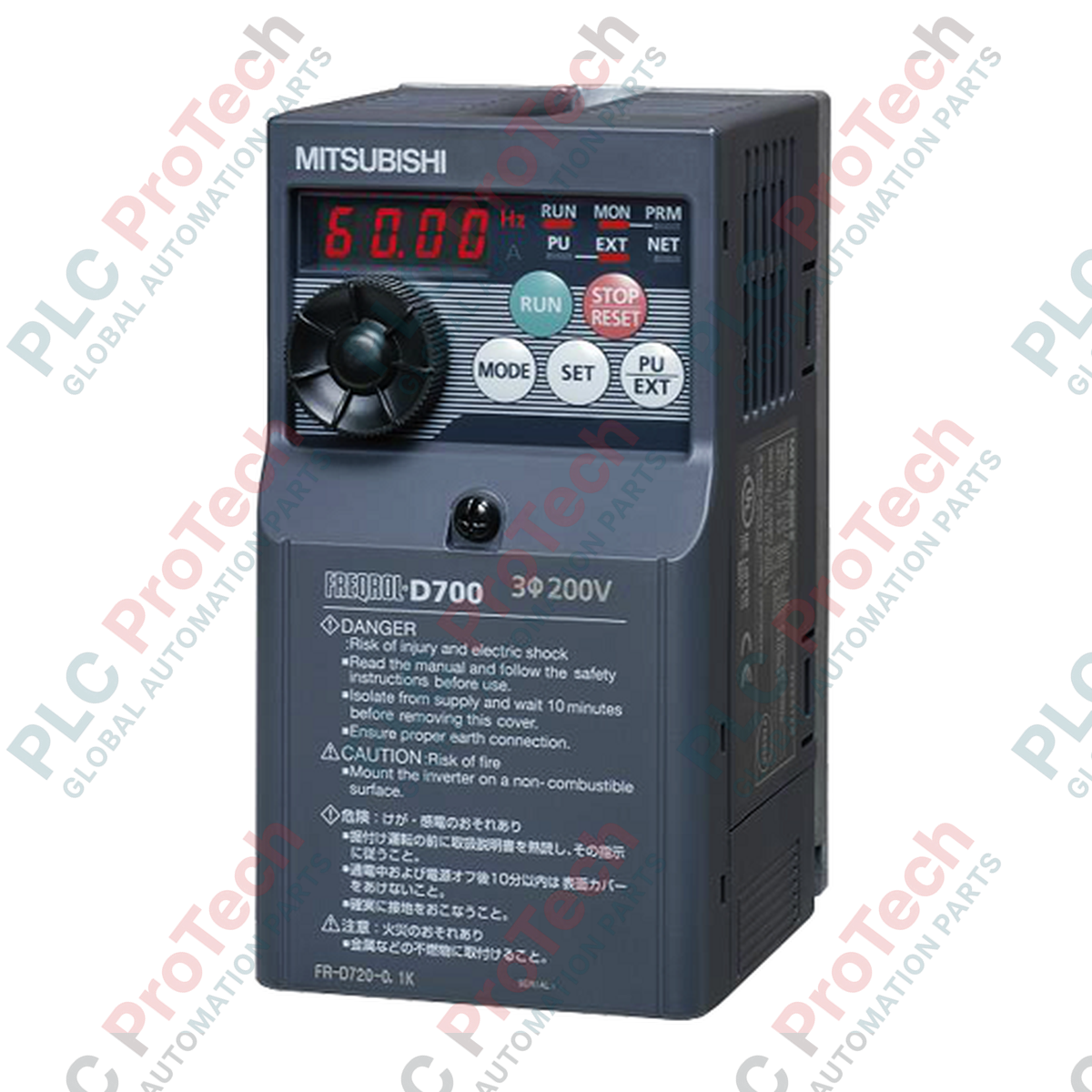
Untuk mengoptimalkan arsitektur kontrol motor yang memiliki keterbatasan ruang, micro-drive Mitsubishi Electric FR-D720-0.75K menghadirkan pengaturan kecepatan yang presisi dan kinerja torsi tinggi untuk motor induksi tiga fase hingga 0,75 kW (1 HP). Variable frequency drive ini beroperasi dengan input kelas 200 V tiga fase, menggunakan kontrol vektor fluks magnetik serbaguna yang canggih untuk mencapai torsi awal lebih dari 150% pada 1 Hz. Rangkanya yang sangat ringkas menjadikannya pilihan ideal untuk konveyor, mesin pengemasan, penggerak kipas dan pompa, serta sistem penanganan material otomatis yang memerlukan keandalan tinggi dan integrasi yang sederhana.
| Parameter | Nilai Spesifikasi |
|---|---|
| Produsen | Mitsubishi Electric |
| Nomor Model | FR-D720-0.75K |
| Seri Produk | Seri FREQROL-D700 |
| Kapasitas Motor yang Sesuai | 0,75 kW (1 HP) |
| Arus Output Terukur | 4,2 A |
| Kapasitas Output Terukur | 1,7 kVA |
| Tegangan Output Terukur | AC 3 fase 200 hingga 240 VAC |
| Kapasitas Arus Beban Lebih | 150% selama 60 detik, 200% selama 0,5 detik |
| Kelas Tegangan Input | Kelas 200 V Tiga Fase |
| Tegangan & Frekuensi Input AC | AC 3 fase 200 hingga 240 VAC, 50 Hz / 60 Hz |
| Variasi Tegangan yang Diizinkan | 170 hingga 264 VAC |
| Toleransi Frekuensi Catu Daya | +/- 5% |
| Metode Kontrol | Soft-PWM / PWM Frekuensi Carrier Tinggi (Kontrol V/F, Kontrol Vektor Fluks Magnetik dapat dipilih) |
| Rentang Frekuensi Output | 0,2 hingga 400 Hz |
| Metode Pendinginan | Pendinginan mandiri |
| Struktur Pelindung | Tipe Tertutup (IP20) |
| Suhu Pengoperasian Ambien | -10 hingga +50 °C (tidak membeku) |
| Kelembapan Pengoperasian Ambien | 90% RH atau kurang (tanpa kondensasi) |
| Berat Pengiriman (Dihitung) | 2,0 kg |
| Dimensi Produk | 68 mm (W) x 128 mm (H) x 142.5 mm (D) |
| Terminal / Port | Fungsi / Penetapan Sirkuit |
|---|---|
| L1, L2, L3 | Masukan daya AC tiga fase |
| U, V, W | Keluaran AC tiga fase ke motor induksi |
| Terminal 2 | Masukan pengaturan frekuensi analog (0 hingga 10 V / 0 hingga 5 V dapat dipilih) |
| Terminal 4 | Masukan analog (0 hingga 10 V / 0 hingga 5 V / 4 hingga 20 mA dapat dipilih) |
| FM | Monitor keluaran rangkaian pulsa (Hingga 2.4 kHz) |
| Port RJ-45 | Antarmuka Modbus RTU RS-485 / koneksi PU |
FR-D720-0.75K berfungsi sebagai pengganti modern langsung untuk drive FR-S520-0.75K lama. Perhatikan bahwa tata letak terminal kontrol berbeda; seri D700 yang lebih baru menggunakan terminal penjepit pegas tahan getaran, bukan terminal sekrup tradisional. Saat memigrasikan konfigurasi dari drive lama, peta parameter umumnya sesuai, tetapi Anda harus memeriksa Parameter 79 (Pemilihan Mode Operasi) secara manual untuk memastikan perintah mulai dari jaringan atau eksternal dirutekan dengan benar.
Karena ukuran rangka kecil ini menggunakan konveksi alami (pendinginan mandiri) dan tidak memiliki kipas pendingin internal, perangkat ini sangat sensitif terhadap konsentrasi panas lingkungan. Jika dipasang di dalam kabinet ringkas tanpa ventilasi, drive akan segera memicu kesalahan Overheat (E.THT atau E.FIN). Pastikan jarak bebas minimum 50 mm di atas dan di bawah drive, serta pastikan suhu panel tidak melebihi 50 degC selama siklus kerja kontinu.
Saat mengonfigurasi komunikasi Modbus RTU melalui koneksi RJ-45 terintegrasi, ingat bahwa kabel patch Ethernet standar dapat digunakan, tetapi Anda harus memasang resistor 120 ohm antara sinyal SDA dan SDB pada drive di ujung jalur untuk mencegah batas waktu komunikasi. Selalu rutekan jalur sinyal kontrol dan jalur daya utama melalui saluran terpisah untuk menghilangkan derau akibat EMI pada terminal masukan analog yang penting (Terminal 2 dan 4).
Pengiriman Ekspres Global
Pengembalian & Garansi
Pesanan diproses dan dikirimkan Senin-Jumat (tidak termasuk hari libur nasional).
Untuk kelayakan penuh, biaya pengisian ulang, dan detail pengembalian internasional, silakan lihat resmi kami Kebijakan Pengembalian & Pengembalian Dana .
| Country of origin |
Amerika Serikat
|

Implementasikan rangkaian lampu XOR dengan sakelar 3-SPST di LogixPro atau RSLogix 500 menggunakan bit relai internal. Mencakup tabel kebenaran, persamaan Boolean, dan telah diverifikasi.

Integrasikan Allen-Bradley CompactLogix, Caterpillar ATS, dan generator ke dalam DeltaV DCS melalui Modbus RTU. Mencakup gateway ProSoft MVI69-MCM dan Miille DIN266.

Instruksi ONS aktif, tetapi koil OTE tidak pernah mengunci di Studio 5000 karena one-shot hanya bernilai benar selama satu pemindaian. Gunakan OTL/OTU atau logika seal-in sebagai gantinya.

Konfigurasikan drive servo Allen-Bradley Kinetix 5500 di EtherNet/IP. Mencakup CIP Sync, pengaturan waktu IEEE 1588 V2, pemilihan Stratix, topologi DLR, dan HMI.

Filter rata-rata bergerak adalah penghalus jendela geser yang paling sering dipasang oleh teknisi instrumentasi ke jalur analog DCS dan PLC. Berikut cara kerja jendelanya, bagaimana N dan waktu...

Pada turbin gas Frame 5–9, GE Mark VI dan Mark VIe menjalankan kontrol sebagai perangkat lunak aplikasi berbasis blok fungsi. Artikel ini memetakan fungsi proses, proteksi, dan pengurutan—serta...