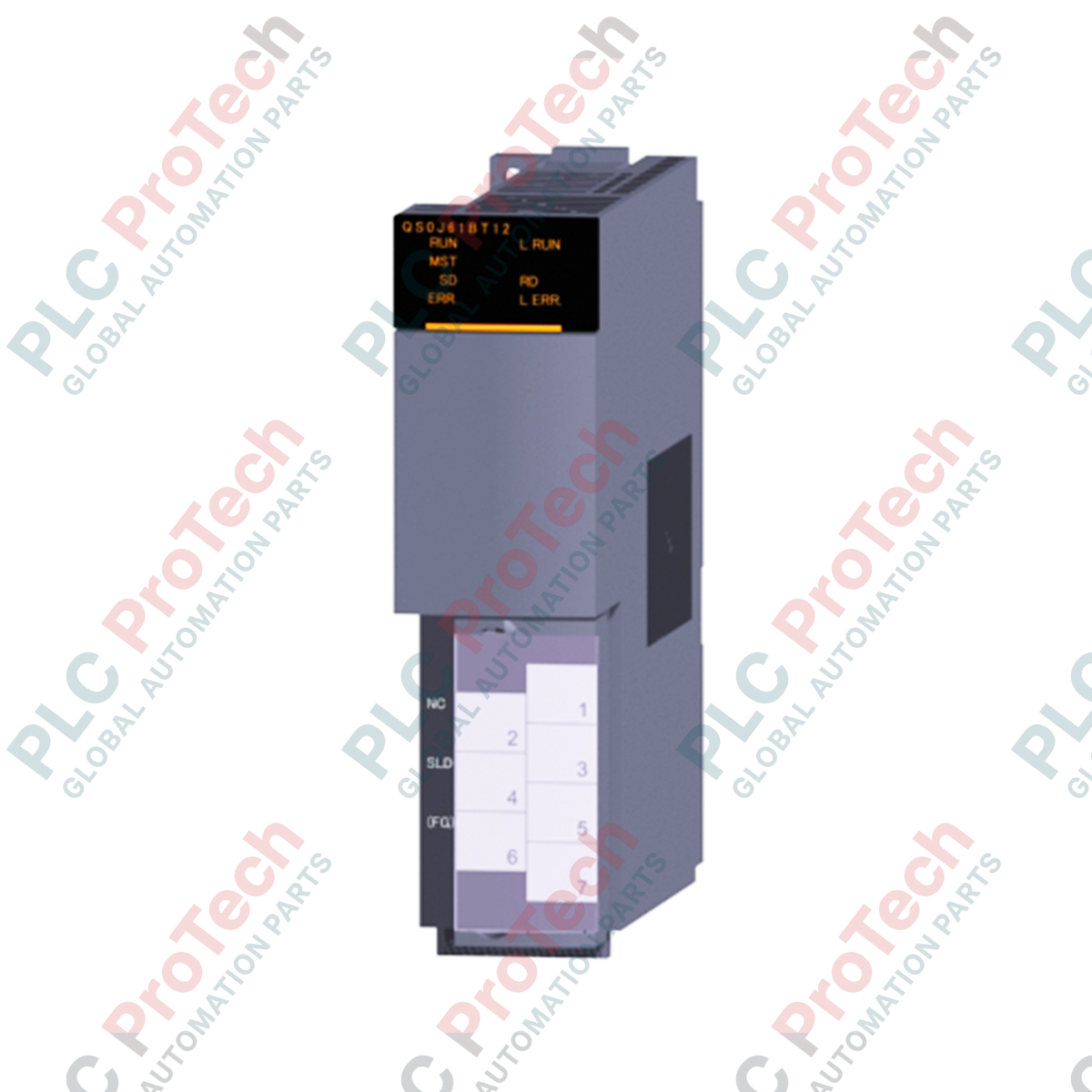
Deskripsi
Dengan menyediakan komunikasi keselamatan fungsional deterministik di lingkungan berisiko tinggi, Mitsubishi Electric QS0J61BT12 berfungsi sebagai Stasiun Master Keselamatan CC-Link khusus untuk platform kendali MELSEC-QS. Modul master keselamatan ini mengoordinasikan stasiun I/O jarak jauh yang aman, menjalankan diagnostik ketat dan verifikasi protokol keselamatan melalui topologi bus fisik standar. Dirancang untuk terintegrasi dengan CPU Keselamatan, modul ini memungkinkan jaringan komunikasi yang memenuhi SIL3 dan Kategori 4 tanpa memerlukan pengkabelan terpisah untuk sinyal data keselamatan dan nonkeselamatan.
Fitur Utama
-
Kecepatan Baud yang Dapat Dipilih: Kecepatan transmisi yang dapat dikonfigurasi mulai dari 156 kbps hingga 10 Mbps agar sesuai dengan panjang bus dan waktu siklus sistem tertentu.
-
Manajemen Node Berkapasitas Tinggi: Menghubungkan hingga 64 stasiun keselamatan jarak jauh atau stasiun jarak jauh tujuan umum dalam satu segmen jaringan.
-
Kontrol Protokol Dua Lapis: Menggunakan verifikasi CRC independen, dengan CRC32 untuk stasiun jarak jauh yang aman dan CRC16 untuk stasiun jarak jauh tujuan umum.
-
Topologi Fleksibel: Mendukung jalur utama jarak jauh hingga 1200 meter pada 156 kbps menggunakan kabel khusus CC-Link kompatibel Ver.1.10 standar.
-
Pemrosesan Sinyal Cerdas: Mengalokasikan 32 titik penetapan I/O cerdas per slot master langsung ke backplane pengendali keselamatan.
Aplikasi Industri
-
Jalur Perakitan Otomotif: Sirkuit penghentian darurat terdistribusi, tirai cahaya, dan sakelar gerbang interlock.
-
Sel Kerja Robot: Mengoordinasikan pemantauan kecepatan aman dan pengamanan perimeter pada kelompok robot multisumbu.
-
Sistem Penanganan Material: Integrasi keselamatan konveyor, sistem darurat jalur penyortiran, dan stasiun pengangkat dengan muatan berat.
-
Mesin Pengemasan: Eksekusi keselamatan fungsional berkecepatan tinggi pada mesin pengindeksan multistasiun.
Spesifikasi Teknis
| Parameter |
Nilai Spesifikasi |
| Produsen |
Mitsubishi Electric |
| Referensi Model |
QS0J61BT12 |
| Jenis Modul |
Unit Master Sistem Keselamatan CC-Link |
| Jenis Stasiun |
Stasiun Master Keselamatan |
| Kecepatan Baud yang Didukung |
156 kbps / 625 kbps / 2,5 Mbps / 5 Mbps / 10 Mbps (Dapat Dipilih) |
| Maks. Jarak Komunikasi |
1200 m (pada 156 kbps) hingga 100 m (pada 10 Mbps) |
| Maks. Stasiun yang Terhubung |
64 Stasiun |
| Maks. Titik Tautan per Sistem |
RX/RY: 2048 titik; RWr: 256 titik; RWw: 256 titik |
| Skema Komunikasi |
Polling siaran dengan sinkronisasi frame |
| Pengodean Jalur |
Kode NRZI |
| Lapisan Fisik |
Topologi Bus RS-485 |
| Kontrol Kesalahan (Node Keselamatan) |
Algoritma standar CRC32 |
| Kontrol Kesalahan (Node Standar) |
Algoritma standar CRC16 |
| Titik I/O yang Digunakan |
32 titik (penetapan I/O cerdas) |
| Konsumsi Arus Internal (DC 5V) |
0.46 A |
| Massa Unit Bersih |
0.12 kg |
| Berat Pengiriman (Dihitung) |
1.10 kg |
| Negara Asal |
Jepang |
Koneksi dan Antarmuka
| Nama Terminal |
Penetapan Fungsi & Sinyal |
| DA |
Jalur Komunikasi CC-Link A |
| DB |
Jalur Komunikasi CC-Link B |
| DG |
Pentanahan Sinyal |
| SLD |
Terminal Pelindung (Secara internal terhubung ke FG melalui jaringan kapasitor/resistor) |
| FG |
Pentanahan Fungsional (Pentanahan rangka) |
Model Alternatif & Kompatibilitas
Modul ini dirancang khusus untuk dipasang pada backplane fisik Seri MELSEC-QS. Modul ini harus beroperasi bersama modul Safety CPU QS001CPU. Meskipun berfungsi pada perangkat keras fisik RS-485 yang serupa dengan modul CC-Link Seri-Q standar (seperti QJ61BT11N), modul standar tidak dapat menggantikan peran master stasiun keselamatan karena tidak memiliki mikrokontroler ganda dan unit pemrosesan CRC32 yang diperlukan untuk menjalankan frame data keselamatan.
Kesalahan Penerapan & Catatan Rekayasa
Pastikan semua segmen kabel memenuhi standar lapisan fisik CC-Link Ver.1.10. Mencampur kabel CC-Link dari generasi atau produsen berbeda dalam jalur trunk yang sama mengubah impedansi karakteristik, sehingga menyebabkan pantulan sinyal. Pantulan ini memicu kesalahan transmisi CRC32 sementara, yang memaksa Safety CPU host beralih ke status "STOP" untuk mempertahankan protokol keselamatan fungsional. Pastikan resistor terminasi pada setiap ujung sama persis dengan impedansi karakteristik kabel (biasanya 110 ohm).
Tips Commissioning & Pengkabelan
Selalu hubungkan kabel pelindung (SLD) langsung ke blok terminal, dan pastikan terminal pentanahan fungsional (FG) terhubung ke busbar pentanahan tembaga berimpedansi rendah di dalam panel. Selama konfigurasi perangkat lunak di GX Developer atau GX Works2, jangan petakan titik I/O aman ke ruang I/O tujuan umum biasa; titik tersebut harus dipetakan secara khusus melalui tab "Safety Connection Parameter" untuk mempertahankan pemeriksaan verifikasi perangkat lunak yang ketat.
Panduan Pemasangan
PERINGATAN PENTING: Pastikan sumber daya panel utama benar-benar tidak bertegangan dan telah dikunci serta diberi label (LOTO) sebelum memasang atau melepas modul dari backplane. Kegagalan meniadakan tegangan pada rak dapat menyebabkan kilatan busur listrik internal pada backplane, menghancurkan ASIC prosesor, merusak parameter keselamatan, atau menyebabkan pergerakan mesin yang tidak diinginkan.
1
Pemasangan: Kaitkan tab pemosisian bawah modul ke lubang pemandu unit dasar, lalu tekan kuat hingga pengunci snap atas berbunyi klik.
2
Pengencangan: Kencangkan sekrup pengikat modul atas (M3 x 12) dengan torsi 0,36 hingga 0,48 N-m untuk memastikan koneksi backplane yang stabil dan ketahanan terhadap getaran.
3
Pengkabelan: Pasang blok terminal yang telah disiapkan, berisi jalur CC-Link dan resistor terminasi (jika ini merupakan node ujung), ke blok terminal.
4
Pentanahan: Hubungkan terminal FG menggunakan kabel dengan penampang minimal 2 mm persegi langsung ke titik pentanahan listrik pusat pada penutup mesin.