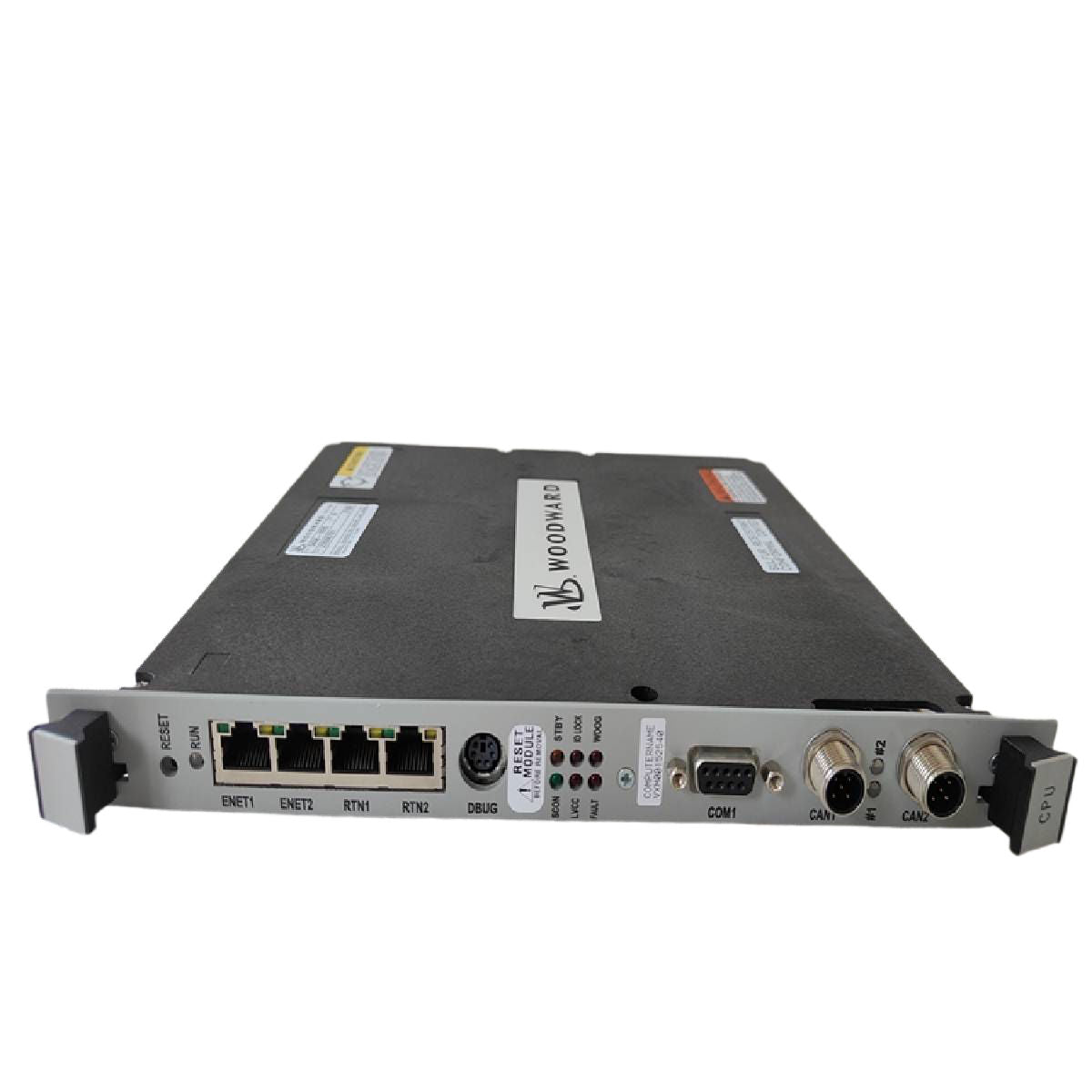
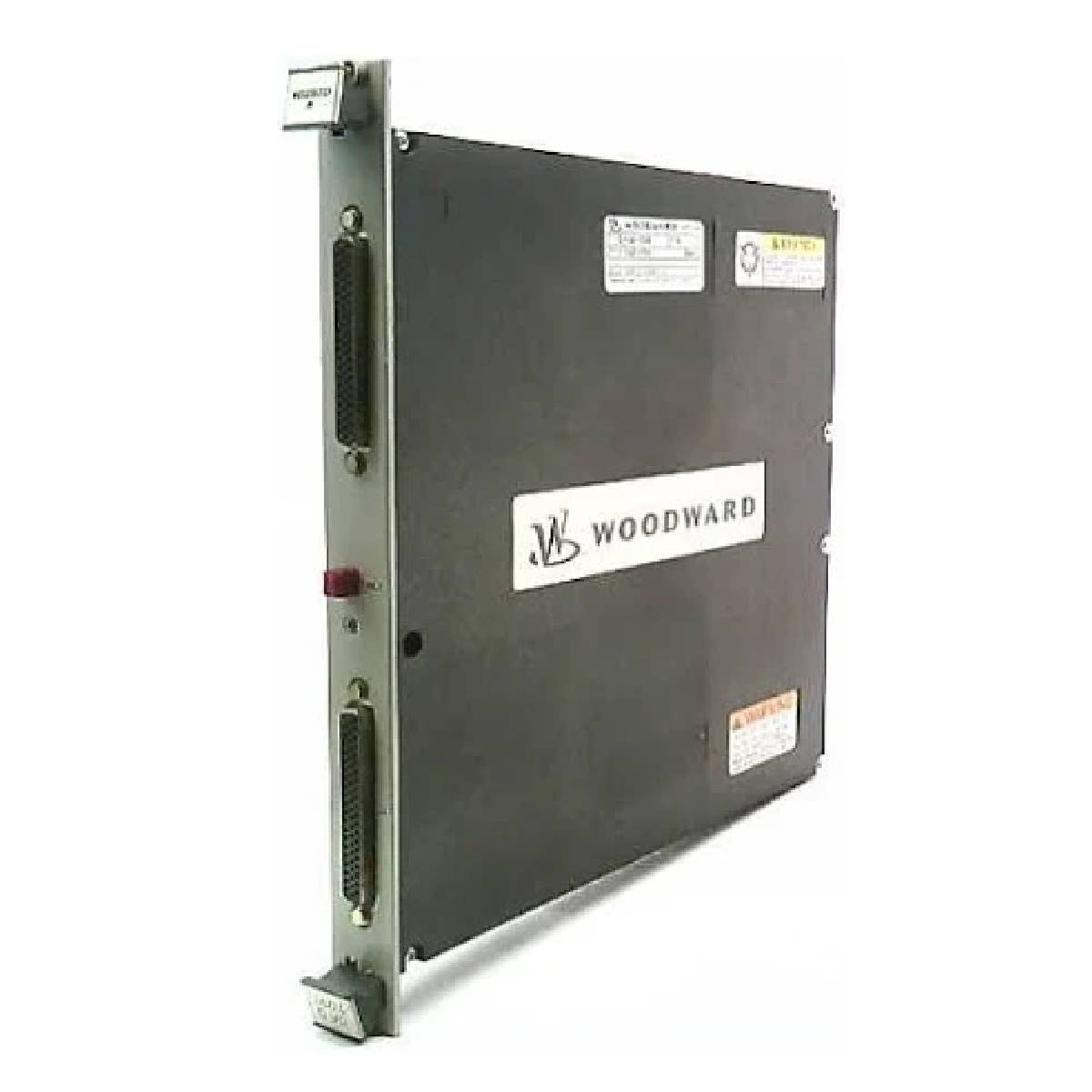
The Woodward 5466-1035 is a MicroNet CPU5200 processor module designed to serve as a primary computational engine within high-availability MicroNet Plus and MicroNet TMR digital turbine control architectures. Powered by a Motorola PowerPC MPC5200 core processor, the 5466-1035 processes digitized telemetry data, executes governing application logic, performs fuel scheduling calculations, and outputs position demands to valve driver nodes. Onboard logic acceleration is managed via a field-programmable gate array (FPGA), which handles hardware-level VMEbus master/slave interface operations to maintain deterministic data bandwidth across the backplane motherboard. The module supports both simplex and redundant system operation. Memory capabilities include 128 MB DDR RAM and 64 MB Flash Memory, alongside an integrated real-time clock.
Dedicated FPGA for VMEbus master/slave interface offloading
Configurable for simplex or redundant operation modes
Integrated real-time clock with 10 ms accuracy and battery backup
128 MB DDR RAM and 64 MB Flash Memory capacity
Interfaces across standard 14-VME chassis format
Onboard communication options including Ethernet, Serial, Service, CAN, and Real-Time Network ports
Applications
High-availability MicroNet Plus and MicroNet TMR control systems
Industrial digital turbine control and governor systems
Critical fuel scheduling and valve position driver management
Distributed SCADA and local HMI plant integration
Technical Specifications
Parameter
Specification
Manufacturer
Woodward
Part Number
5466-1035
Series
MicroNet Digital Control / MicroNet Plus / MicroNet TMR
Product Type
CPU5200 Processor Module
Core Microprocessor
Motorola PowerPC MPC5200
Memory Capacity
128 MB DDR RAM / 64 MB Flash Memory
Architecture Mode
Configurable for Simplex or Redundant Operation
Chassis Interface
Standard 14-VME (Versa Module Europa) Format
Communication Interface
2x General Purpose Ethernet, 1x Real-Time Network, 1x Serial, 1x Service, 2x CAN Ports
Scan Resolution
10 ms Real-Time Clock Accuracy
Operating Temperature
-40 degC to +85 degC (-40 degF to +185 degF)
Weight
Approximately 1.15 kg (2.5 lbs)
Country of Origin
United States
Installation Guidelines
Chassis Mounting: Install into standard 14-VME format chassis slots within the MicroNet rack assembly.
Redundancy Configuration: When operating in redundant setups, position primary and secondary units in designated parallel chassis slots to enable synchronized failover.
Bus Overhead Management: Ensure proper backplane grounding to allow the onboard FPGA to reliably handle VMEbus data framing without logic interference.
Power & Clock Maintenance: The internal battery automatically tops up during regular operation to maintain real-time clock tracking during power disruptions.
FAQ
What primary function does the device perform in turbine control systems?
The module acts as a central processing unit, executing turbine speed, load, and governing software algorithms while directing outputs to valve drivers.
How does the onboard FPGA enhance processor performance?
The FPGA manages VMEbus master/slave data framing across the backplane, offloading interface tasks from the main PowerPC core to ensure stable loop times.
How do dual processor modules operate in a redundant setup?
The active CPU manages primary control while a backup card remains synchronized in a parallel slot, allowing automatic failover if an internal error occurs.
A practical guide to selecting, wiring and diagnosing DIN-style valve connectors, including form identification, coil voltage, suppression, polarity, sealing, release-time effects and commissioning...
A PLC and a microcontroller can both generate step-and-direction motion, but arc welding exposes major differences in EMC, I/O protection, diagnostics, maintainability, safety integration, and...
Piezo pneumatic valves offer low holding power and fine proportional control, but they are not universal solenoid replacements. This guide covers driver electronics, flow limits, contamination, fail...
Built-in sensor timers can reject chatter, stretch short pulses, and simplify local timing—but they do not replace PLC diagnostics or safety logic. Learn how to apply on-delay, off-delay, and...
Reversing a three-phase motor is more than swapping two leads. This guide covers phase sequence, VFD settings, reversing contactors, encoder feedback, load checks, lockout, and commissioning tests.
Grounding one side of a 24 VDC supply can improve fault detection and voltage reference, while floating circuits support isolation. This guide explains bonding, noise, first-fault behavior, and...
Choosing a selection results in a full page refresh.