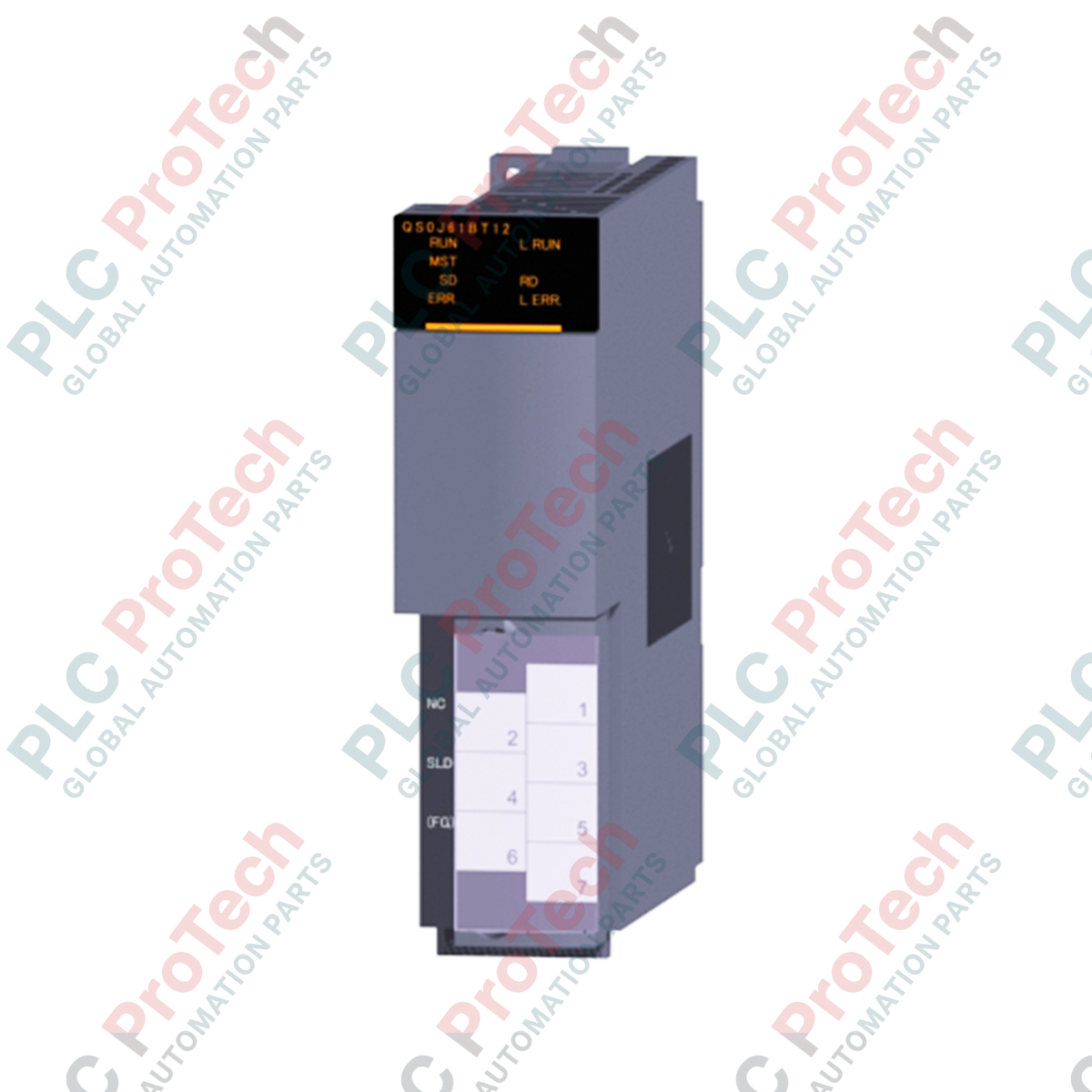
Descrição
Oferecendo comunicação determinística de segurança funcional em ambientes de alto risco, o Mitsubishi Electric QS0J61BT12 atua como uma estação mestre dedicada CC-Link Safety para plataformas de controle MELSEC-QS. Este módulo mestre de segurança coordena estações remotas de E/S seguras, executando diagnósticos rigorosos e verificação do protocolo de segurança em uma topologia de barramento físico padrão. Projetado para integração com CPUs de segurança, permite redes de comunicação compatíveis com SIL3 e Categoria 4 sem exigir cabeamento separado e dedicado para sinais de dados de segurança e não relacionados à segurança.
Principais recursos
-
Taxas de transmissão selecionáveis: Velocidades de transmissão configuráveis de 156 kbps a 10 Mbps para atender a comprimentos específicos de barramento e tempos de ciclo do sistema.
-
Gerenciamento de nós de alta capacidade: Conecta até 64 estações remotas de segurança ou estações remotas de uso geral em um único segmento de rede.
-
Controle de protocolo em duas camadas: Emprega verificação CRC independente, usando CRC32 para estações remotas seguras e CRC16 para estações remotas de uso geral.
-
Topologias flexíveis: Suporta linhas tronco de longa distância de até 1200 metros a 156 kbps usando cabeamento CC-Link dedicado compatível com a Ver.1.10 padrão.
-
Processamento inteligente de sinais: Aloca 32 pontos de E/S inteligente por slot mestre diretamente ao backplane do controlador de segurança.
Aplicações industriais
-
Linhas de montagem automotiva: Circuitos de parada de emergência distribuídos, cortinas de luz e interruptores de portões de intertravamento.
-
Células de trabalho robóticas: Coordenação do monitoramento de velocidade segura e da proteção perimetral em grupos de robôs com vários eixos.
-
Sistemas de movimentação de materiais: Integração da segurança de transportadores, sistemas de emergência de linhas de triagem e estações de elevação para cargas pesadas.
-
Máquinas de embalagem: Execução de segurança funcional em alta velocidade em máquinas de indexação com várias estações.
Especificações técnicas
| Parâmetro |
Valor da especificação |
| Fabricante |
Mitsubishi Electric |
| Referência do modelo |
QS0J61BT12 |
| Tipo de módulo |
Unidade mestre do sistema CC-Link Safety |
| Tipo de estação |
Estação mestre de segurança |
| Taxas de transmissão compatíveis |
156 kbps / 625 kbps / 2,5 Mbps / 5 Mbps / 10 Mbps (selecionável) |
| Distância máx. de comunicação |
1200 m (a 156 kbps) a 100 m (a 10 Mbps) |
| Máx. de estações conectadas |
64 estações |
| Máx. de pontos de link por sistema |
RX/RY: 2048 pontos; RWr: 256 pontos; RWw: 256 pontos |
| Esquema de comunicação |
Sondagem por transmissão com sincronização de quadros |
| Codificação de linha |
Código NRZI |
| Camada física |
Topologia de barramento RS-485 |
| Controle de erros (nós de segurança) |
Algoritmo padrão CRC32 |
| Controle de erros (nós padrão) |
Algoritmo padrão CRC16 |
| Pontos de E/S ocupados |
32 pontos (atribuição inteligente de E/S) |
| Consumo de corrente interno (5 V CC) |
0,46 A |
| Massa líquida da unidade |
0,12 kg |
| Peso de envio (calculado) |
1,10 kg |
| País de origem |
Japão |
Conexões e interfaces
| Nome do terminal |
Atribuição de funções e sinais |
| DA |
Linha de comunicação CC-Link A |
| DB |
Linha de comunicação CC-Link B |
| DG |
Aterramento de sinal |
| SLD |
Terminal de blindagem (conectado internamente ao FG por uma rede de capacitores/resistores) |
| FG |
Aterramento funcional (aterramento do chassi) |
Modelos alternativos e compatibilidade
Este módulo foi projetado exclusivamente para montagem em um backplane físico da Série MELSEC-QS. Ele deve operar junto com um módulo de CPU de segurança QS001CPU. Embora funcione com hardware físico RS-485 semelhante ao dos módulos CC-Link padrão da Série Q (como o QJ61BT11N), os módulos padrão não podem substituir os módulos mestres de estação de segurança, pois não possuem os dois microcontroladores e as unidades de processamento CRC32 necessárias para executar quadros de dados de segurança.
Armadilhas de aplicação e notas de engenharia
Certifique-se de que todos os segmentos de cabo estejam em conformidade com os padrões da camada física CC-Link Ver.1.10. Misturar cabos CC-Link de diferentes gerações ou fabricantes na mesma linha tronco altera a impedância característica, resultando em reflexão de sinais. Essa reflexão dispara erros transitórios de transmissão CRC32, fazendo com que a CPU de segurança do host entre no estado "STOP" para manter os protocolos de segurança funcional. Certifique-se de que os resistores de terminação em cada extremidade correspondam exatamente à impedância característica do cabo (normalmente 110 ohms).
Dicas de comissionamento e fiação
Sempre conecte o fio da blindagem (SLD) diretamente ao bloco de terminais e verifique se o terminal de aterramento funcional (FG) está ligado a uma barra de aterramento de cobre de baixa impedância no painel. Durante a configuração do software no GX Developer ou GX Works2, não mapeie pontos de E/S de segurança no espaço comum de E/S de uso geral; eles devem ser mapeados especificamente pela guia "Safety Connection Parameter" para manter verificações rigorosas do software.
Diretrizes de instalação
AVISO CRÍTICO: Certifique-se de que a fonte de alimentação principal do painel esteja completamente desenergizada e bloqueada (LOTO) antes de inserir ou remover módulos do backplane. A não desenergização do rack pode causar arcos elétricos internos no backplane, destruindo o ASIC do processador, corrompendo parâmetros de segurança ou provocando movimentos inesperados da máquina.
1
Montagem: Encaixe a aba inferior de posicionamento do módulo no orifício-guia da unidade-base e pressione firmemente até ouvir o clique da trava superior.
2
Fixação: Aperte o parafuso de fixação superior do módulo (M3 x 12) com um torque de 0,36 a 0,48 N-m para garantir uma conexão estável com o backplane e resistência à vibração.
3
Fiação: Conecte o bloco de terminais preparado, contendo as linhas CC-Link e o resistor de terminação (se este for um nó final), ao bloco de terminais.
4
Aterramento: Conecte o terminal FG usando um fio com seção transversal de pelo menos 2 mm² diretamente ao ponto central de aterramento elétrico do gabinete da máquina.