Product Overview
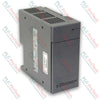
The 8913-PS-AC is a high-availability, dual-voltage system and field power supply module engineered for the PAC8000 and MTL8000 Process I/O platforms. Originally developed under the MTL Instruments family and historically integrated into General Electric (GE) and Emerson discrete control architectures, this rugged power unit delivers a highly synchronized dual-rail output: 12 VDC at 5 A dedicated to internal backbone system logic, and 24 VDC at 5 A configured for auxiliary field-side instrumentation loops. Critical industrial operations—including offshore oil platforms, chemical processing plants, and gas transmission stations—rely on the 8913-PS-AC (8913-PS-AC) to sustain deterministic processing telemetry. By supporting direct parallel connections for N+1 structural redundancy and carrying rigorous Class I, Division 2 explosive environment certifications, this power module isolates downstream controller nodes from devastating utility line surges, eliminates grid transition drops, and prevents catastrophic facility downtime.
Technical Configuration & Platform Pedigree
The hardware topography and multi-brand lifecycle tracking of the 8913-PS-AC module establish its compatibility across distinct process control infrastructure.
-
Dual-Voltage Integrated Rail: Combines two discrete power delivery functions into a single chassis slot, generating a regulated 12 VDC loop to drive active processor backplanes and a concurrent 24 VDC loop to feed external process sensors.
-
N+1 Parallel Redundancy Support: Outfitted with internal decoupling diode networks that allow multiple 8913 power cards to tie directly into a single power bus, guaranteeing uninterrupted load sharing if a primary supply fails.
-
Hazardous Area Certification: Formulated with non-arcing solid-state components, achieving full international compliance for safe mounting inside Zone 2, Gas Group IIC T4 hazardous locations and Class I, Div 2 environments.
-
Cross-Branded Platform Legacy: Shares identical form, fit, and functional parameters across multiple OEM designations, seamlessly replacing or interchanging with legacy assets labeled under Eaton, MTL Instruments, GE Intelligent Platforms, or Emerson PAC8000 series.
Performance Data & Technical Specifications
| Engineering Metric |
Factory Document Specification |
| Model Designation |
8913-PS-AC (Also indexed as 8913-PS-AC-Legacy) |
| Brand Heritage |
Emerson / GE PAC8000 / Eaton MTL8000 Series |
| Device Classification |
System & Field Power Supply - Dual Voltage |
| Input Voltage Range (AC) |
85 to 264 VAC Universal Wide Range |
| Input Voltage Range (DC) |
90 to 264 VDC Wide Range Capability |
| Line Frequency Range |
47 to 65 Hz Operating Spectrum |
| Regulated Rail Output 1 |
12 VDC @ 5 A dedicated for Controller Logic |
| Regulated Rail Output 2 |
24 VDC @ 5 A dedicated for Auxiliary Field Loops |
| Total Power Efficiency |
Up to 87 percent nominal conversion rating |
| Input Overvoltage Protection |
Integrated Slow-Blow Fuse and Varistor (VDR) Network |
| Diagnostic Signal Loops |
Pin 10 Dedicated Power Fail Signal Contact |
| Electrical Safety Shield |
Fully certified to EN 60950 and EMC EN 55011/22 |
| Ambient Thermal Boundaries |
-40 to +70 deg C Operational Window |
Hardware Lifecycle & Compatibility FAQs
Why is the 8913-PS-AC technical manual managed by Eaton while the part belongs to GE or Emerson systems?
The 8913-PS-AC was originally engineered by MTL Instruments as the primary backbone supply for MTL8000 Process I/O. GE and later Emerson adopted this hardware series as an OEM component for their PAC8000 distributed control systems. Because Eaton acquired MTL Instruments, Eaton continues to manage the fundamental manufacturing and technical data sheets, while the unit remains a standard replacement part across GE and Emerson industrial racks.
How does the module signal the main controller if an internal circuit failure occurs?
The output connector features a dedicated auxiliary terminal loop at Pin 10, labeled as the Power Fail Signal. This active contact drop monitors real-time rail integrity, opening immediately if internal conversion parameters fail or input utility line power drops, letting the supervisor CPU execute an orderly shutdown sequence.
Can this AC power supply module handle high-voltage DC input lines in heavy infrastructure setups?
Yes. The internal input rectifier circuit is designed for dual-source flexibility. It accepts a standard alternating current feed between 85 and 264 VAC, and can also run on a direct current input feed anywhere between 90 and 264 VDC without requiring hardware jumpers or modifications.
Field Engineering & Installation Protocol
-
Terminal Pin Pinout Mapping and Voltage Alignment:
When installing the output block, follow the terminal pin layout to prevent cross-voltage destruction. Land the 24 VDC auxiliary power lines across Terminals 2 and 3 (Positive) and Terminals 4 and 5 (Negative). Wire the 12 VDC core system logic lines across Terminals 6 and 7 (Positive) and Terminals 8 and 9 (Negative). Ensure Terminal 1 and Terminal 11 are wired directly to a low-impedance protective earth grounding bar to ensure proper EMC compliance to EN 61000 standards.
-
Thermal Management and Airflow Clearance Constraints:
The module is rated to operate across an extended environmental window from -40 to +70 deg C. However, to sustain a maximum 5 A load profile at high ambient conditions, you must mount the module horizontally on its certified DIN rail base. Maintain a minimum clearance gap of 3 cm above and below the module ventilation grills to allow unrestricted convective airflow, preventing localized heat pockets from degrading the internal electrolytic capacitors.
-
Mounting Kits and High-Vibration Enclosures:
For standard panel assembly, use the heavy-duty 8413-FK-DN DIN rail installation kit to secure the module against low-frequency mechanical shifts. In heavy industrial environments—such as marine engine rooms or mining crusher platforms—substitute the standard clip for the 8414-FK-SU surface panel mounting kit to bolt the power framework directly to the structural backpanel, preventing contact disconnects under heavy vibration.