Description
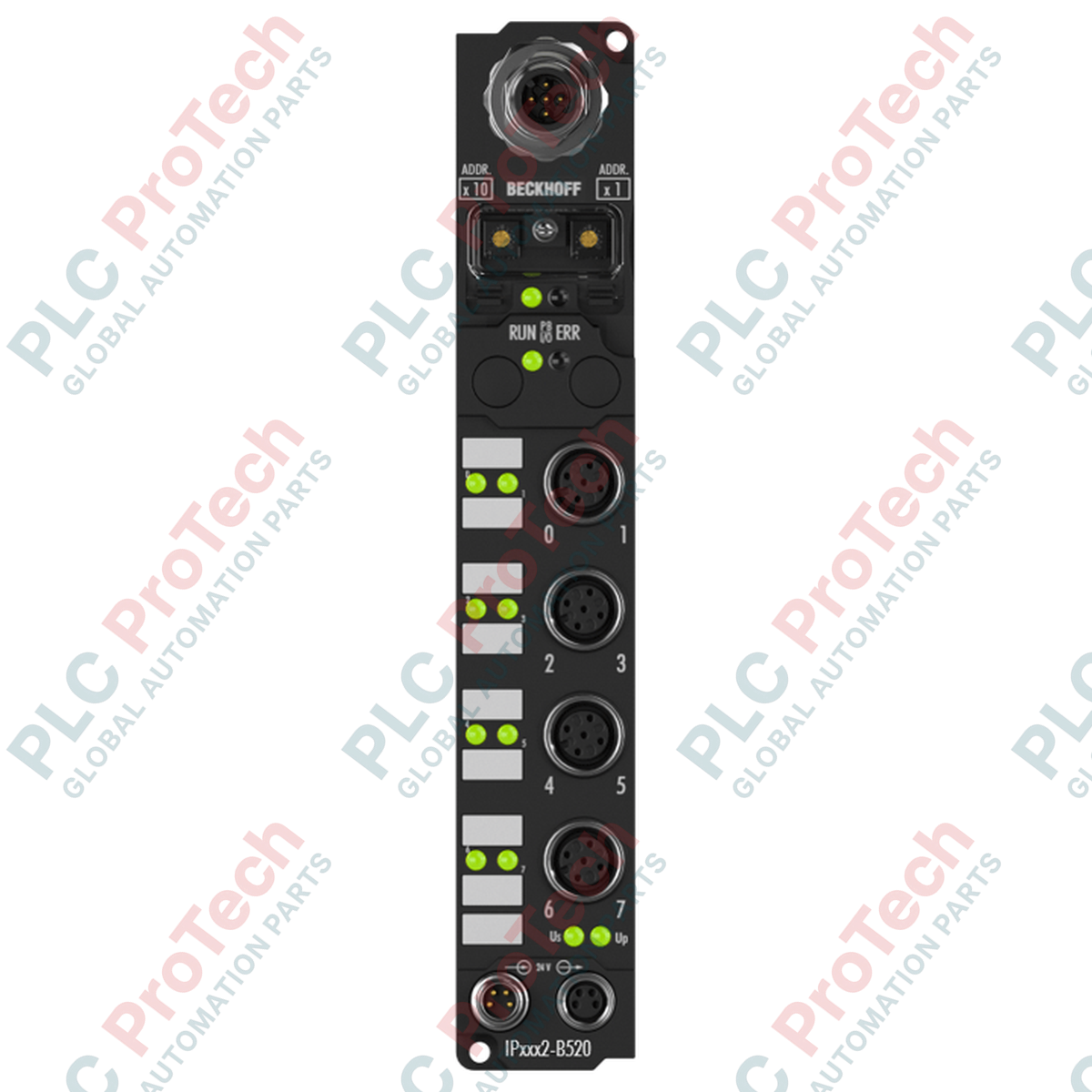
Conçu pour une installation directe sur le terrain dans des environnements de traitement difficiles, le Beckhoff IP3312-B520 fonctionne comme une station d’E/S industrielle distribuée, interfacée directement via le protocole DeviceNet. Ce module Fieldbus Box intègre des capacités de mesure de température et prend en charge jusqu’à deux entrées pour thermocouples, éliminant ainsi le besoin d’armoires de commande de protection. L’appareil dispose d’une détection automatique du débit en bauds jusqu’à 500 kbauds et utilise des interfaces de connecteurs M12 et M8 haut de gamme afin de garantir une transmission fiable des signaux et une connectivité physique robuste sous de fortes contraintes mécaniques. La configuration est gérée de manière transparente via l’environnement logiciel KS2000 ou directement au moyen de messages explicites envoyés par le contrôleur.
Fonctionnalités
-
Montage direct sur le terrain : Les indices de protection IP65, IP66 et IP67 permettent une installation directement sur les machines, sans armoire de commande.
-
Intégration DeviceNet : Prend en charge les modes de communication bit strobe, interrogation, cyclique et changement d’état (COS).
-
Détection automatique du débit en bauds : Identifie et synchronise automatiquement les vitesses réseau jusqu’à 500 kbauds.
-
Isolation électrique robuste : Assure une isolation galvanique de 500 V entre la tension de commande et le réseau de bus de terrain.
-
Capacités de diagnostic : Surveillance en temps réel et retour d’état via le logiciel de configuration KS2000.
Applications
-
Systèmes de traitement thermique : Surveillance de la température dans les fours industriels, les fours à chambre et les lignes de traitement thermique.
-
Machines de moulage par injection : Montage direct sur la machine pour l’acquisition de la température de la buse et du cylindre.
-
Fabrication industrielle lourde : Acquisition distribuée de la température dans les ateliers de production lorsque l’espace disponible dans les armoires est limité.
-
Assemblage automobile : Détection distribuée le long des lignes de convoyage équipées d’une infrastructure DeviceNet.
Caractéristiques techniques
| Paramètre de spécification |
Valeur / Caractéristique nominale |
| Fabricant |
Beckhoff Automation |
| Identifiant du modèle |
IP3312-B520 |
| Interface de bus de terrain |
DeviceNet (1 x connecteur M12, 5 broches) |
| Débit de transmission des données |
Détection automatique jusqu’à 500 kbauds |
| Alimentation de la tension de commande |
24 V CC (-15 % / +20 %) |
| Consommation de courant du boîtier |
45 mA + charge du capteur (0,5 A maximum) |
| Isolation électrique |
500 V (tension de commande par rapport au bus de terrain) |
| Indice de protection |
IP65 / IP66 / IP67 (conforme à la norme EN 60529) |
| Plage de températures de fonctionnement |
0 à +55 °C |
| Plage de températures de stockage |
-25 à +85 °C |
| Résistance aux vibrations et aux chocs |
Conforme aux normes EN 60068-2-6 / EN 60068-2-27 |
| Normes CEM |
Conforme aux normes EN 61000-6-2 / EN 61000-6-4 |
| Homologations |
CE, UL |
| Poids d’expédition (calculé) |
2,0 kg |
Connexions et interfaces
| Port / Connexion |
Type de connecteur |
Affectation fonctionnelle |
| Interface de bus DeviceNet |
1 x connecteur M12, 5 broches |
Ligne de communication réseau blindée |
| Arrivée d’alimentation |
1 x prise M8 mâle, 4 broches |
Tension de commande 24 V CC entrante et terre |
| Alimentation en aval |
1 x prise M8 femelle, 4 broches |
Boucle de distribution d’alimentation vers les modules suivants |
Constats techniques empiriques
Modèles alternatifs et compatibilité
Le module IP3312-B520 fonctionne avec des configurations DeviceNet. Lors de la mise à niveau d’anciens réseaux ou du remplacement de modules dans des anneaux industriels existants, vérifiez que les fichiers de configuration du maître/scanner (EDS) correspondent correctement aux révisions du micrologiciel. Si vous convertissez un système vers EtherCAT ou PROFINET, choisissez les modules Fieldbus Box équivalents des séries EP ou EQ, respectivement, car les couches physiques de la série IP sont dédiées à leurs options de bus de terrain spécifiques (B520 pour DeviceNet, B310 pour PROFIBUS).
Pièges d’application et remarques techniques
Les signaux des thermocouples sont très sensibles aux interférences électromagnétiques (IEM). Bien que l’IP3312-B520 offre une robuste immunité CEM conforme à la norme EN 61000-6-2, le cheminement des câbles d’extension des thermocouples à proximité de câbles de sortie de variateurs de fréquence (VFD) de forte puissance peut fausser les relevés de température. Évitez de former des boucles avec les câbles des capteurs et utilisez des chemins de câblage séparés. Veillez également à obturer tous les ports M12 et M8 inutilisés avec des capuchons de protection industriels afin de préserver l’indice de protection IP67 contre les infiltrations.
Conseils de mise en service et de câblage
Lors de l’installation initiale, veillez à placer correctement les résistances de terminaison DeviceNet aux deux extrémités physiques du câble principal (généralement 121 ohms, 1/4 watt). Lorsque l’alimentation est acheminée par le port M8 en aval, calculez le courant cumulé total de tous les capteurs et modules raccordés. Le dépassement de la limite de 0,5 A peut entraîner des chutes de tension et déclencher des défauts de diagnostic de sous-alimentation sur les capteurs en aval.
Directives d’installation
AVERTISSEMENT CRITIQUE : Débranchez toutes les sources d’alimentation avant de commencer l’installation matérielle ou le câblage. Tout contact avec des composants sous tension peut endommager l’équipement ou provoquer une grave décharge électrique. Assurez-vous que l’alimentation de commande 24 V CC est complètement hors tension et vérifiez l’absence d’énergie avant toute intervention sur le réseau.
1
Montez le Fieldbus Box sur une surface plane et résistante aux vibrations à l’aide de deux vis M4 passant dans les oreilles de fixation intégrées.
2
Raccordez l’alimentation entrante de 24 V CC au connecteur M8 mâle à 4 broches. Vérifiez attentivement la correspondance des polarités.
3
Si vous distribuez l’alimentation en boucle vers d’autres nœuds, raccordez le port M8 femelle en aval à l’aide d’un câble blindé à 4 conducteurs.
4
Raccordez le câble principal du réseau DeviceNet au connecteur de bus de terrain M12 à 5 broches. Vérifiez que les résistances de terminaison sont activées si cette unité se trouve à l’extrémité du réseau.
5
Configurez l’adresse du nœud et les paramètres du bus à l’aide de l’outil logiciel KS2000 ou via l’environnement de configuration de l’API.