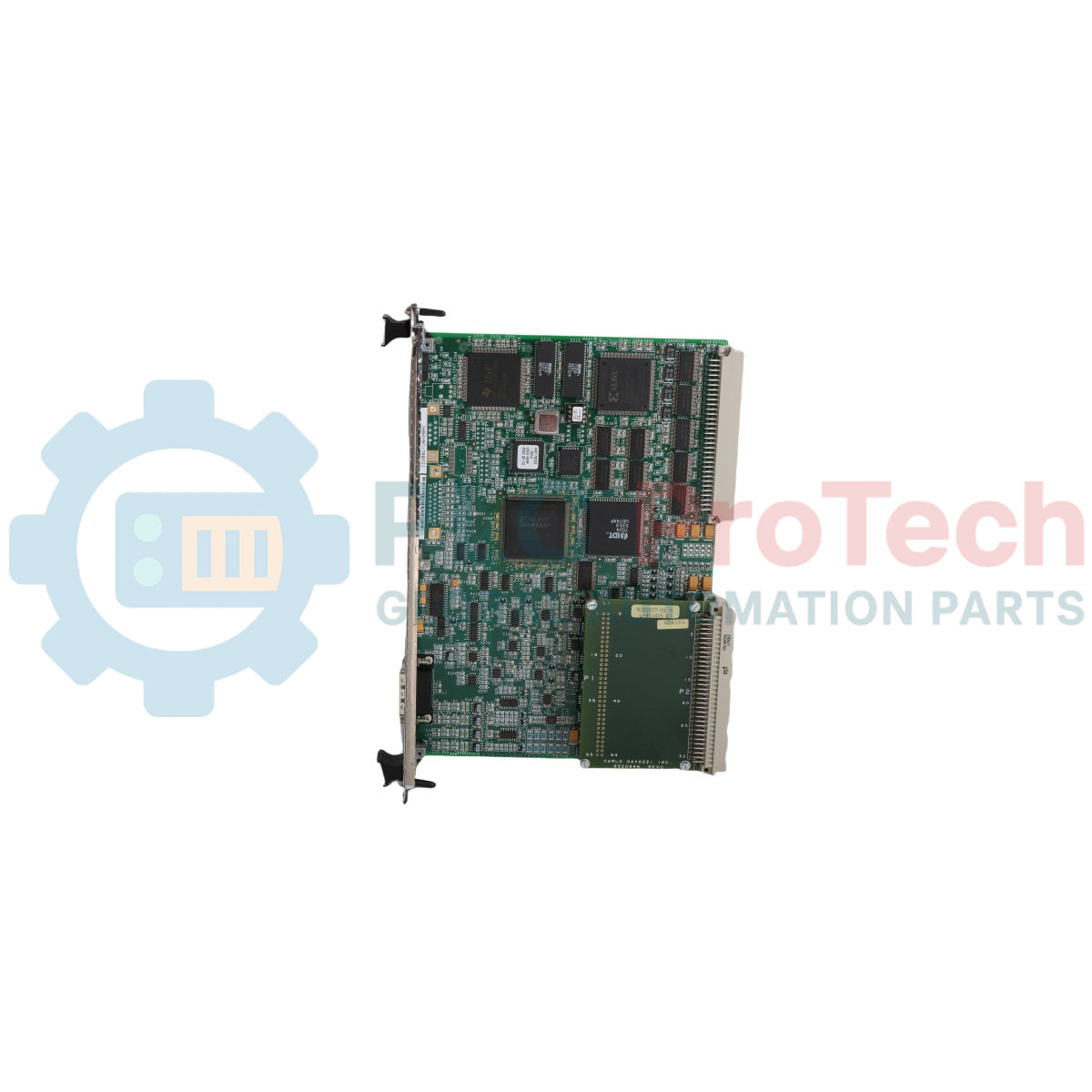
Module d’interface de transducteur de vibrations Mark VI General Electric IS200VTURH2BAC
SKU IS200VTURH2BAC
En stock
No reviews
Garantie 12 mois
Retours gratuits sous 30 jours
Fabricant :
General Electric
N° de produit :
IS200VTURH2BAC
Pays d'origine :États-Unis
Type de produit :
Module d’interface du transducteur de vibrations
Code-barres :
8537101190
Paiement :
Virement bancaire, Western Union
Poids :
290g
Dimensions :
11,00 x 9,00 x 3,00 pouces
Port d'expédition :
Xiamen
Garantie :
12 mois
Description
Le IS200VTURH2BAC est un module d’interface pour transducteurs de vibrations haute densité fabriqué par General Electric dans le cadre de la plateforme de commande de turbines Mark VI Speedtronic. Ce module s’interface avec des cartes à bornes telles que la TTUR afin d’acheminer les données essentielles de vitesse d’arbre et des capteurs vers l’environnement du contrôleur. Il joue un rôle clé dans la boucle principale de protection contre les survitesses, en acheminant les signaux de déclenchement vers la carte TRPG lorsque des conditions de défaut sont détectées. Ces signaux sont ensuite traités par des circuits de vote à trois relais afin d’isoler systématiquement l’alimentation des solénoïdes de déclenchement.
Au-delà des entrées de détection dynamique, le IS200VTURH2BAC exécute l’algorithme de synchronisation automatique du système. La carte surveille les doubles entrées de transformateurs de potentiel (PT) provenant du générateur et des lignes de bus afin de suivre activement les variations de phase et de glissement. Lorsqu’elle est activée par le code d’exécution de l’application, elle utilise une technique de détection du passage par zéro pilotée par interruption pour moduler les paramètres de phase, de glissement et d’accélération, puis déclenche la fermeture du relais du disjoncteur K25 tout en maintenant des paramètres de compensation adaptatifs pour les retards mécaniques du disjoncteur.
Caractéristiques
Protection multiniveau contre les survitesses de turbine : Coordonne les capteurs de vitesse et les composants à bornes afin d’assurer des boucles fiables de régulation et d’intervention primaire et d’urgence en cas de survitesse.
Sortie à vote deux sur trois : Distribue des signaux indépendants pour exécuter un vote 2/3 sur les circuits de relais matériels afin de garantir la désactivation des solénoïdes de déclenchement d’urgence.
Algorithme de synchronisation automatique (K25) : Utilise une logique de détection du passage par zéro pour mesurer les différences de phase, de glissement et d’accélération entre le générateur et les lignes de bus afin de gérer les connexions du disjoncteur.
Compensation auto-adaptative du disjoncteur : Intègre des paramètres de suivi configurables qui ajustent automatiquement les commandes de fermeture du disjoncteur en fonction des temporisations mécaniques.
Capacité de temporisation mult disjoncteurs : Permet de calculer et d’administrer les routines de synchronisation de deux unités de disjoncteurs distinctes et séparées depuis un seul assemblage de carte.
Applications
Boucles de surveillance et de protection contre les survitesses des turbines à gaz et à vapeur Mark VI Speedtronic
Commande automatisée de la synchronisation électrique entre le générateur et le bus
Interfaces de déclenchement de turbine pour arrêt d’urgence à redondance modulaire triple (ESD)
Caractéristiques techniques
Élément
Description / Valeur
Fabricant
General Electric
Série
Mark VI
Référence
IS200VTURH2BAC
Type de produit
Module d’interface pour transducteurs de vibrations
Manuel d’instructions
GEH-6421
Nombre d’entrées de tension analogiques
6
Plage de tension en mode commun
+/-5 V
Tension nominale de la carte
125 V cc
Température de fonctionnement
0 à 60 degrés Celsius
Dimensions
11.00 x 9.00 x 3.00 pouces
Pays d’origine
États-Unis
Directives d’installation
Paramétrage de la logique du disjoncteur : Assurez-vous que les temporisations de fermeture du disjoncteur et les limites de tension de fonctionnement sont entièrement configurées dans la base de données logicielle avant d’activer la routine de synchronisation automatique K25.
Câblage des transformateurs de potentiel d’entrée : Vérifiez que les lignes des transformateurs de potentiel du générateur et du bus sont correctement isolées et respectent les seuils de tension en mode commun avant leur raccordement.
Mise à la terre du blindage des capteurs : Raccordez tous les blindages entrants des signaux de vibration et de vitesse à la barre de terre du châssis désignée afin d’empêcher les parasites radioélectriques de fausser les calculs de passage par zéro.
FAQ
Quelle technique de calcul l’algorithme de synchronisation automatique utilise-t-il ?
L’algorithme de synchronisation automatique utilise la technique du passage par zéro de la tension pour calculer la phase, le glissement et l’accélération entre les entrées du générateur et du bus.
L’appareil a-t-il besoin d’une source de tension pour exécuter ses fonctions de commande de synchronisation ?
Oui, l’algorithme de synchronisation automatique est piloté par interruptions et doit détecter une tension active du générateur pour fonctionner correctement.
Comment les décisions de déclenchement sont-elles gérées entre le module et les solénoïdes de déclenchement ?
Lorsqu’une condition de déclenchement est déterminée, des signaux sont envoyés à une carte TRPG, où trois sorties font l’objet d’un vote 2 sur 3 dans des circuits de vote à trois relais afin de couper l’alimentation des solénoïdes de déclenchement individuels.
Livraison standard : 4 à 6 jours ouvrables via DHL, FedEx et UPS.
Expédition express : Expédition le jour même pour les commandes en stock passées avant 14h00 (GMT+8).
Couverture mondiale : Service dans plus de 150 pays, avec livraison rapide en Arabie Saoudite et aux Émirats Arabes Unis.
Retours et garantie
Garantie de 30 jours : Retours acceptés pour les produits en stock dans leur emballage d'origine scellé en usine.
Garantie de 12 mois : Chaque composant industriel est couvert par notre garantie technique professionnelle.
Les commandes sont traitées et livrées du lundi au vendredi (hors jours fériés).
Pour connaître l'éligibilité complète, les frais de restockage et les détails des retours internationaux, veuillez consulter notre site officiel
Politique de remboursement et de retour
.
Un guide pratique pour la mise en service de la mesure de puissance triphasée : vérifiez le câblage des transformateurs de courant et de la tension, la mise à l’échelle, l’ordre des phases, la...
Créer et vérifier un premier projet d’automate TwinCAT sur un IPC Beckhoff. Cette liste de contrôle couvre la sélection de la cible, la détection EtherCAT, le mappage des E/S, l’activation sécurisée,...
Une séquence pratique de mise en service des connexions OPC UA de KEPServerEX : définir la propriété des données, tester les variables localement, configurer le point de terminaison et la confiance...
La mise en service d’un automate programmable connecté à Ethernet commence souvent par l’ordinateur portable, et non par le contrôleur. Découvrez comment relever les paramètres existants, choisir une...
La maîtrise des poussières combustibles exige plus que de simples alarmes. Découvrez comment cartographier la génération de poussières, sélectionner l’instrumentation, concevoir les verrouillages,...
Les bobinages hairpin augmentent le taux de remplissage des encoches et favorisent la conception de moteurs de traction compacts, mais la géométrie des conducteurs, les pertes en courant alternatif,...
Choisir une sélection entraîne un rafraîchissement complet de la page.