1 of 1

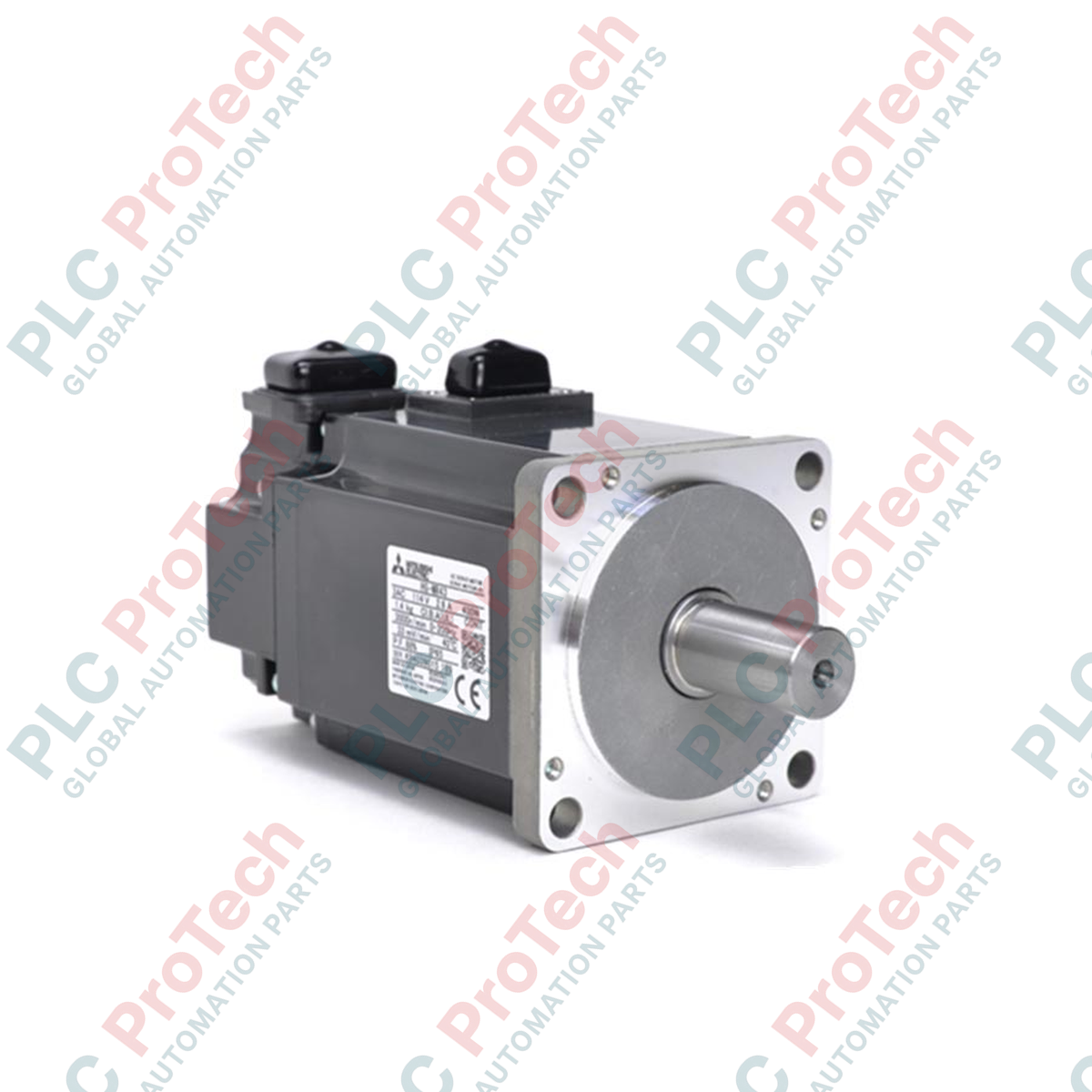
HG-MR43B | Mitsubishi Electric | Moteur servo

HG-MR43B | Mitsubishi Electric | Moteur servo

Il ne reste que 10 article(s) en stock
  • Fabricant : Mitsubishi Electric

  • N° de produit : HG-MR43B

  • Pays d'origine :États-Unis

  • Type de produit : Moteur servo

  • Paiement : Virement bancaire, Western Union

  • Poids : 3000g

  • Dimensions : 210 mm x 150 mm x 120 mm

  • Port d'expédition : Xiamen

  • Garantie : 12 mois

Quantité
Voir les détails complets

Description

Providing high-dynamic positioning in compact industrial automation architectures, the Mitsubishi Electric HG-MR43B is an ultra-low inertia AC servo motor engineered specifically for high-duty cycle applications. Integrating an advanced electromagnetic holding brake, this motor ensures immediate load-locking and position preservation during power-down states or emergency stops. By pairing an ultra-low rotor inertia core with a high-resolution absolute feedback system, this unit delivers exceptional acceleration profiles, minimal thermal dissipation, and micro-precision motion synchronization when driven by compatible MELSERVO MR-J4 servo amplifiers.

Features

  • Ultra-Low Inertia Rotor: Optimized for rapid start-stop duty cycles, permitting high-frequency positioning sequences without thermal overload.
  • Integrated Safety Brake: Electromagnetic holding brake provides secure physical axis locking when control power is deactivated.
  • High-Resolution Feedback: Outfitted with a high-density encoder to achieve outstanding path tracking, velocity control, and positioning repeatability.
  • Rugged Environmental Execution: IP65-compliant casing protects critical internal windings and active electronics against industrial moisture and particulate contamination.

Applications

  • High-speed pick-and-place robotic systems and multi-axis Cartesian gantries.
  • Precision electronic assembly machinery and semiconductor wafer handling equipment.
  • In-line rotary packaging, labeling, and continuous form-fill-seal machines.
  • Dynamic material handling diverters and indexing rotary tables.

Technical Specifications Table

Parameter Specification Value
Manufacturer Mitsubishi Electric
Model Identifier HG-MR43B
Motor Series HG-MR (Ultra-Low Inertia, Small Capacity)
Rated Output Power 0.4 kW (400 W)
Rated Rotational Speed 3000 r/min
Maximum Rotational Speed 6000 r/min
Rated Continuous Torque 1.3 N-m
Electromagnetic Brake Yes (Holding type)
Brake Rated Voltage 24 VDC (+0% / -10%)
Feedback Encoder Resolution 22-bit (4,194,304 pulses/rev) absolute / incremental
Ingress Protection Class IP65 (excluding shaft-through portion)
Country of Origin Japan
Shipping Weight (Calculated) 3.0 kg
Package Dimensions (Calculated) 210 mm x 150 mm x 120 mm

Connections and Interfaces

Connector Pin Function / Circuit Assignment
Power Pin U Phase U motor excitation input
Power Pin V Phase V motor excitation input
Power Pin W Phase W motor excitation input
Ground (PE) Protective earth grounding terminal (housing link)
Brake Pin B1 / B2 24 VDC polarity-independent holding brake activation input

Empirical Engineering Insights

Alternative Models & Compatibility

This model serves as the physical and electrical successor to the older HF-KP43B series. While physical mounting dimensions (flange size and pilot diameter) remain identical to ease mechanical retrofits, the encoder feedback architecture is fundamentally upgraded to 22-bit serial communication. Because of this, it must be paired with MR-J4 series amplifiers. Attempting to run this motor on older MR-J3 amplifiers will cause initialization and encoder serial communication handshake faults.

Application Pitfalls & Engineering Notes

The integrated electromagnetic brake is strictly a holding brake and must never be utilized for dynamic braking or load deceleration during operation. Forcing the electromagnetic brake to absorb rotational kinetic energy will rapidly glaze the internal friction plates, causing permanent loss of holding torque. Standard configuration must reserve brake activation for zero-speed scenarios or power outages.

Commissioning & Wiring Tips

To eliminate high-frequency electromagnetic interference (EMI) from inducing feedback tracking errors (such as AL 37 or AL 50 on the drive), ensure the encoder cable shield is clamped to the servo amplifier ground plate. Do not route the encoder feedback line immediately parallel to high-power AC lines; a minimum separation of 100 mm is recommended unless adequate metallic conduit segregation is established.

Installation Guidelines

CRITICAL WARNING: SAFETY AND PROTECTION

Ensure primary three-phase power feed to the servo amplifier is completely isolated and verified de-energized prior to terminal access. Discharge capacitors on the DC bus link by waiting at least 15 minutes post-power isolation before conducting resistance tests on motor stator windings.

1
Mechanical Shaft Alignment: Securely align the motor shaft to the driving load. Use flexible couplings to compensate for any minor concentricity or angular misalignments to safeguard internal bearings from excessive radial/thrust loading.
2
Cable Routing & Shielding: Route motor power cables (U, V, W, PE) separate from encoder feedback channels to avoid electromagnetic crosstalk. Fasten proper strain relief brackets to secure the circular connection points.
3
Brake Power Supply Isolation: Feed the holding brake from a dedicated 24 VDC power supply separate from the drive control unit power loop to prevent transient drops during brake engagement from destabilizing control circuits.
Loading product navigation…

Can this motor run directly on older MR-J3 or MR-JN series amplifiers?

No. The encoder on this model uses a proprietary high-resolution 22-bit serial protocol developed for MR-J4 and MR-JE-B systems. Older amplifiers will fail to initiate communications with the encoder, triggering a system startup fault.

Is the electromagnetic brake on this motor suitable for emergency dynamic braking?

No. This unit features an electromagnetic holding brake designed only to hold static shafts in position when control power is lost. Using it dynamically to stop moving loads will glaze and destroy the friction plates.

What is the physical mounting frame size for this 400W servo motor?

This model features a standard 60 mm flange size, which aligns with standard mounting practices for 400W industrial-grade compact motors.

How should the brake power circuit be wired to avoid electrical damage?

The brake circuit requires a 24 VDC input and must include a surge absorber (varistor) wired in parallel to prevent high-voltage inductive spikes from burning relay contacts when the brake circuit opens.

Expédition express mondiale

  • Livraison standard : 4 à 6 jours ouvrables via DHL, FedEx et UPS.
  • Expédition express : Expédition le jour même pour les commandes en stock passées avant 14h00 (GMT+8).
  • Couverture mondiale : Service dans plus de 150 pays, avec livraison rapide en Arabie Saoudite et aux Émirats arabes unis.

Retours et garantie

  • Garantie de 30 jours : Retours acceptés pour les produits en stock dans leur emballage d'origine scellé en usine.
  • Garantie de 12 mois : Chaque composant industriel est couvert par notre garantie technique professionnelle.

Les commandes sont traitées et livrées du lundi au vendredi (hors jours fériés).


Pour connaître l'éligibilité complète, les frais de restockage et les détails des retours internationaux, veuillez consulter notre site officiel Politique de remboursement et de retour .

TECHNICAL SPECIFICATIONS

Country of origin
États-Unis

Produits récemment consultés

Connaissances techniques

Actionneurs électriques conçus pour remplacer les systèmes à fluide : un guide pratique d'automatisation industrielle

Cet article explique comment les actionneurs électriques intégrés, tels que la série e-Actuator de SMC, transforment le contrôle du mouvement industriel en remplaçant les systèmes pneumatiques et...

Opérations mathématiques avec OpenPLC pour les applications d'automatisation industrielle

Cet article explique comment les systèmes PLC réalisent des opérations mathématiques de base telles que l'addition, la soustraction, la multiplication, la division, le modulo et l'exponentiation dans...

Logique booléenne avancée avec la programmation FBD PLC : applications industrielles pratiques au-delà de la logique de base

L'article explique plusieurs fonctions avancées de la logique booléenne utilisées en programmation d'automates programmables industriels (API) au-delà des opérations de base ET, OU et NON. Il aborde...

Logique booléenne en programmation PLC : comprendre les portes logiques FBD

La logique booléenne est la base de tout programme PLC. Des commandes machines simples aux systèmes d'automatisation industrielle complexes, les portes logiques déterminent comment les contrôleurs...

Guide approfondi sur les pare-feux industriels et la segmentation des réseaux OT

Les pare-feux industriels jouent un rôle crucial dans la cybersécurité OT, protégeant les réseaux PLC, DCS et SCADA grâce à la segmentation, au contrôle des entrées/sorties et à l’intégration IDS/IPS...

Guide des pinces robotiques : de la manipulation délicate à l'automatisation lourde

Les pinces robotiques modernes évoluent au-delà des mâchoires mécaniques traditionnelles. Des systèmes adhésifs inspirés des geckos aux pinces souples de qualité alimentaire, en passant par des...