1 of 1

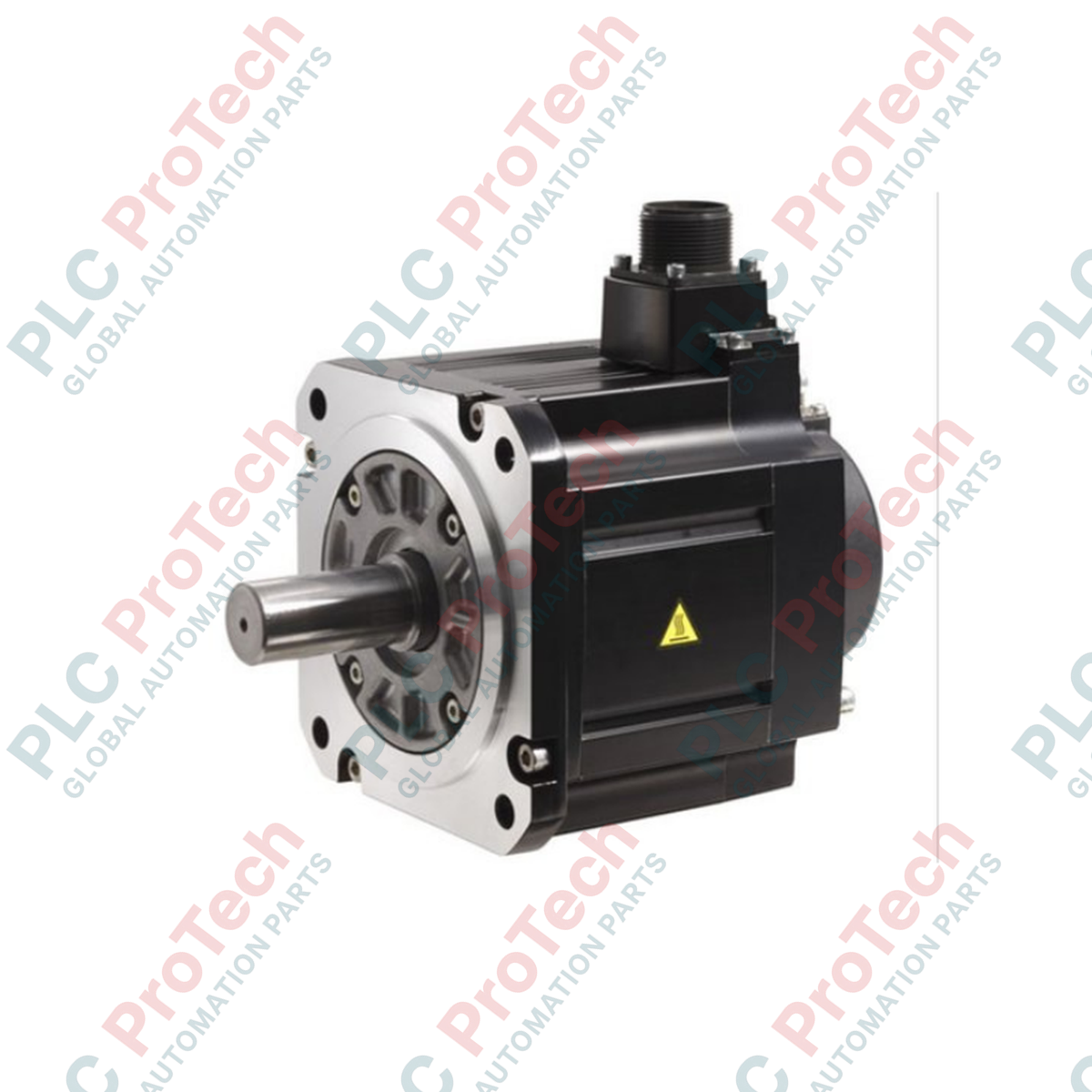
HG-SN302J-S100 | Mitsubishi Electric | Moteur servo

HG-SN302J-S100 | Mitsubishi Electric | Moteur servo

Il ne reste que 10 article(s) en stock
  • Fabricant : Mitsubishi Electric

  • N° de produit : HG-SN302J-S100

  • Pays d'origine :États-Unis

  • Type de produit : Moteur servo

  • Paiement : Virement bancaire, Western Union

  • Poids : 16000g

  • Port d'expédition : Xiamen

  • Garantie : 12 mois

Quantité
Voir les détails complets

Description

Providing reliable dynamic positioning and precise speed control under heavy industrial loads, the Mitsubishi Electric HG-SN302J-S100 is an AC servo motor engineered for compatibility with high-performance motion control drives. This unit features a 3.0 kW rated output and operates at a rated speed of 2000 r/min, delivering high torque performance while maintaining structural stability. Equipped with an integrated oil seal (designated by the "J" suffix) and built to an IP67 protection rating, this motor is specifically sealed against dust and liquid ingress, making it suitable for rigorous industrial machinery installations.

Features

  • Optimized Power Output: Delivers continuous 3.0 kW output power for high-demand rotary positioning tasks.
  • Integrated Oil Seal: Factory-installed oil seal protects internal components from oil mist and lubrication splashes.
  • Robust Environment Protection: Totally enclosed, natural cooling design certified to IP67 standards (excluding the shaft-through portion).
  • High Thermal Limits: Built to Insulation Class 155 (F) specifications to handle operational heat dissipation.
  • Low Vibration Rank: Rated at V10 vibration class to ensure minimal structural wear and high rotational accuracy.

Applications

  • Material Handling: Dynamic conveyor drive synchronization, gantry loaders, and automated storage systems.
  • Packaging Machinery: High-speed filling, sealing, and cartoning axes requiring rapid torque response.
  • Metalworking & Press Feeds: High-precision feeding systems and ancillary machine tool axes.
  • Textile Production: Tension-controlled winding, spooling, and weaving drive mechanisms.

Technical Specifications

Parameter Value / Specification
Manufacturer Mitsubishi Electric
Model Number HG-SN302J-S100
Series Name HG-SN Series
Rated Output 3.0 kW
Rated Torque 14.3 Nm
Rated Speed 2000 r/min
Maximum Speed 2500 r/min
Instantaneous Permissible Speed 2875 r/min
Rated Current 11 A
Maximum Current 33 A
Recommended Load Inertia Ratio 15 times or less
Insulation Class 155 (Class F)
Enclosure Structure Totally enclosed, natural cooling (IP67)
Vibration Rank V10
Operating Temperature 0 degC to 40 degC (non-freezing)
Storage Temperature -15 degC to 70 degC (non-freezing)
Operating Humidity 10% to 80% RH (non-condensing)
Storage Humidity 10% to 90% RH (non-condensing)
Maximum Altitude 2000m or less above sea level
Vibration Resistance X: 24.5 m/s2, Y: 49 m/s2
Weight 16 kg
Shipping Weight (Calculated) 17 kg

Empirical Engineering Insights

Alternative Models & Compatibility

The HG-SN302J-S100 is designed for optimized pairing with the MR-JE-300A and MR-JE-300B servo amplifiers. When upgrading older HC-SFS series installations to the HG-SN series, verify parameters related to the incremental encoder interface, as resolution registers differ. Ensure your MR Configurator2 software is updated to support the correct electronic gear and encoder resolution parameters to avoid feedback mismatch errors.

Application Pitfalls & Engineering Notes

This model features a built-in oil seal (J-type). While this provides highly effective protection, do not install the motor in environments where the oil level rises above the oil seal lip. For horizontal configurations, design standard oil-escape mechanisms in the machine gearbox to prevent oil from pooling against the seal and eventually seeping into the stator. Because the motor relies entirely on natural cooling, do not obstruct the air path around the motor frame inside the enclosure; maintain at least 100mm of clearance from adjacent structures.

Commissioning & Wiring Tips

Always use dedicated, shielded cables for encoder feedback (MR-EKCBL) and power supply (MR-PWCNS). Ground the motor’s main protective earth (PE) terminal directly to the servo amplifier’s ground plate, using a heavy-gauge wire to prevent high-frequency noise from corrupting encoder signals, which can cause erratic rotation or speed loop instability during commissioning.

Installation Guidelines

CRITICAL WARNING: HIGH VOLTAGE AND THERMAL HAZARD

Ensure main control and three-phase power lines are completely de-energized and locked out before attempting installation or cable connection. Wait at least 15 minutes after power-off to allow internal amplifier bus capacitors to fully discharge. Motor housing surfaces can exceed 70 degC during heavy dynamic cycles; allow cooling before physical contact.

1
Mechanical Mounting: Securely mount the motor to a rigid machine surface using the base/flange mounting holes. Avoid mechanical shock or axial hammering of the shaft during assembly, as this can destroy the high-resolution internal encoder.
2
Alignment Validation: Check shaft runout and align the motor coupling to prevent structural vibrations and bearing damage. Use a flexible coupling designed for high-inertia motor operations.
3
Cable Connection: Connect the three-phase power lines (U, V, W) and the PE ground terminal. Fasten the encoder connector securely, ensuring the IP67-rated waterproof gaskets are flat and fully seated to preserve environmental sealing.
Loading product navigation…

What does the J suffix mean on the HG-SN302J-S100 model number?

The 'J' indicates that the motor is factory-fitted with an oil seal, designed to prevent fluids and oil mist from entering the motor interior along the shaft-through portion.

Which Mitsubishi servo drive models are compatible with this motor?

This motor is matched with the MR-JE-300A (Analog/Pulse Train) and MR-JE-300B (SSCNET III/H) servo amplifiers.

Is the HG-SN302J-S100 rated for completely submerged operations?

No. While the motor body and electrical connections carry an IP67 protection rating, the shaft-through section is not certified for submersion. Proper external guarding is required if the shaft is exposed to standing liquids.

What is the recommended load to motor inertia ratio limit for stable operation?

Mitsubishi Electric recommends keeping the load-to-motor inertia ratio at 15 times or less. Exceeding this limit can result in tuning instability and oscillation during rapid acceleration cycles.

Expédition express mondiale

  • Livraison standard : 4 à 6 jours ouvrables via DHL, FedEx et UPS.
  • Expédition express : Expédition le jour même pour les commandes en stock passées avant 14h00 (GMT+8).
  • Couverture mondiale : Service dans plus de 150 pays, avec livraison rapide en Arabie Saoudite et aux Émirats arabes unis.

Retours et garantie

  • Garantie de 30 jours : Retours acceptés pour les produits en stock dans leur emballage d'origine scellé en usine.
  • Garantie de 12 mois : Chaque composant industriel est couvert par notre garantie technique professionnelle.

Les commandes sont traitées et livrées du lundi au vendredi (hors jours fériés).


Pour connaître l'éligibilité complète, les frais de restockage et les détails des retours internationaux, veuillez consulter notre site officiel Politique de remboursement et de retour .

TECHNICAL SPECIFICATIONS

Country of origin
États-Unis

Produits récemment consultés

Connaissances techniques

Actionneurs électriques conçus pour remplacer les systèmes à fluide : un guide pratique d'automatisation industrielle

Cet article explique comment les actionneurs électriques intégrés, tels que la série e-Actuator de SMC, transforment le contrôle du mouvement industriel en remplaçant les systèmes pneumatiques et...

Opérations mathématiques avec OpenPLC pour les applications d'automatisation industrielle

Cet article explique comment les systèmes PLC réalisent des opérations mathématiques de base telles que l'addition, la soustraction, la multiplication, la division, le modulo et l'exponentiation dans...

Logique booléenne avancée avec la programmation FBD PLC : applications industrielles pratiques au-delà de la logique de base

L'article explique plusieurs fonctions avancées de la logique booléenne utilisées en programmation d'automates programmables industriels (API) au-delà des opérations de base ET, OU et NON. Il aborde...

Logique booléenne en programmation PLC : comprendre les portes logiques FBD

La logique booléenne est la base de tout programme PLC. Des commandes machines simples aux systèmes d'automatisation industrielle complexes, les portes logiques déterminent comment les contrôleurs...

Guide approfondi sur les pare-feux industriels et la segmentation des réseaux OT

Les pare-feux industriels jouent un rôle crucial dans la cybersécurité OT, protégeant les réseaux PLC, DCS et SCADA grâce à la segmentation, au contrôle des entrées/sorties et à l’intégration IDS/IPS...

Guide des pinces robotiques : de la manipulation délicate à l'automatisation lourde

Les pinces robotiques modernes évoluent au-delà des mâchoires mécaniques traditionnelles. Des systèmes adhésifs inspirés des geckos aux pinces souples de qualité alimentaire, en passant par des...