1 de 1

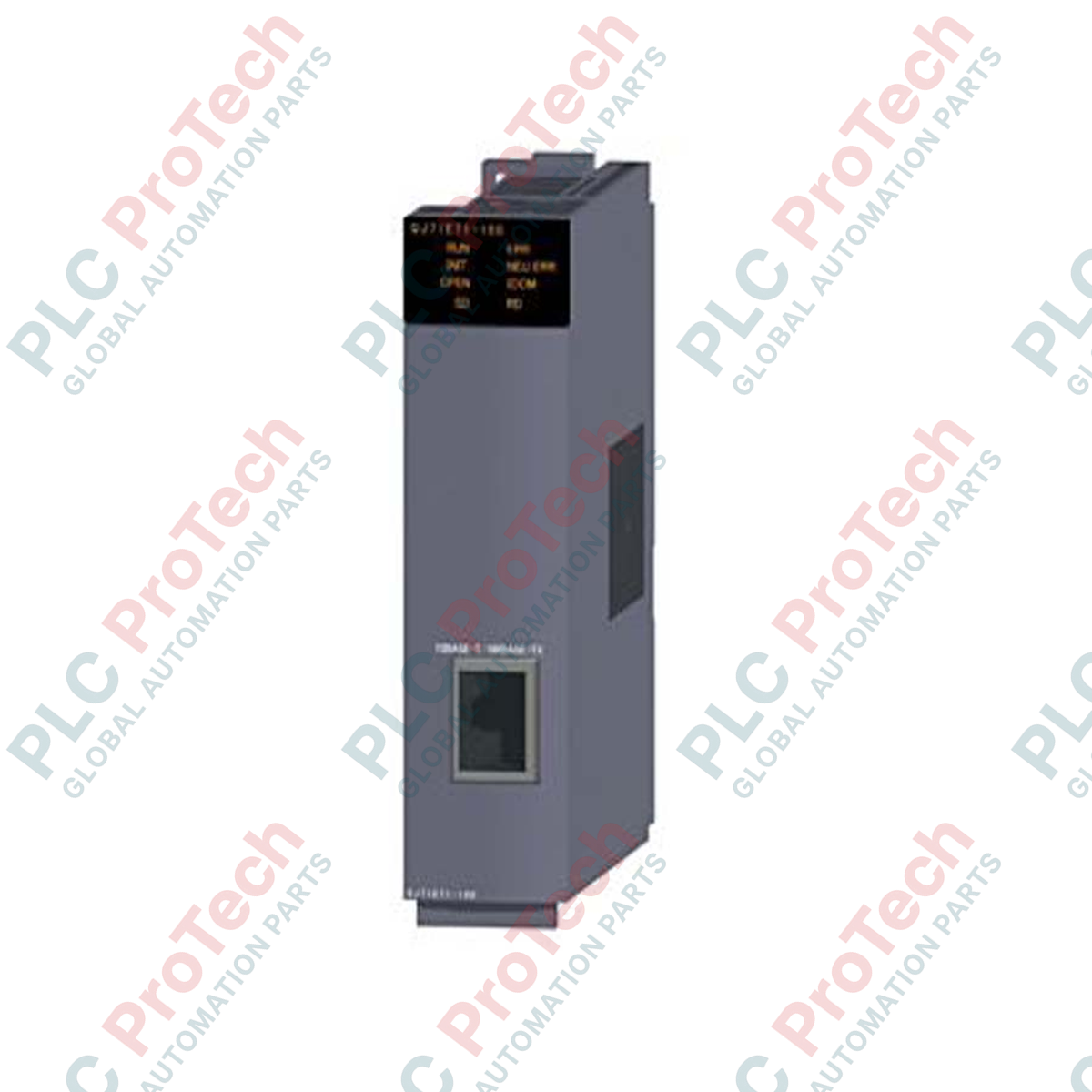
QJ71MT91 | Mitsubishi Electric | Module réseau Modbus/TCP

QJ71MT91 | Mitsubishi Electric | Module réseau Modbus/TCP

Il ne reste que 10 article(s) en stock
  • Fabricant : Mitsubishi Electric

  • N° de produit : QJ71MT91

  • Pays d'origine :États-Unis

  • Type de produit : Module réseau Modbus/TCP

  • Paiement : Virement bancaire, Western Union

  • Poids : 110g

  • Port d'expédition : Xiamen

  • Garantie : 12 mois

Quantité
Voir les détails complets

Description

Designed for seamless integration within MELSEC Q Series control architectures, the Mitsubishi Electric QJ71MT91 establishes reliable Ethernet-based communications by acting as a dedicated interface between high-performance PLCs and Modbus/TCP networks. This module allows MELSEC system processors to exchange data efficiently with third-party devices, instruments, and supervisory SCADA platforms over standard TCP/IP frameworks. Operating seamlessly in both master and slave capacities, it eliminates the need for expensive protocol converters or custom communication scripts in multi-vendor environments.

Key Features

  • Dual functionality supports concurrent Master and Slave execution roles over the network.
  • Built-in automatic communication utility simplifies data exchange without complex sequence ladder programming.
  • High-density buffer memory provides robust storage capacity for 4k words of input and output data.
  • Standard RJ45 physical layer interface supports industrial Ethernet architectures.
  • Direct integration onto the MELSEC Q series baseplate, drawing power directly from the backplane system.

Applications

  • Integration of multi-vendor PLC platforms (e.g., interfacing Modicon or Beckhoff controllers with MELSEC systems).
  • Distributed SCADA and HMI network interfaces over enterprise-wide local area networks.
  • Real-time telemetry and control of field instruments, power meters, and variable frequency drives over Modbus/TCP.

Technical Specifications

Parameter Value / Specification
Manufacturer Mitsubishi Electric
Model Reference QJ71MT91
Product Type Modbus/TCP Interface Module
Physical Interface RJ45 Connector
Maximum Connection Count 64 logical connections
Max Slaves Supported 64 slaves
Buffer Memory Allocation (I/O) 4k words Input / 4k words Output
Max Concurrent Instructions Up to 8 active instructions
Max Payload size (per instruction) 253 bytes
I/O Points Occupied 32 points (on baseplate)
Internal Current Draw (5VDC) 0.52A
Module Weight 0.11 kg
Shipping Weight (Calculated) 1.50 kg
Standards & Approvals UL, cUL, CE

Empirical Engineering Insights

Alternative Models & Compatibility

The QJ71MT91 is a dedicated Modbus/TCP module that provides native TCP/IP encapsulation for Modbus protocols. When migrating older systems from serial Modbus (RTU/ASCII) architectures previously managed by the QJ71C24N module, the QJ71MT91 offers a modern Ethernet upgrade without necessitating significant redesign of the backplane. This module requires GX Works2 or GX Developer utility software for module parameter setup and configuration profile mapping.

Application Pitfalls & Engineering Notes

Engineering systems incorporating multiple network-heavy modules must carefully calculate backplane current consumption. The QJ71MT91 draws a substantial 0.52A from the 5VDC internal bus line. Always verify that your power supply module (e.g., Q61P, Q63P) can supply sufficient current to avoid unexplained system resets or communications interruptions during heavy packet routing phases.

Commissioning & Wiring Tips

To guarantee clean execution and isolate industrial data lines from electromagnetic noise, ensure all Ethernet cabling running from the RJ45 port of the module is category 5e/6 STP (Shielded Twisted Pair). Ensure the shield of the physical Ethernet line is correctly bonded to the control panel's ground point. If accessing the module through firewalls, keep standard Modbus/TCP port 502 open for bidirectional protocol traffic.

Installation Guidelines

CRITICAL WARNING

Always isolate all phase power supplies feeding the rack and the field cabling interfaces prior to installing, removing, or wiring any network communications modules. Failure to fully de-energize active industrial panels before physical servicing can damage delicate backplane circuit components or result in immediate diagnostic hardware faults.

1

Ensure the base rack and adjacent CPU are powered down entirely. Carefully align the lower projection hook of the module with the bottom guide slot on the Q Series baseplate.

2

Push the module forward firmly into the backplane connector until it sits flush against the adjacent modules, securing it with the top module fixing screw if required in high-vibration environments.

3

Insert the shielded RJ45 connector into the front interface port until the locking tab clicks securely, ensuring the physical drop line does not exceed maximum local node spacing limits.

Loading product navigation…

What is the primary function of the QJ71MT91 module?

The module allows MELSEC Q series PLC platforms to communicate directly over industrial Ethernet networks using the standardized Modbus/TCP protocol.

How many logical connections can the QJ71MT91 manage simultaneously?

This module supports up to 64 concurrent logical connections, allowing multi-device client and server configurations to run on a single physical link.

Does this module require external 24VDC power connections?

No, it is powered entirely through the internal backplane bus of the MELSEC Q base unit, drawing 0.52A at 5VDC.

Which software utility is used to configure parameters on the module?

The module is configured using GX Works2 or GX Developer software via dedicated utility settings or standard buffer memory assignments.

Expédition express mondiale

  • Livraison standard : 4 à 6 jours ouvrables via DHL, FedEx et UPS.
  • Expédition express : Expédition le jour même pour les commandes en stock passées avant 14h00 (GMT+8).
  • Couverture mondiale : Service dans plus de 150 pays, avec livraison rapide en Arabie Saoudite et aux Émirats arabes unis.

Retours et garantie

  • Garantie de 30 jours : Retours acceptés pour les produits en stock dans leur emballage d’origine scellé en usine.
  • Garantie de 12 mois : Chaque composant industriel est couvert par notre garantie technique professionnelle.

Les commandes sont traitées et livrées du lundi au vendredi (hors jours fériés).


Pour connaître les conditions d’éligibilité complètes, les frais de restockage et les détails des retours internationaux, veuillez consulter notre site officiel Politique de remboursement et de retour .

TECHNICAL SPECIFICATIONS

Country of origin
États-Unis

Produits récemment consultés

Connaissances techniques

Logique booléenne avancée avec la programmation FBD PLC : applications industrielles pratiques au-delà de la logique de base

L'article explique plusieurs fonctions avancées de logique booléenne utilisées en programmation d'automates programmables industriels (API) au-delà des opérations de base ET, OU et NON. Il aborde...

Logique booléenne en programmation PLC : comprendre les portes logiques FBD

La logique booléenne est la base de tout programme PLC. Des commandes machines simples aux systèmes d'automatisation industrielle complexes, les portes logiques déterminent comment les contrôleurs...

Guide approfondi sur les pare-feux industriels et la segmentation des réseaux OT

Les pare-feux industriels jouent un rôle crucial dans la cybersécurité OT, protégeant les réseaux PLC, DCS et SCADA grâce à la segmentation, au contrôle des entrées/sorties et à l'intégration IDS/IPS...

Guide des préhenseurs robotiques : de la manipulation délicate à l'automatisation lourde

Les pinces robotiques modernes évoluent au-delà des mâchoires mécaniques traditionnelles. Des systèmes adhésifs inspirés du gecko et des pinces souples de qualité alimentaire aux outils d'entrepôt...

Retour en arrière : comment les premiers moteurs électriques ont transformé l'exploitation minière souterraine

Des compresseurs à courant continu entraînés par corde aux wagonnets de mine alimentés par batterie, les premières opérations minières ont marqué un tournant dans l’électrification industrielle. Cet...

Factory I/O : un outil moderne de simulation PLC pour la formation à l'automatisation industrielle

Factory I/O révolutionne l'enseignement des automates programmables industriels (API) en proposant des simulations industrielles 3D immersives pour les étudiants, les ingénieurs et les équipes de...